
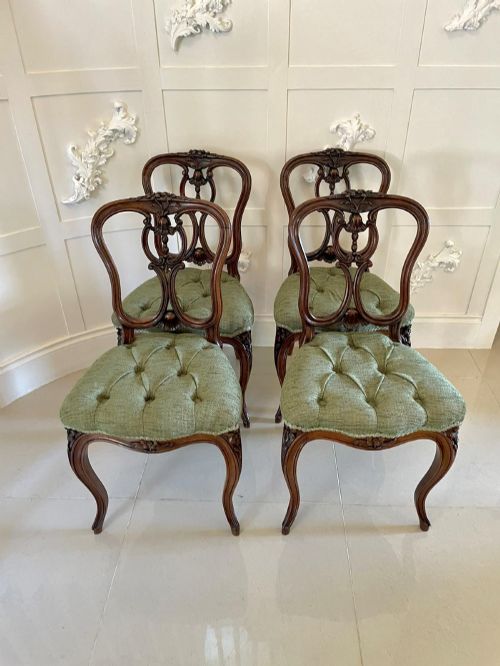

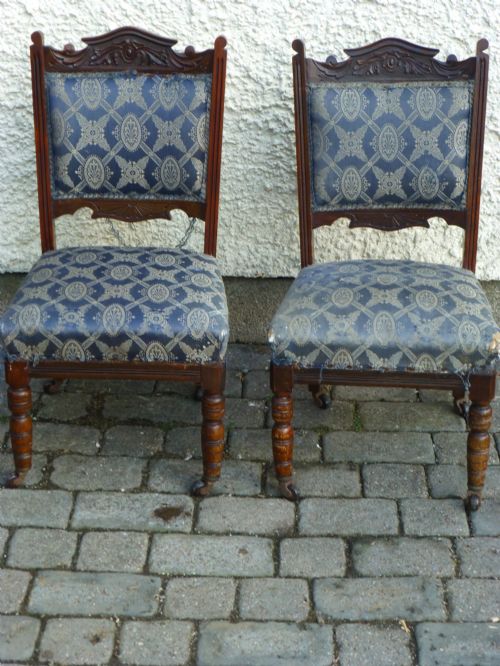
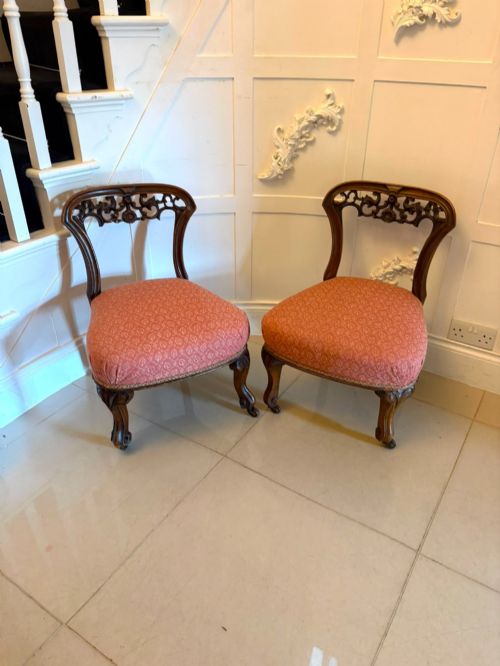
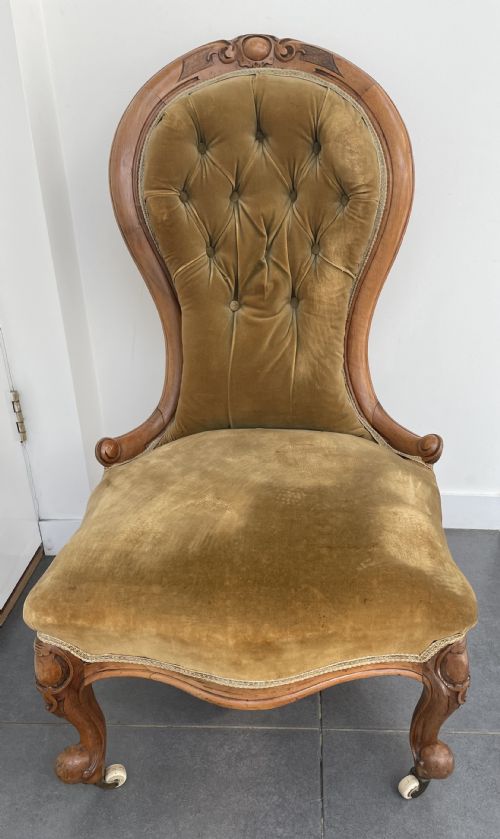
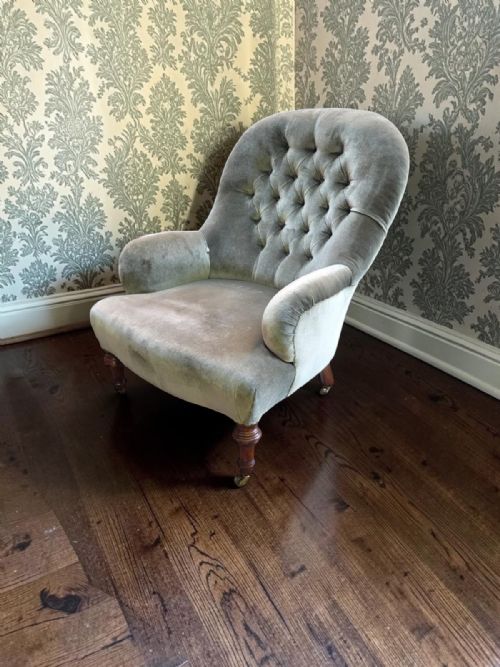
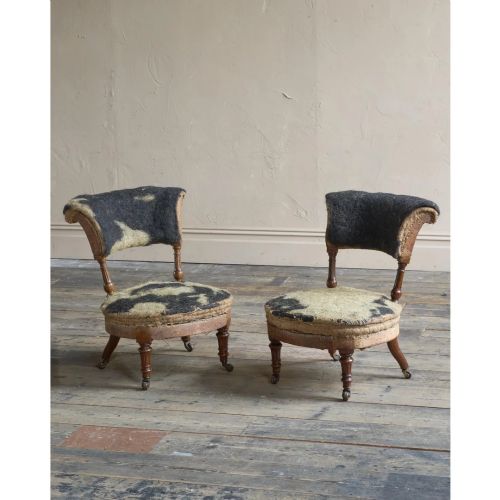
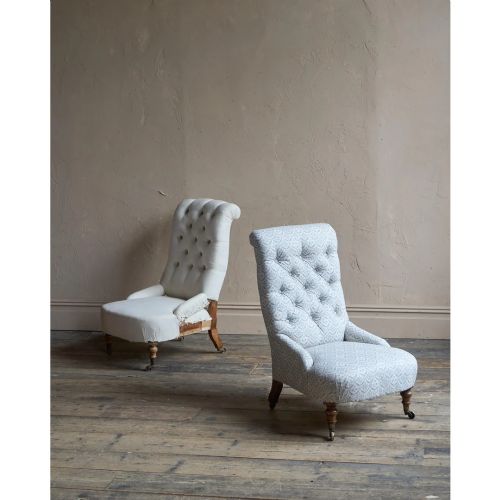
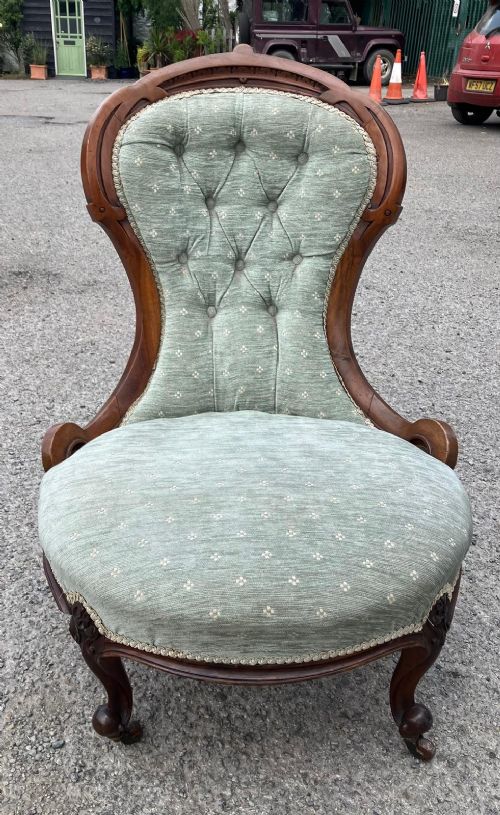
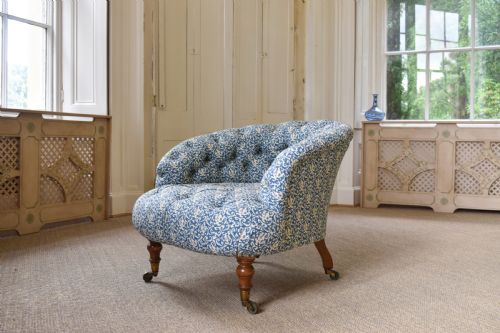
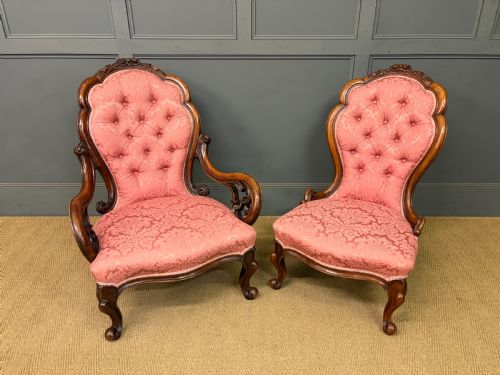
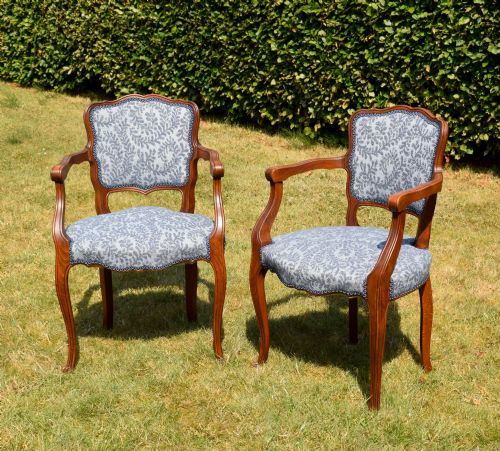
Walnut Bedroom Chair
A walnut bedroom chair brings refined timber and comfortable seating into private rooms, offering compact elegance for dressing areas and parlours.
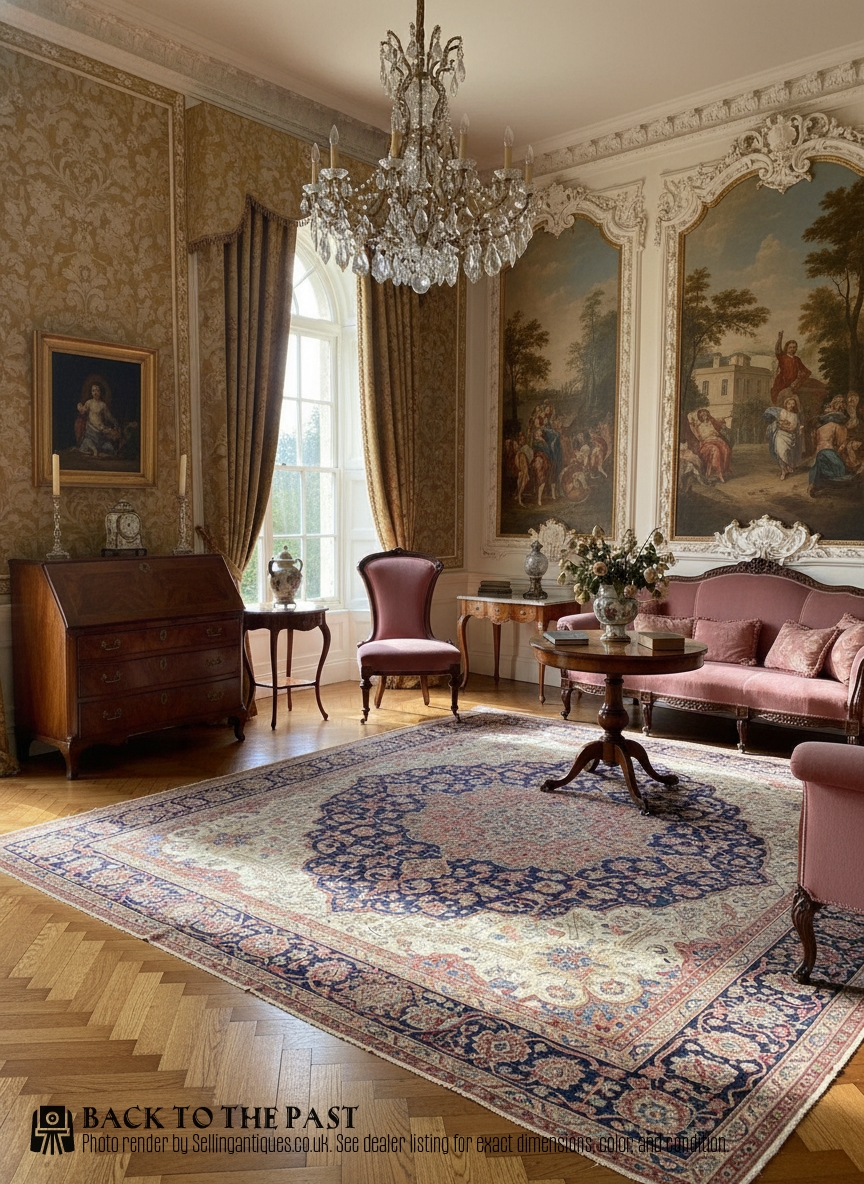
Materials and Construction
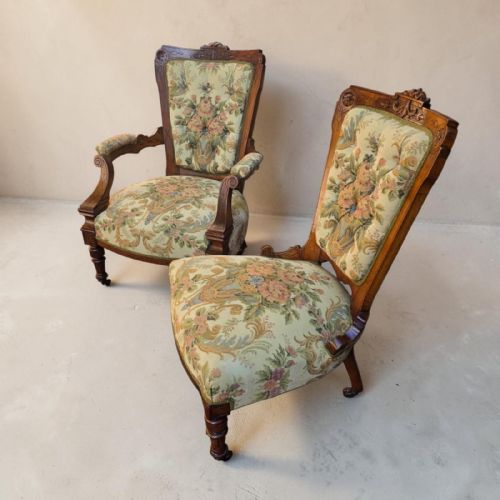
The primary framing relies on solid walnut and figured walnut veneers, frequently chosen for rich grain patterns and warm tones. Cabinetmakers utilised carved details, marquetry inlay, and shaped frames to elevate the visual appeal of these domestic seats.
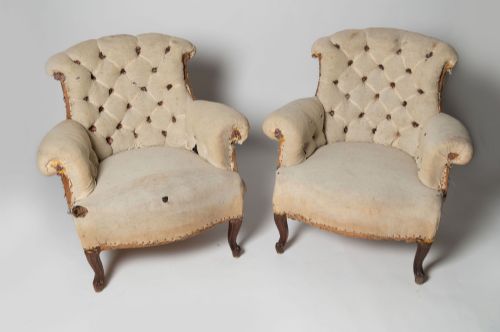
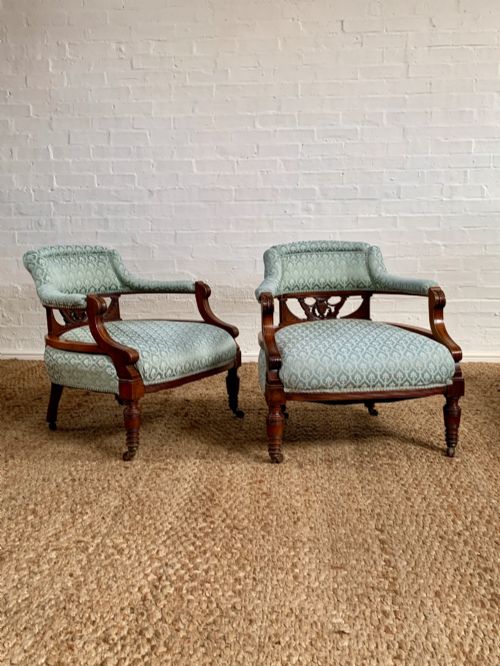
Underpinning the upholstery involves traditional materials such as hessian, webbing, and stuffing secured over supportive frames. Brass castors frequently provide mobility to low-slung nineteenth-century variants.
Secondary structural elements incorporate cane work for breathable seating surfaces on specific regional or period examples.
Markers of Distinction
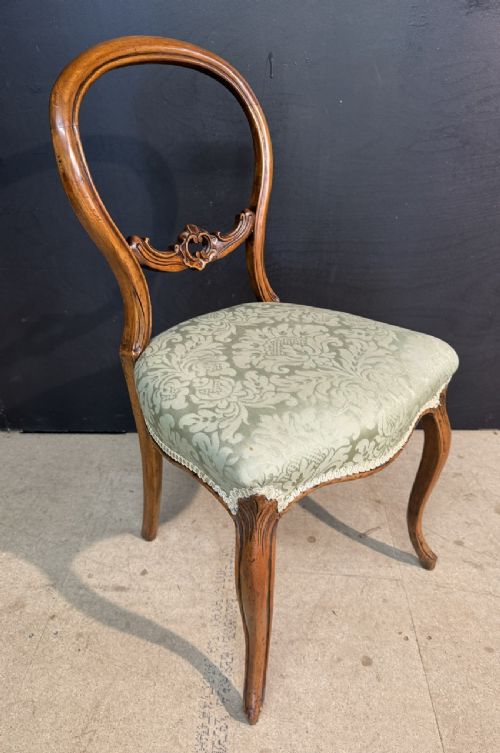
Superior examples separate themselves through the crispness of hand-carved ornamentation and the selection of highly figured walnut veneers. Subtleties in proportion, such as well-balanced spoon backs and elegantly curved cabriole legs, indicate careful design execution.
The integration of documented maker stamps or labels, particularly from prominent nineteenth-century furnishing firms, elevates an individual piece. Original upholstery materials and intact marquetry inlay further distinguish higher-tier specimens.
Retail Price Guide 2026
Typical UK retail prices for walnut bedroom chair, calculated from the Sellingantiques database of over a million retail prices indexed since 2003. This retail price guide relies exclusively on Sellingantiques data; no external sources or auction records are used, so the figures do not describe the wider market.
The documented inventory spans nineteenth-century Victorian forms alongside eighteenth-century Italian country variants, utilising walnut, fabric, velvet, and rush.
Howard and Sons·Hewetson and Milner
The Walnut Bedroom Chair Glossary
- Spoon back
- A padded chair back shaped in a concave curve resembling the bowl of a spoon. This ergonomic form emerged prominently during the Victorian era to support the spine.
- Nursing chair
- A low-seated chair designed originally for feeding infants or personal grooming. Their reduced height allowed sitters to tend to children comfortably.
- Marquetry
- Decorative veneer work arranged in geometric or floral patterns using various tinted woods. This technique demonstrates high-level cabinetmaking skill on nineteenth-century surfaces.
- Cabriole leg
- A furniture leg featuring a double curve modelled on animal limbs, convex at the top and concave below. It terminates in a plain or ornate foot.
- Prie Dieu
- A devotional chair featuring a high, narrow back with a flat top rail designed for kneeling during prayer. These items became popular domestic furniture in the nineteenth century.
Frequently Asked Questions
How do I date a walnut chair?
Dating relies on stylistic markers, framing techniques, and secondary woods visible beneath the upholstery webbing.
Victorian pieces frequently display deep machine or hand carvings and walnut frames, while earlier Regency examples favour simpler classical lines.
Where should I place these chairs?
These compact seats suit bedrooms, dressing rooms, and corners of reception spaces where full-sized armchairs overwhelm the floor plan.
Their decorative backs make them visually appealing when viewed from behind in open room settings.
Are walnut and mahogany similar?
Walnut displays a softer, warmer brown tone with distinctive looping grain patterns compared to the deeper reddish hues of mahogany.
Cabinetmakers prized walnut for its suitability to intricate carving and contrasting veneer marquetry.