


Wall Mounted Display Cabinet
A wall mounted display cabinet lifts your collection off the floor, bringing ceramics, books or curiosities to eye level.
Wall Mounted Display Cabinet
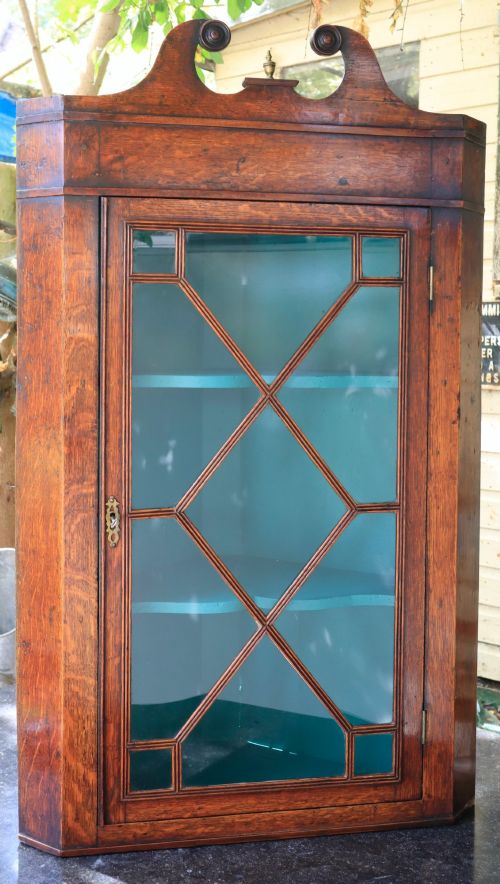
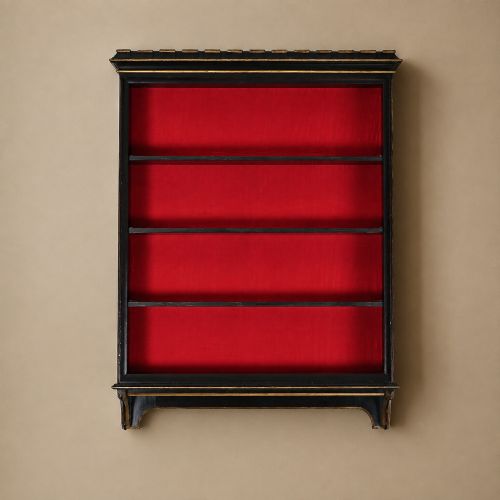
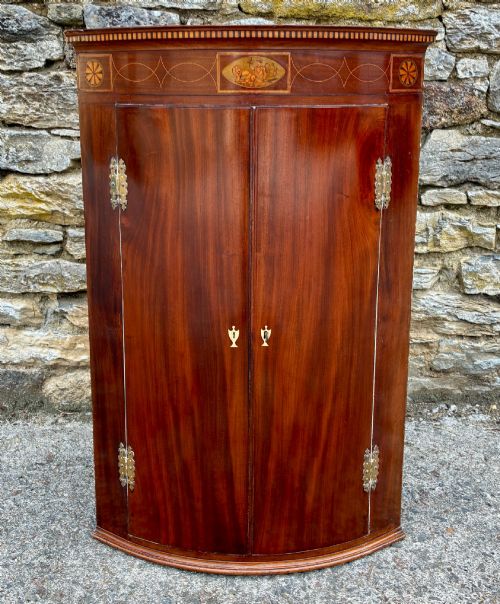
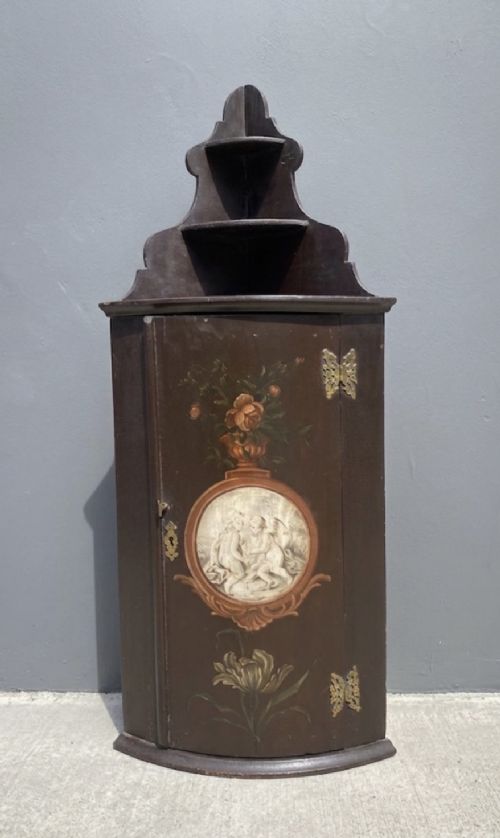
A wall mounted display cabinet is designed to hang directly on a wall or sit within a corner, freeing up floor space while showcasing prized possessions behind glass doors or upon open shelves. These pieces range from compact hanging cupboards to larger glazed vitrines and corner cabinets.
The selections span numerous eras, from the 18th Century and Georgian periods through to Victorian, Edwardian, and 1930s examples. Buyers most frequently encounter mahogany and oak corner cupboards or hanging display cabinets carrying Georgian and Victorian stylistic influences.
Materials and construction methods
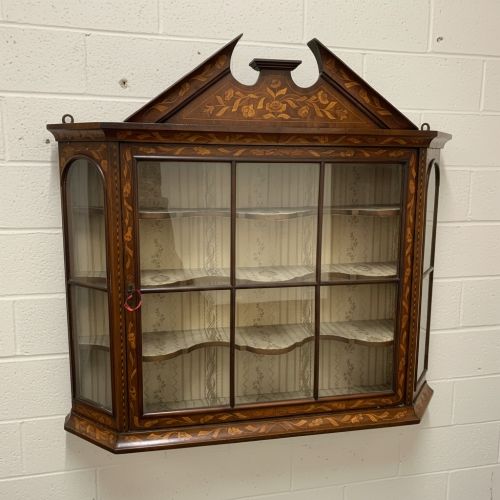
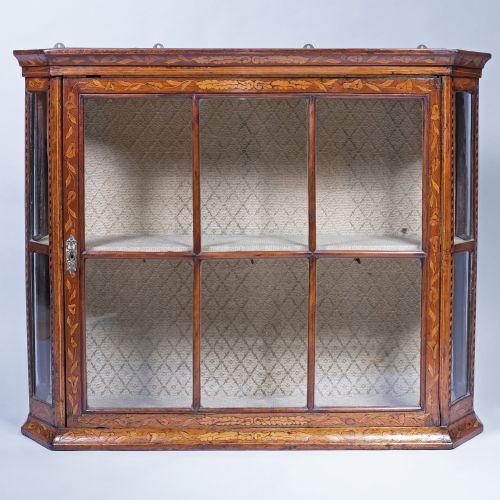
Timbers such as mahogany, oak, and walnut form the structural backbone of these cabinets, frequently paired with satinwood or intricate marquetry inlay for decorative contrast. Cabinetmakers constructed frames to support glazed doors, mirrored backs, or brass hardware.
Specialised techniques include carved gilt surfaces, ebonised finishes, and hand-painted advertising signage applied to chocolate and tobacco display cabinets. Glazing bars divide glass panes to keep items secure whilst maintaining visibility.
Listings feature woods like mahogany, oak, walnut, and satinwood alongside brass hardware and fabric-lined interiors.
Judging the quality of a cabinet
Quality rests in the selection of timbers, the crispness of marquetry or carved details, and the integrity of original glazing and hardware. Superior examples display thoughtful proportions, such as broken arch pediments or fine bow front designs.
The condition of internal fabric linings, working locks with keys, and the retention of original hand-painted or sign-written details elevate certain pieces above standard utility cupboards.
George Edmund Street·Wills Capstan Navy Cut
The Wall Mounted Display Cabinet Glossary
- Bow front
- A convex curved cabinet front that projects outward, common in Georgian mahogany pieces.
- Marquetry inlay
- Decorative patterns formed by fitting small pieces of contrasting veneer into wood panels.
- Pediment
- The decorative structure placed above the door or top cornice of a cabinet, such as a broken arch.
- Vitrine
- A glass-fronted cabinet or display case designed specifically for showing delicate objects.
- Aesthetic Movement
- A late 19th Century design style prioritising visual beauty over narrative function, seen in Anglo-Japanese walnut cabinets.
Wall Mounted Display Cabinet: Frequently Asked Questions
How were wall mounted display cabinets used?
These cabinets served to store and display valuable items, documents, or personal collections while keeping them safe behind locked doors.
Many styles were specifically built to utilise corner spaces in rooms, or hung above tables and sideboards for easy access.
What periods do these cabinets come from?
The available pieces stretch from the 18th Century and Georgian eras through the Victorian and Edwardian periods up to the 1930s.
Earlier examples often feature rich mahogany or oak, whilst later Victorian and Edwardian pieces introduce ebonising, specialised shop displays, and diverse inlay work.
Can I hang a heavy oak cabinet safely?
Solid oak and mahogany cabinets require secure wall fixings distributed evenly to bear the substantial weight of the timber and stored objects.
Checking the structural condition of the hanging brackets and backboards is essential before mounting any antique cabinet.