


Glazed Oak Wall Cabinet
A glazed oak wall cabinet brings timber warmth and glass-fronted storage to a room, keeping collections visible while protected from dust.
Glazed Oak Wall Cabinet
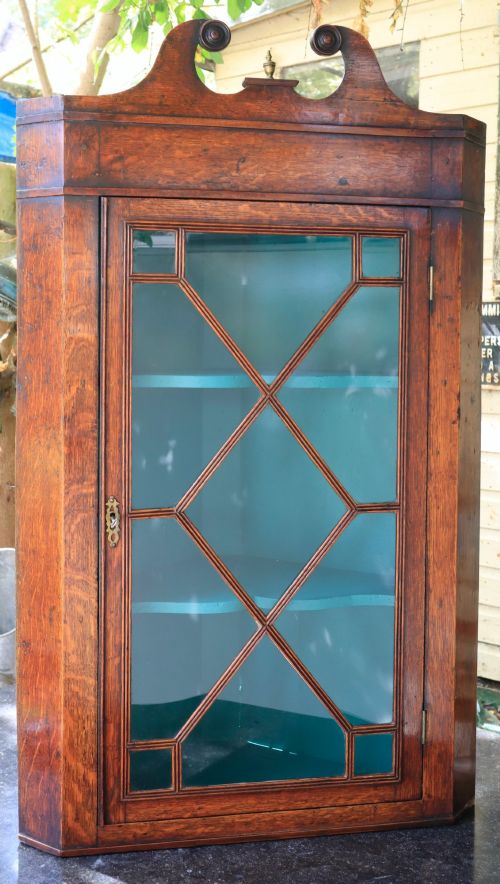
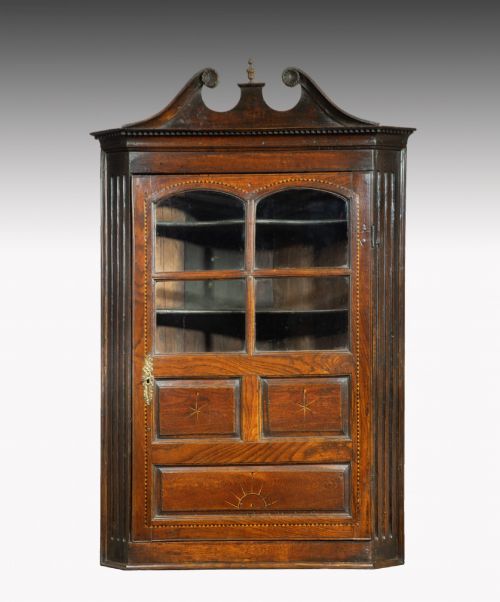
A glazed oak wall cabinet takes several forms across the centuries, appearing most frequently on this page as a corner cabinet or wall-hanging cupboard designed to utilise neglected angles and floor space.
The pieces span periods from the early eighteenth century through the Georgian and Victorian eras to Edwardian and Arts and Crafts examples from nineteen thirty.
Makers shaped these items in regional English styles, alongside occasional Welsh, Cotswold School, and continental pieces.
Quality and proportion
Quality rests in the timber selection and the precision of the joinery, particularly where door frames meet and glass bars intersect.
Finer examples display delicate astragal glazing and considered proportions that suit domestic interiors without dominating a wall.
Materials appearing across the listings include solid oak, glass, brass, ebonised wood, and fabric linings.
The Glazed Oak Wall Cabinet Glossary
- Astragal
- Glazing bars that divide a glass window into smaller panes within a door. These thin wooden strips frame the glass securely.
- Corner cupboard
- A storage piece built with a triangular footprint to fit directly into the corner of a room. This form maximises space in smaller chambers.
- Limed oak
- Timber treated with a white pigment rubbed into the grain to lighten the surface colour. This finish gained popularity in twentieth-century pieces.
- Barley twist
- A spiral turning technique applied to wooden supports and columns. It adds decorative relief to furniture frames.
Glazed Oak Wall Cabinet: Frequently Asked Questions
How do I hang a wall cabinet safely?
These cabinets require secure fixings screwed directly into wall studs or masonry to support the weight of the timber and glass.
Professional mirror plates or heavy-duty brackets fitted to the interior back frame distribute the load evenly.
Are most of these cabinets meant for corners?
The evidence shows a high proportion of corner cupboards and corner cabinets designed specifically to fit room angles.
Flat wall-hanging display cabinets also appear alongside these triangular variants.
What is the difference between Georgian and Edwardian pieces?
Georgian cabinets often feature refined proportions with astragal glazing bars dating from the eighteenth century.
Edwardian examples reflect later revivals and domestic utility from the early twentieth century.
Can I store heavy books inside?
These smaller wall cabinets and display cupboards suit porcelain, glassware and lightweight collections rather than heavy volumes.
Shelves inside are typically fixed timber boards scaled for decorative display.