


Edwardian Oak Smokers Cabinet
An edwardian oak smokers cabinet is a compact tabletop or wall-mounted store for pipes and tobacco, offering a neat piece of social history.
Edwardian Oak Smokers Cabinet
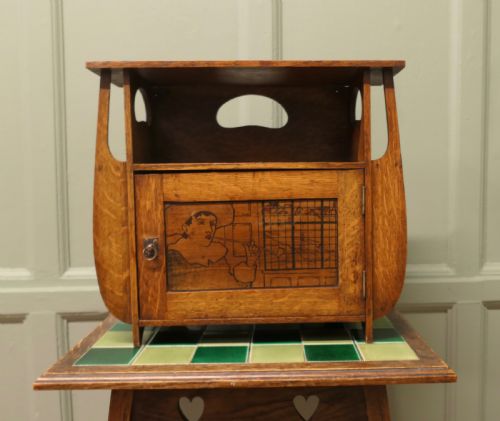
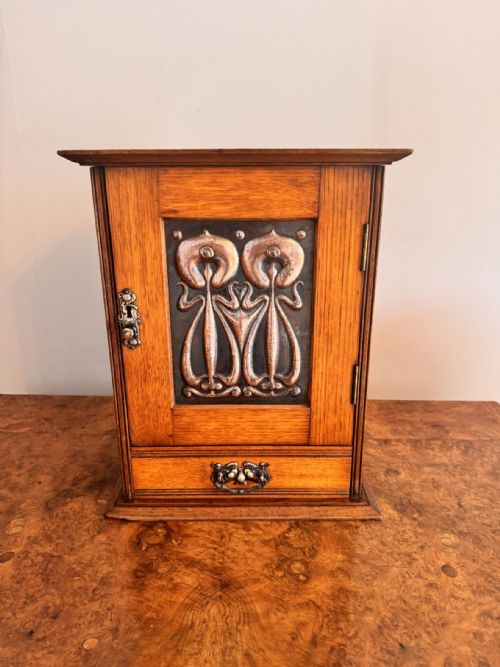
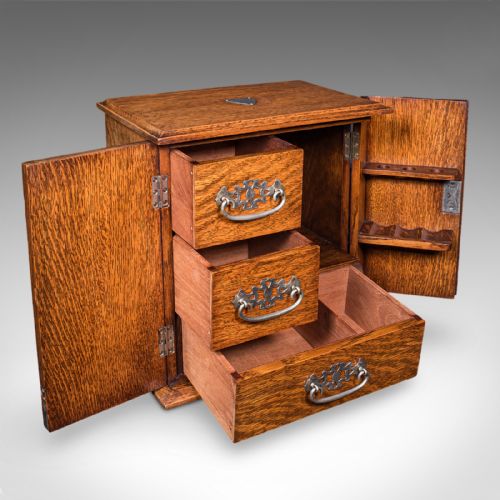
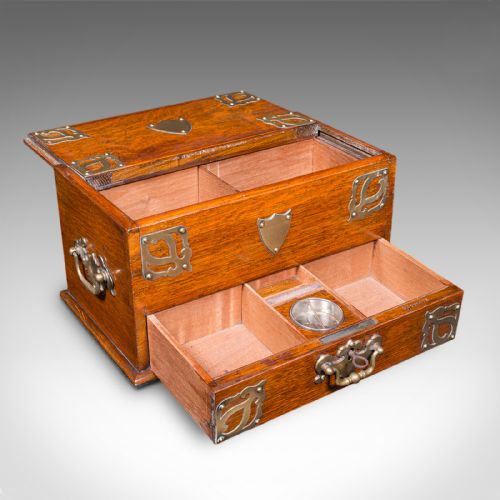
An edwardian oak smokers cabinet is typically encountered as a tabletop box, a wall-mounted cabinet, or a small specimen case designed to hold pipes, cigars, and tobacco.
The pieces on this page span the Edwardian period alongside late Victorian years, reflecting the domestic habits and gentlemen's lounges of the era.
Makers produced these containers in various formats, ranging from simple utilitarian boxes to novelty pieces shaped like coal wagons.
How they were made
Makers constructed these cabinets predominantly in oak, sometimes utilising golden oak or carved finishes, complemented by brass, copper, or iron mounts.
Internal fittings frequently include ceramic or glass elements, such as Imari bowls for mixing tobacco, alongside tambour doors and small drawers.
The listings feature oak combined with brass, copper, iron, glass, and ceramic across Edwardian and late nineteenth-century periods.
What varies in quality
The distinction between standard production items and superior pieces rests on the crispness of the carving, the selection of figured oak, and the robustness of the brass hardware.
Novelty forms and specialised internal arrangements, such as dedicated pipe racks and tambour fronts, command greater interest than plain rectangular boxes.
The Edwardian Oak Smokers Cabinet Glossary
- Tambour
- A flexible door constructed from narrow strips of wood glued to canvas, allowing it to slide around a curved track.
- Humidor
- A moisture-controlled container designed specifically for storing cigars in prime condition.
- Imari
- A style of Japanese decorative ceramic imported and adapted for bowls and receptacles within British smoking cabinets.
- Specimen cabinet
- A small display case originally intended for natural history collections but frequently adapted for pipes and small valuables.
Edwardian Oak Smokers Cabinet: Frequently Asked Questions
How were these cabinets used?
These cabinets served to keep pipes, tobacco, and cigars neatly stored and secure in a study or drawing room.
They provided a designated place for gentlemanly smoking accessories, often locking to protect the contents.
Where should I place one?
Tabletop versions sit comfortably on sideboards, desks, or low tables where their details remain visible.
Wall-mounted examples suit smaller rooms or hallways, utilising vertical space without cluttering surfaces.
How do I date an edwardian oak smokers cabinet?
Dating relies on stylistic clues such as Arts and Crafts or Art Nouveau motifs combined with period hardware.
Construction methods and timber selection also help distinguish Edwardian pieces from late nineteenth-century examples.
Can I store modern cigars inside?
Many of these cabinets lack modern humidification seals unless fitted with a specific lined humidor insert.
Standard boxes work well for display or pipe storage, but cigars may require additional moisture control.