




Antique Smokers Companion
These antique smokers companion pieces organise tobacco, pipes and matches for the fireside, offering functional design from the Victorian and Edwardian eras.
Antique Smokers Companion
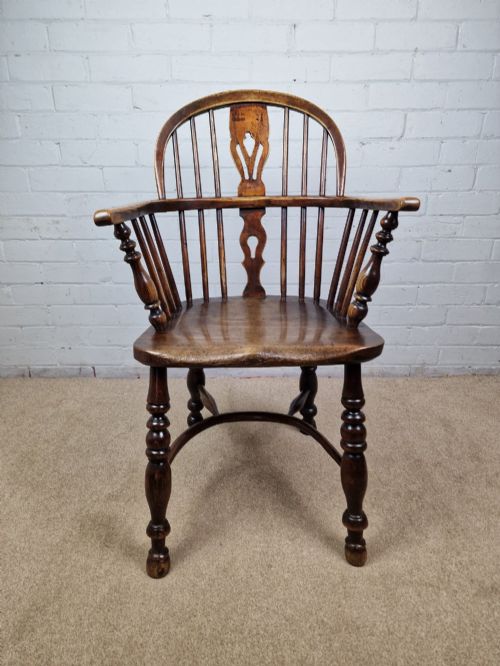
An antique smokers companion gathers smoking accessories into cabinets, floor-standing stands and compendiums designed for domestic use. The pieces seen on this page span the Victorian and Edwardian periods, stretching into the nineteen-twenties and thirties with occasional chairs and tables.
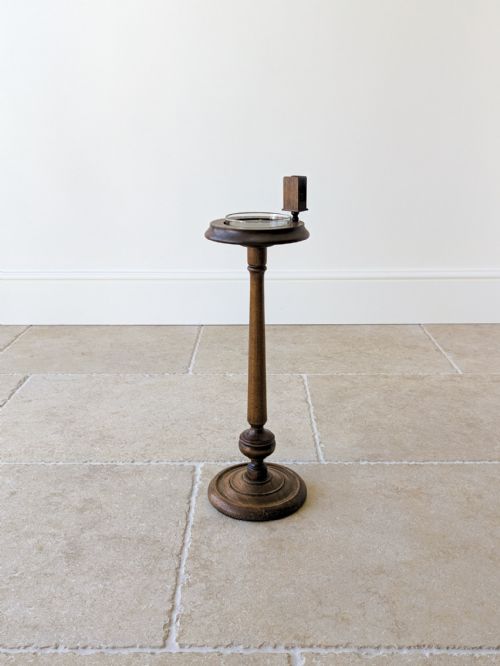
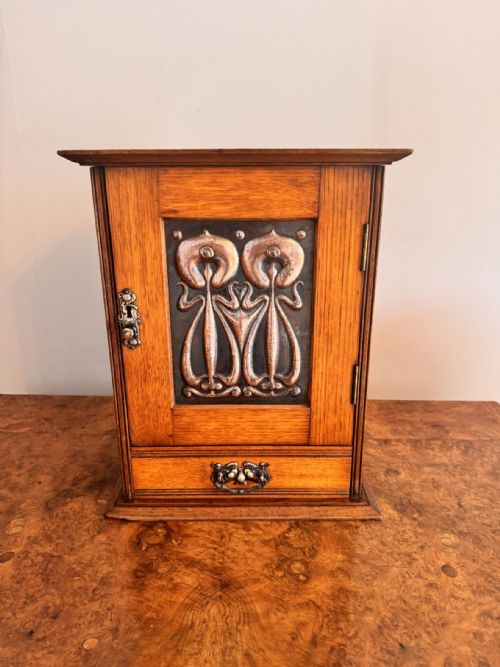
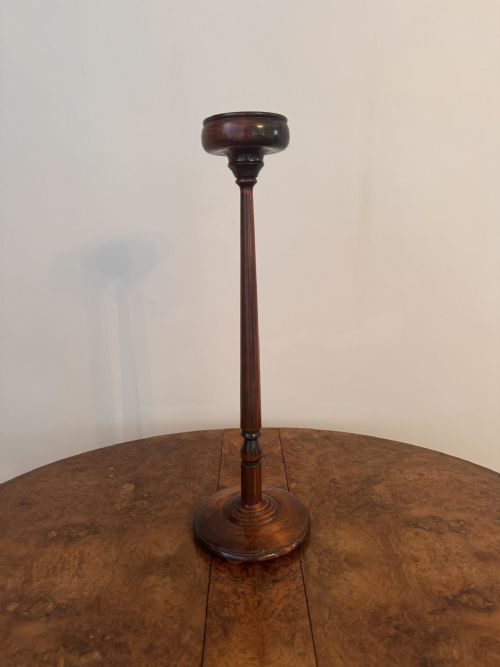
You are most likely to meet oak and mahogany cabinets alongside floor-standing smoking stands. These forms range from simple wall-mounted or tabletop cases to elaborate combination tables and wheeled novelties in silver and glass.
Materials and construction
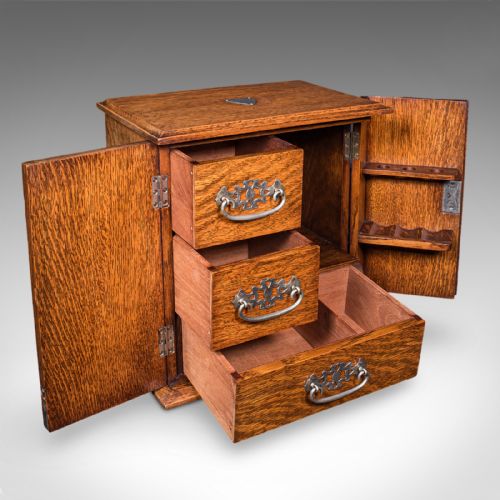
Woods such as oak, mahogany and walnut form the structural carcasses of these cabinets and stands, often featuring inlaid decoration and tailored interior compartments. Cabinetmakers utilised brass hardware, copper accents and glass elements to secure and display pipes, tobacco and matches.
Silver appears frequently in smaller accessories, pipe tampers, picks and compendiums. Selected pieces incorporate wheeled carriages and novel shapes, reflecting specialised metalwork and glass-blowing techniques of the nineteenth and twentieth centuries.
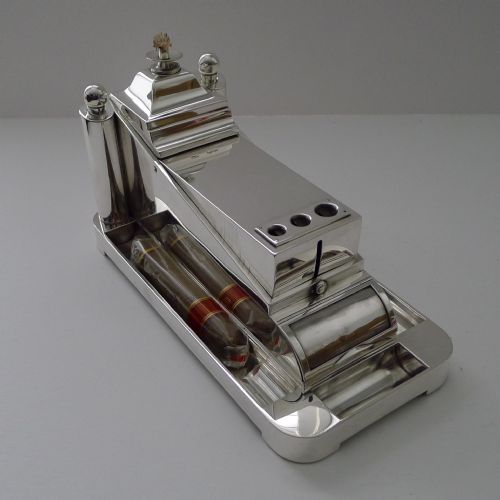
One exceptional Victorian smoking compendium takes the unusual shape of a silver and glass fire carriage on wheels.
Judging quality in these pieces
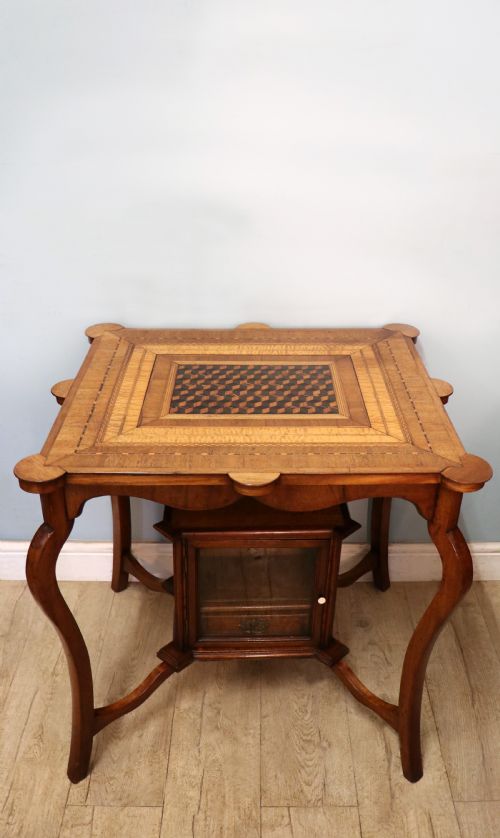
Superior examples distinguish themselves through integrated design, such as combination tables with built-in cabinetry rather than simple standalone boxes. The presence of precious metals, fitted silver accoutrements and clever mechanical forms elevates a piece above standard utilitarian versions.
Material selection and decorative restraint separate ordinary workshop production from striking late Victorian and Edwardian showpieces. Finely figured timbers and intact original glass components carry greater weight than heavy-handed or plain secondary woods.
The Antique Smokers Companion Glossary
- Compendium
- A container holding a variety of related items, often fitted with compartments for pipes, tobacco and matches. These pieces range from tabletop cases to wheeled novelty carriage designs.
- Pipe tamper
- A small tool used to pack tobacco down into the bowl of a pipe evenly. They frequently appear in silver alongside matching picks.
- Cigar humidor
- A specialised box designed to maintain humidity for storing cigars. Walnut and other dense timbers protect the contents.
- Smoking stand
- A dedicated piece of furniture holding smoking equipment near a chair or hearth. Floor-standing versions keep accessories close at hand.
Antique Smokers Companion: Frequently Asked Questions
What is an antique smokers companion?
An antique smokers companion is a specialised piece of furniture or container designed to store and organise tobacco, pipes, matches and smoking accessories. These items include tabletop cabinets, floor-standing stands and wheeled silver compendiums.
They reflect the social habits of the Victorian, Edwardian and Art Deco periods, keeping necessary implements tidy and close to the fireside or smoking room seating.
How were smoking cabinets used?
Smoking cabinets provided a secure, organised place to keep expensive tobacco, fragile clay or briar pipes, and matches away from household dust and moisture. Many featured lockable doors to restrict access.
Owners placed them on tables, desks or directly on the floor beside armchairs, allowing easy access during after-dinner relaxation.
What materials are common?
Solid woods like oak, mahogany and walnut dominate the construction of these cabinets and stands. Metal hardware, brass fixtures and glass panels are standard.
Finer examples incorporate silver for pipe tampers, picks and compendium mountings, sometimes paired with inlaid wood decoration.
How do I date a smokers companion?
Dating relies on stylistic clues, wood choices and construction methods that align with distinct periods. Victorian pieces often display heavier proportions and ornate details, while Edwardian and Art Deco versions lean toward lighter oak frames or streamlined walnut forms.
Assay marks on silver components or specific cabinet configurations also help narrow the decade of manufacture.