



Antique Tobacco Cabinet
An antique tobacco cabinet brings order to pipes, cigars and leaves, offering a sturdy timber housing that keeps smoking gear secure and handsome on a desk.
What an antique tobacco cabinet is
When you search for an antique tobacco cabinet, you find dedicated storage vessels built for pipes, cigars and smoking accessories from the late nineteenth and early twentieth centuries. These pieces range from simple desktop humidors to wall-mounted cabinets fitted with internal drawers and specialised pipe racks.
How they were made
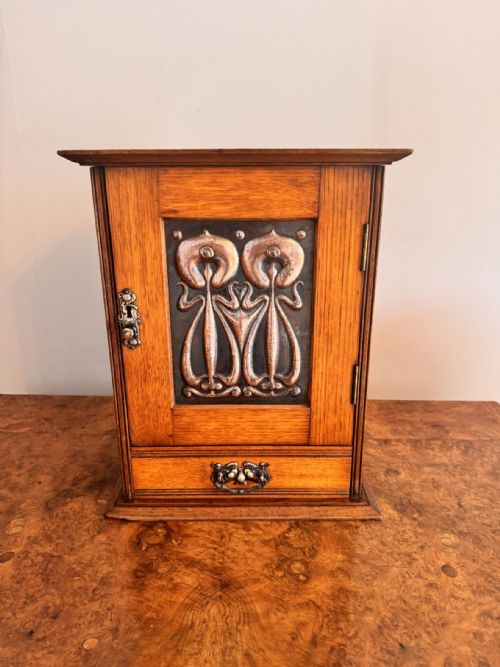
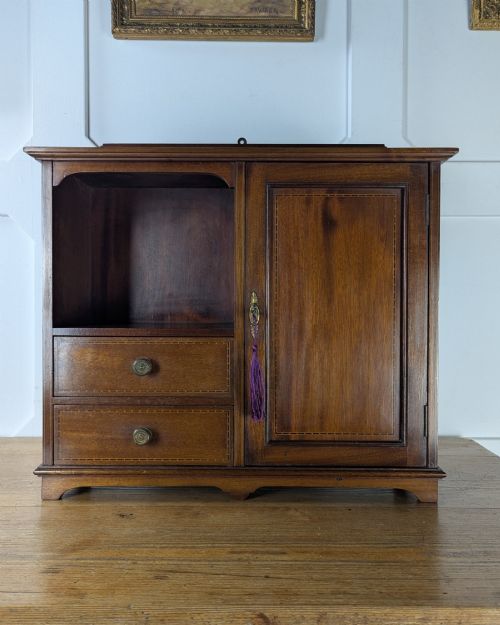
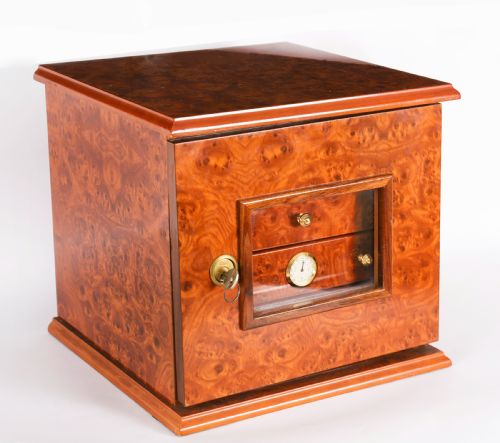
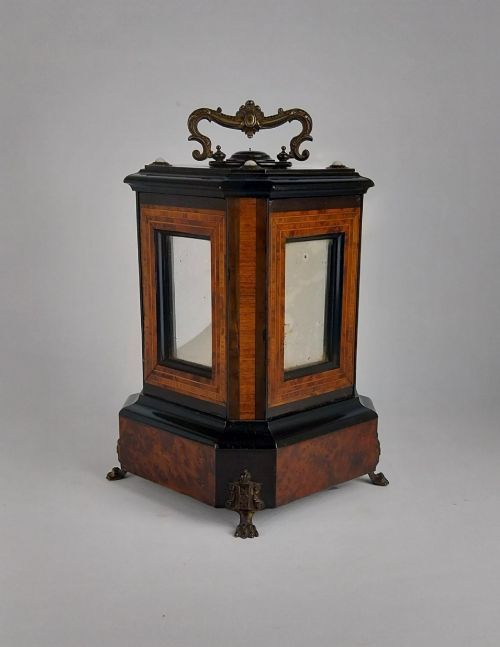
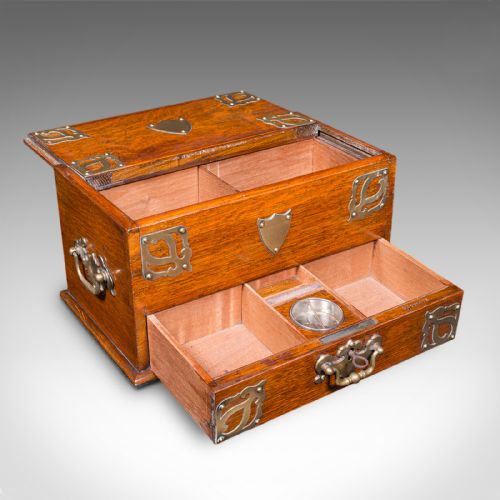
Cabinetmakers utilised durable hardwoods such as oak, mahogany, burr walnut and cedar, often pairing them with brass hinges, locks and handles. Some examples incorporate copper panels, ceramic elements or leaded glass to enrich the exterior appearance.
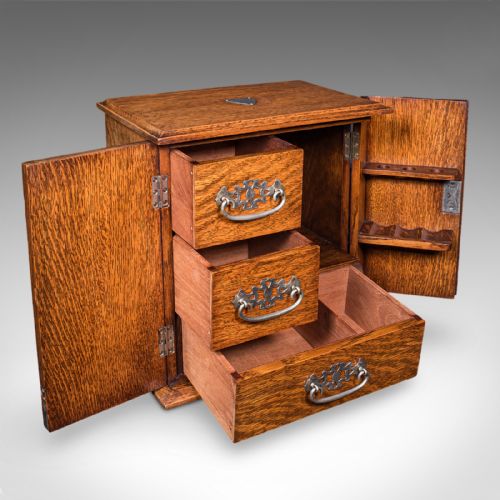
Interiors typically feature tongue-and-groove or dovetailed joinery, housing fitted cedar linings for moisture retention alongside carved wooden racks designed to hold individual pipes upright.
Retail Price Guide 2026
Typical UK retail prices for tobacco cabinet, calculated from the Sellingantiques database of over a million retail prices indexed since 2003. This retail price guide relies exclusively on Sellingantiques data; no external sources or auction records are used, so the figures do not describe the wider market.
Listings show cabinets rendered in oak, mahogany, burr walnut and cedar, spanning the Victorian, Edwardian, Arts and Crafts and Art Nouveau styles.
What varies in quality
Quality rests in the choice of timber and the complexity of the internal fittings, where burr walnut or figured mahogany denote higher ambition than plain commercial softwood carcasses. The presence of signed maker details, specialised advertising branding or heavy brass hardware elevates a piece above standard utilitarian production.
Execution of decorative styles also dictates value, with hand-beaten copper work and clean Arts and Crafts or Art Nouveau carving showing superior workshop standards compared to plain mass-produced factory output.
Shapland and Petter
The Antique Tobacco Cabinet Glossary
- Humidor
- A moisture-controlled box or cabinet designed specifically to keep cigars fresh and pliable. They often feature cedar wood linings to regulate humidity.
- Smokers cabinet
- A small storage piece featuring dedicated racks for pipes and small drawers for tobacco or matches. These units sit upon desks or hang upon walls.
- Dovetail
- A traditional wood joint formed by interlocking wedge-shaped fingers. This method provides immense tensile strength for drawer construction.
- Arts and Crafts
- A design movement valuing honest construction, visible joinery and handcrafted metalwork. Pieces from this tradition often display hand-beaten copper highlights.
Frequently Asked Questions
What is an antique tobacco cabinet?
An antique tobacco cabinet is a small wooden storage chest designed to hold pipes, loose leaf tobacco and cigars in an organised manner. They range from simple desktop boxes to wall-mounted cupboards.
Most examples date from the late nineteenth and early twentieth centuries, reflecting the popularity of pipe and cigar smoking during the Victorian and Edwardian eras.
How do I use one today?
These cabinets adapt readily to modern interiors for storing small collectables, fountain pens, keys or jewellery rather than smoking supplies. The internal drawers and compartments keep small items neatly separated.
Keeping them out of direct sunlight and away from radiators preserves the polish and prevents the timber from drying out.
What woods were used?
Cabinetmakers relied heavily on oak and mahogany for the outer carcasses, often selecting figured timbers like burr walnut for decorative impact. Cedar frequently appears on the interior to line cigar compartments.
Metals such as brass and copper provide structural hardware and decorative hinges, while glass panels allow visibility into the shelved interior.
How do I date an antique tobacco cabinet?
Dating relies on stylistic clues, hardware construction and timber choice matching known periods such as the Arts and Crafts movement or Art Nouveau era. Machine-cut screws and standard dovetails typically point towards the late nineteenth century or later.
Maker stamps, brass plaques or retailer labels inside the drawers or on the back panels also help establish a firm date of manufacture.