
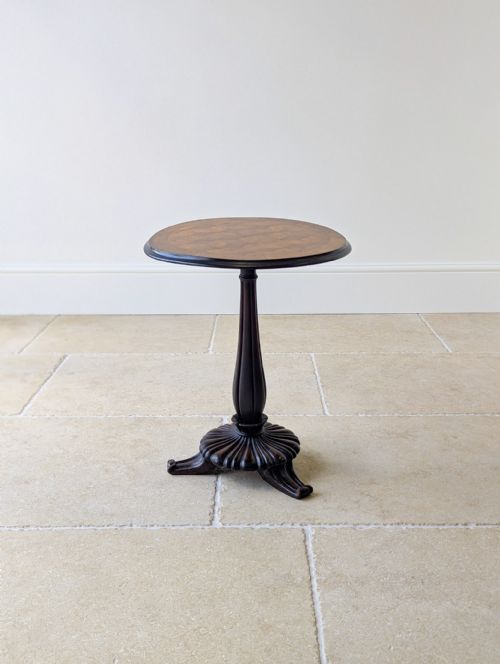
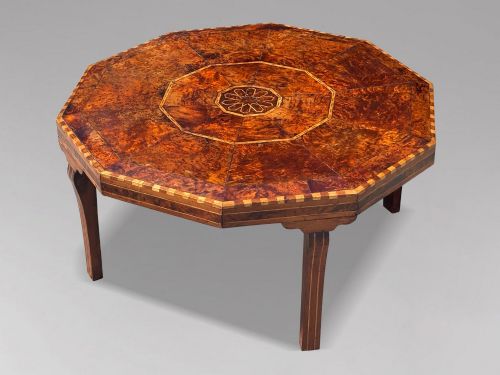
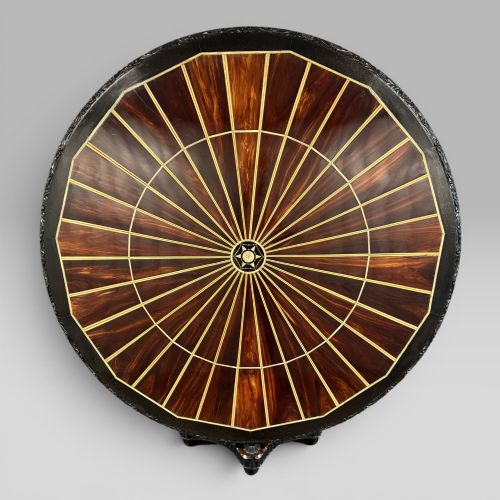
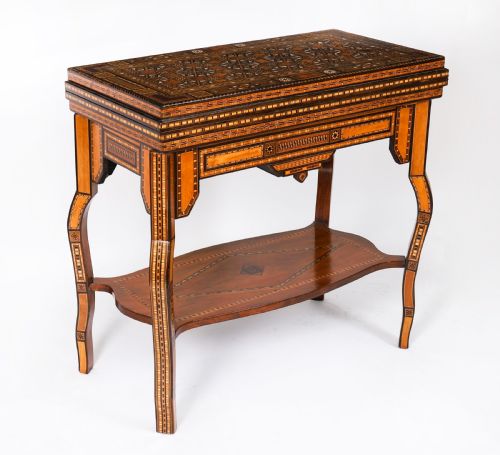
Victorian Parquetry Table
A victorian parquetry table brings geometric wood-block patterns into nineteenth-century interiors, offering intricate surfaces designed for writing, games, and display.
Victorian Parquetry Table
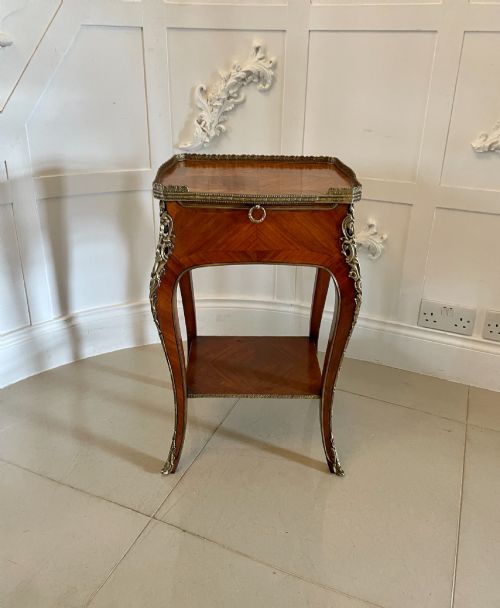
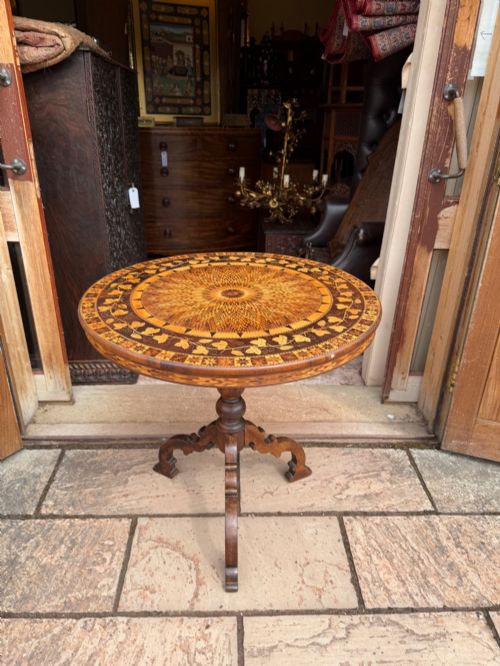
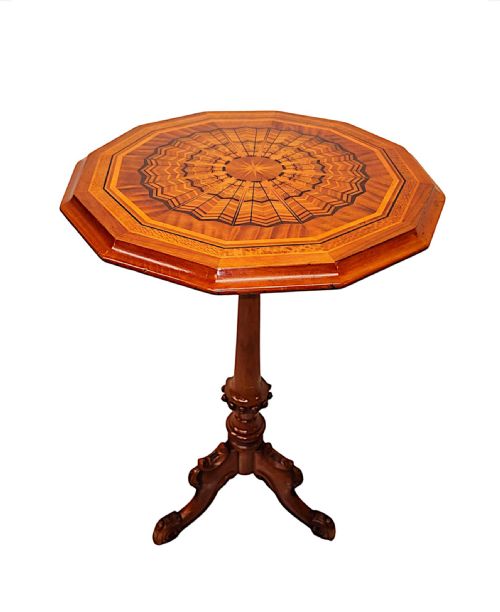
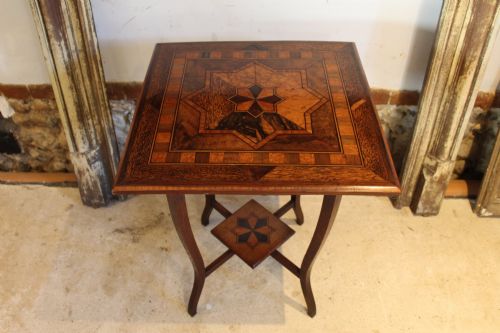
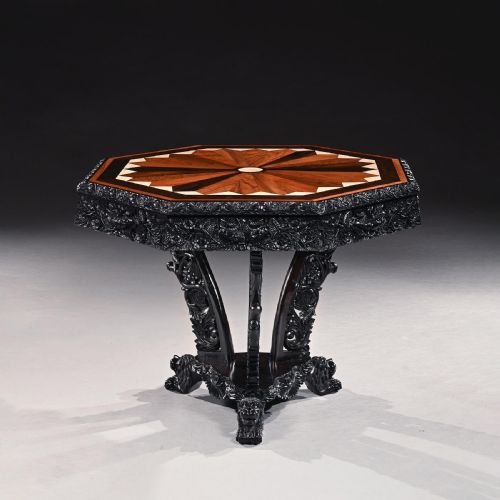
A victorian parquetry table appears across various nineteenth-century forms, ranging from compact occasional stands and lamp tables to larger centre tables, writing desks, and folding games tables designed for cards and chess.
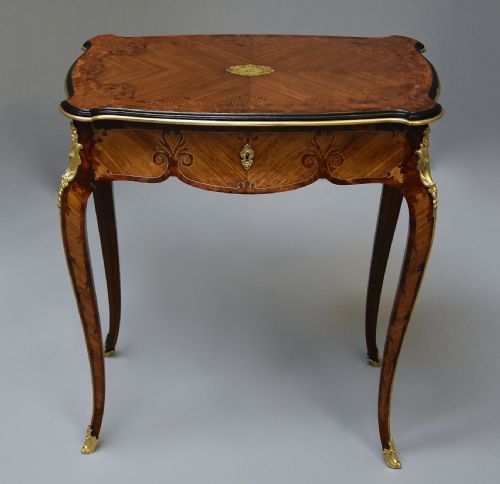
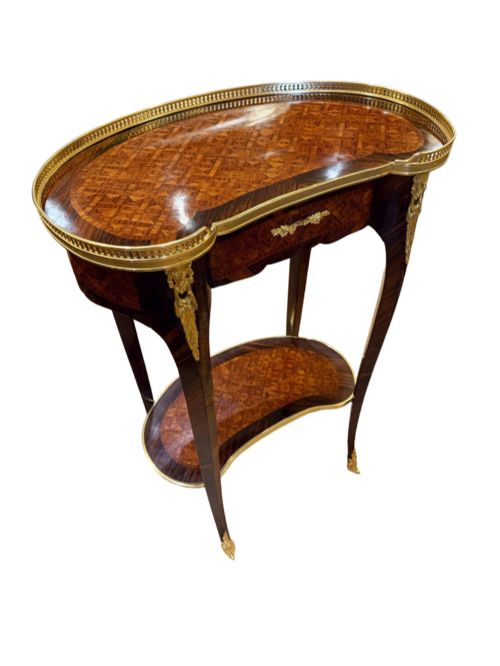
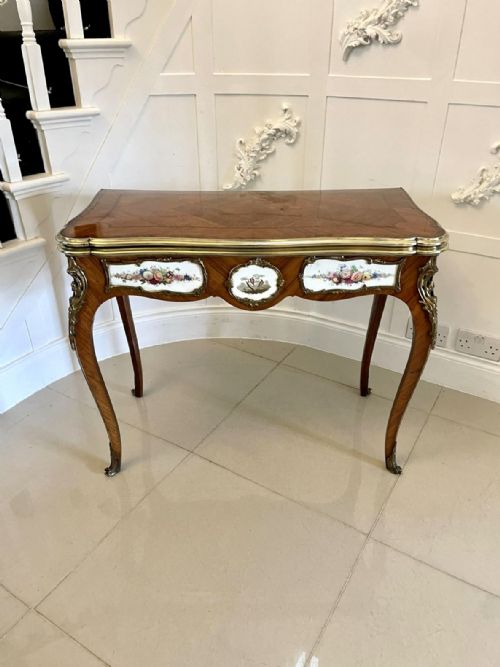
Many examples draw on continental revival aesthetics, including Louis XV and Louis XVI styles, alongside English cabinet-making traditions utilising rich timber veneers.
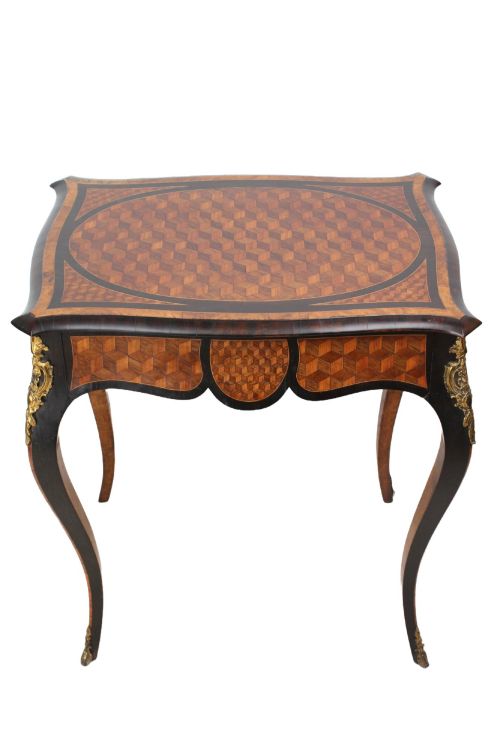
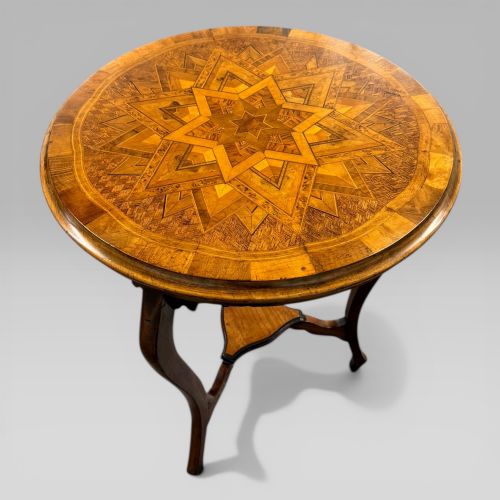
The defining characteristic remains the geometric mosaic top, constructed from precisely fitted wood tiles that create cubes, stars, and interlocking cube patterns.
Materials and Construction
Cabinet-makers relied on dense tropical and European hardwoods, frequently selecting kingwood, rosewood, walnut, satinwood, and mahogany to provide contrasting natural tones for the geometric inlay.
Workshops combined solid timber framing with intricate veneer work, sometimes mounting the resulting tables on turned pedestals or embellishing the framework with cast ormolu mounts and brass details.
Listings feature walnut, kingwood, rosewood, and satinwood across the nineteenth-century period.
Assessing the Standard
Makers identified with exhibition-standard output utilised sophisticated mechanisms, substantial secondary carcases, and intricate multi-wood borders that integrated seamlessly into the structural design.
JAS Shoolbred·Gillows·Anton Seuffert·G T Morant·Collingson & Lock·Donald Ross·Howard & Sons
The Victorian Parquetry Table Glossary
- Parquetry
- Geometric mosaic woodwork formed by fitting small pieces of veneer together to cover a surface, typically creating cubic illusions or repeating patterns.
- Marquetry
- The art of applying decorative pieces of veneer to a structural structure to form pictorial or scrollwork designs, frequently combined with geometric parquetry.
- Ormolu
- Gilded bronze mounts and decorative feet applied to nineteenth-century furniture frames, particularly prevalent on pieces influenced by French revival styles.
- Kingwood
- A dense, heavily figured Brazilian timber with dark violet-brown tones, widely utilised by nineteenth-century makers for high-end geometric veneering.
- Bonheur Du Jour
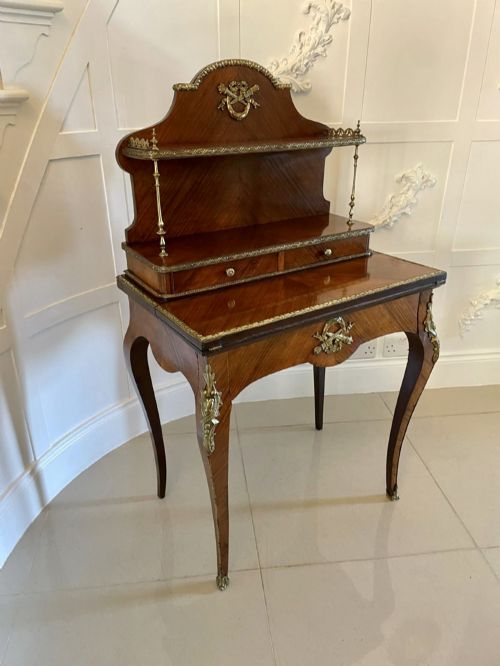
- A small ladies writing desk featuring a raised superstructure with small drawers and compartments above the main work surface.
Victorian Parquetry Table: Frequently Asked Questions
What is a parquetry table?
A parquetry table is a nineteenth-century furniture piece featuring a decorative top constructed from small, geometric wood tiles arranged in patterns such as cubes or zig-zags. These tables served various domestic functions, acting as writing desks, card tables, and decorative lamp stands.
Cabinet-makers used contrasting timbers to create three-dimensional optical illusions across the surface. The technique requires immense precision to ensure the timber segments fit tightly together without gaps.
How were these tables used originally?
Nineteenth-century households utilised these tables for specific social rituals, including letter writing, sewing, and evening games like chess and backgammon. Many designs incorporate folding leaves, hidden compartments, or built-in storage boxes beneath the decorative top.
Smaller occasional and lamp tables were easily moved around drawing rooms to hold decorative objects or lighting. Larger centre tables stood prominently in entrance halls or principal reception rooms as focal points.
How do I care for a nineteenth-century wood table?
Protecting nineteenth-century polished veneer requires maintaining stable room humidity away from direct heat sources and strong sunlight, which can dry out and fade exotic timbers. Regular dusting with a soft, dry cloth preserves the finish without abrasive cleaners.
Using coasters and mats prevents moisture rings and heat damage on the delicate wood surface. Wax can be applied sparingly to nourish the grain if the polish begins to look dry.
How can I tell the period of a parquetry table?
Dating relies on examining the construction methods, secondary timbers used in the carcase, and stylistic indicators such as revival motifs or specific maker signatures. Mid-nineteenth-century examples often feature French influences, while later pieces adopt specific British cabinet-making signatures.
Hardware, drawer linings, and the type of veneer backing provide further clues to the decade of manufacture. Comparing the piece against documented archive examples helps confirm the production era.