
Vintage Weather Instrument
These vintage weather instrument pieces bring historical observation into domestic spaces, offering brass dials, carved woods and delicate glass for practical study and display.
Vintage Weather Instrument
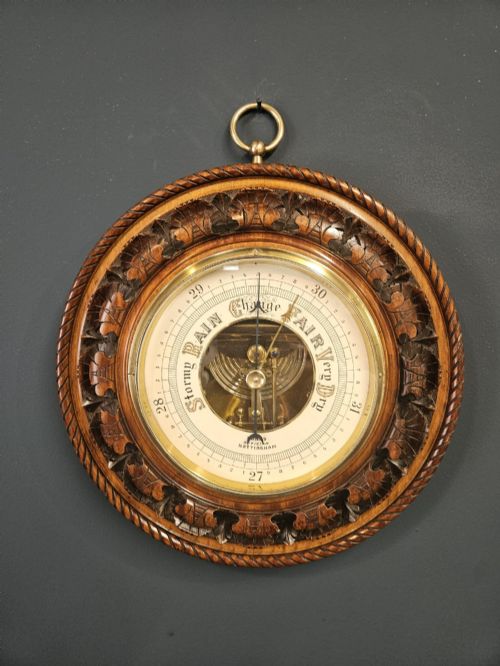
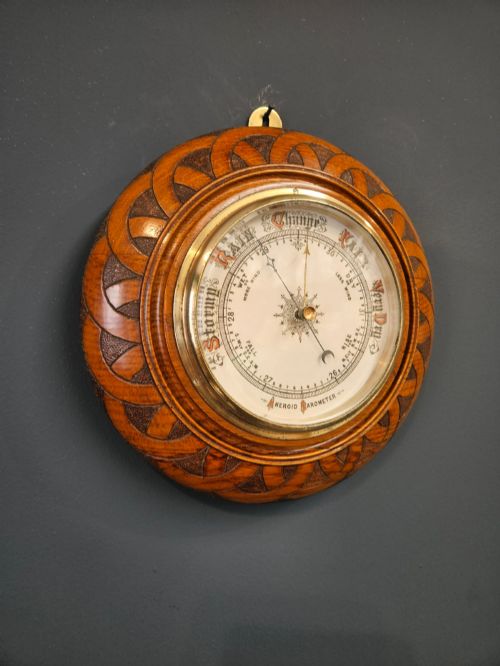
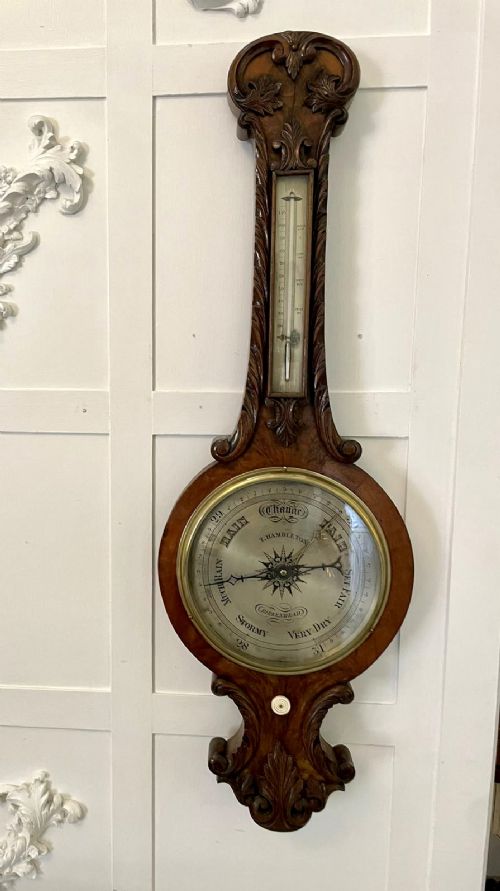
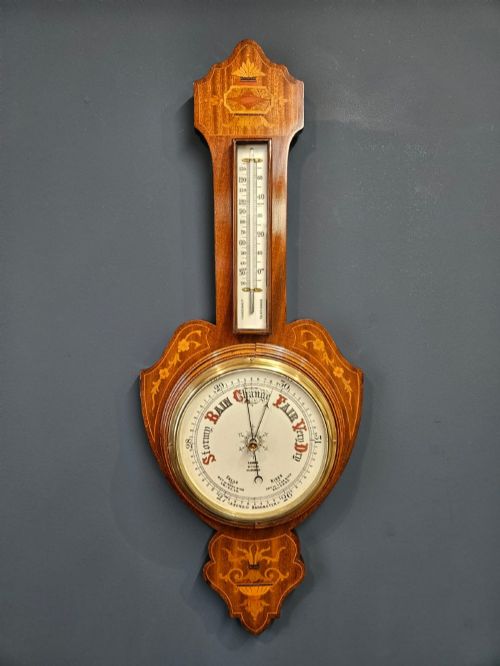
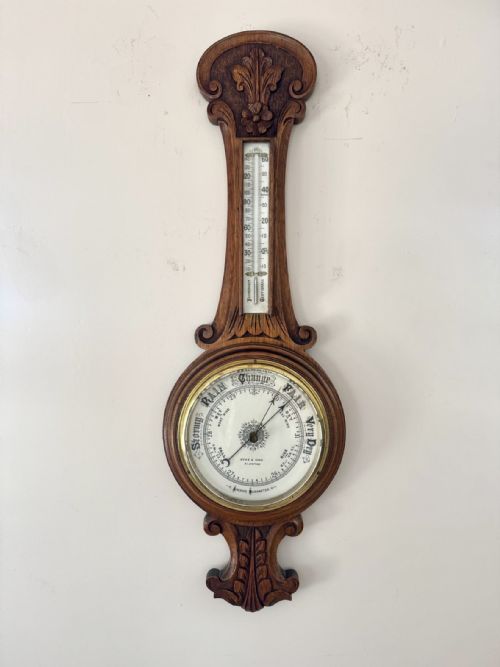
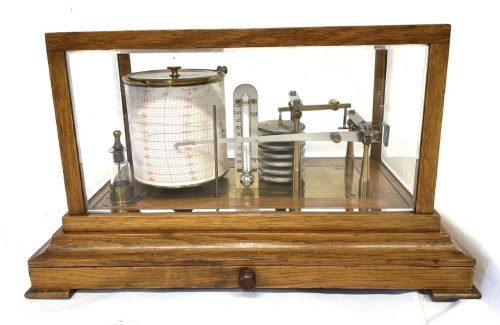
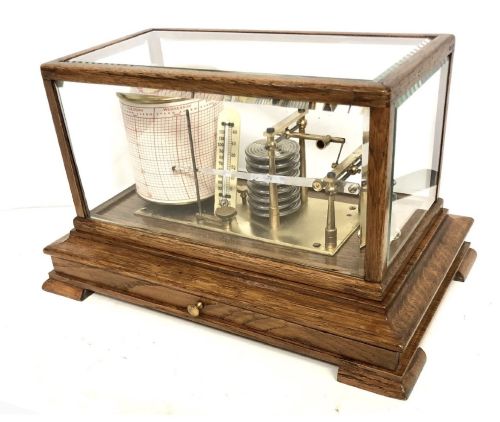
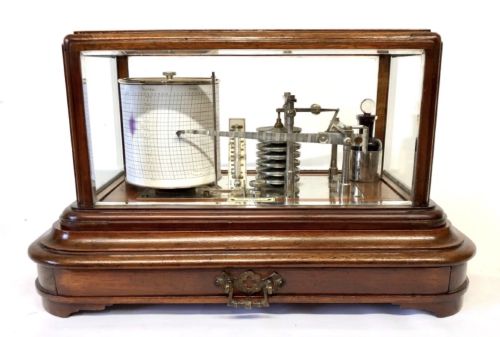
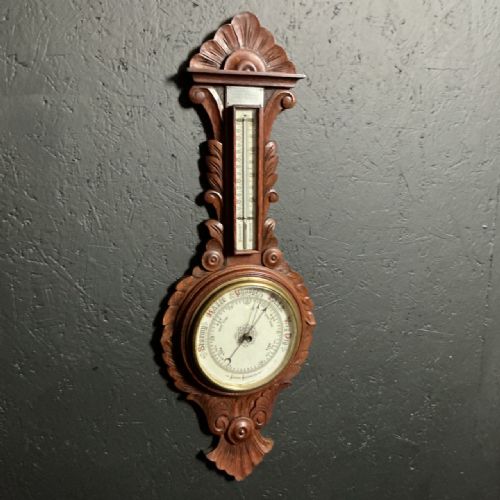
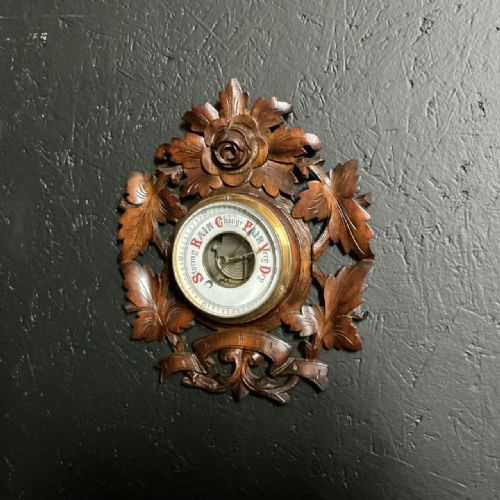
A vintage weather instrument encompasses barometers, barographs, hygrometers and anemometers originating from Georgian, Victorian, Edwardian and Art Deco periods. Domestic interiors typically house wall-mounted banjo barometers, oak or mahogany cased barographs, and portable pocket barometers designed for travel or maritime use.
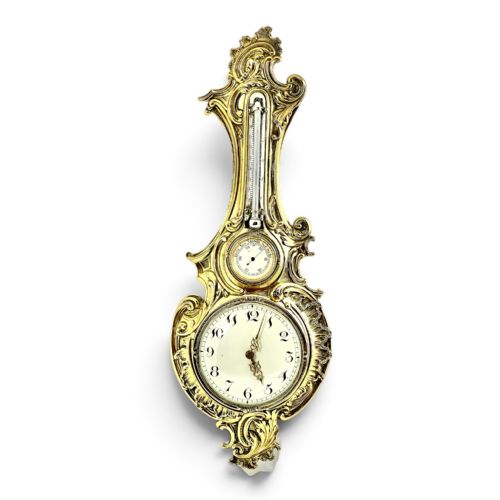
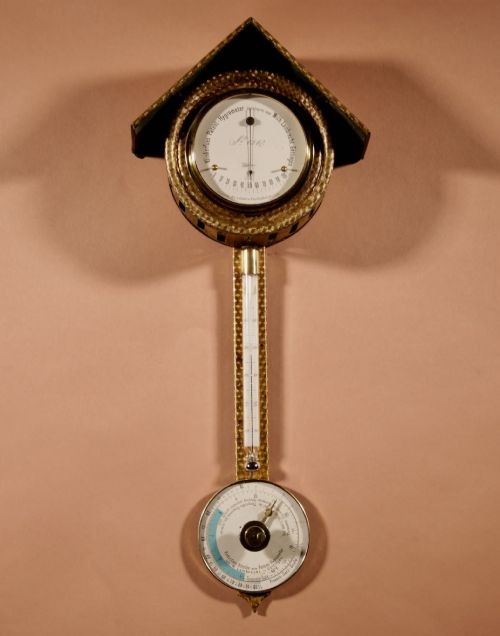
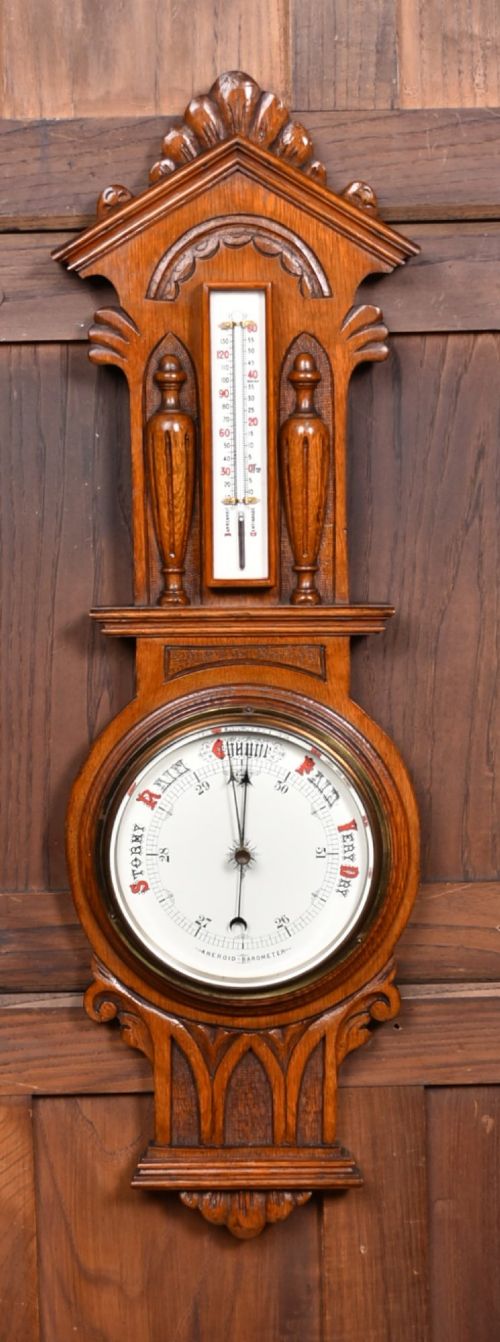
Makers such as Negretti & Zambra and Short & Mason dominate the scientific output alongside Black Forest carvings and inlaid Edwardian woodwork. Buyers meet everything from complex weather stations combining thermometers and clocks to simple oak-cased barometers intended for hallway display.
Materials and Construction
Carpenters shaped dense timbers like oak, mahogany, burr walnut and carved Black Forest wood to house sensitive internal movements. Brass, steel and silver gilt components interact with bevelled glass viewing panels and inscribed paper charts.
Makers integrated aneroid mechanisms, hair hygrometer strands and mercury columns into sturdy wooden chassis or metal pocket cases. Inlay work, silvering on dials and delicate needle assemblies demonstrate precise mechanical and decorative assembly.
Vintage Weather Instrument Retail Price Guide 2026
Typical asking prices for vintage weather instrument among the pieces listed under this phrase on Sellingantiques today, from the lower quarter to the upper quarter. They describe what is for sale here now, not the wider market.
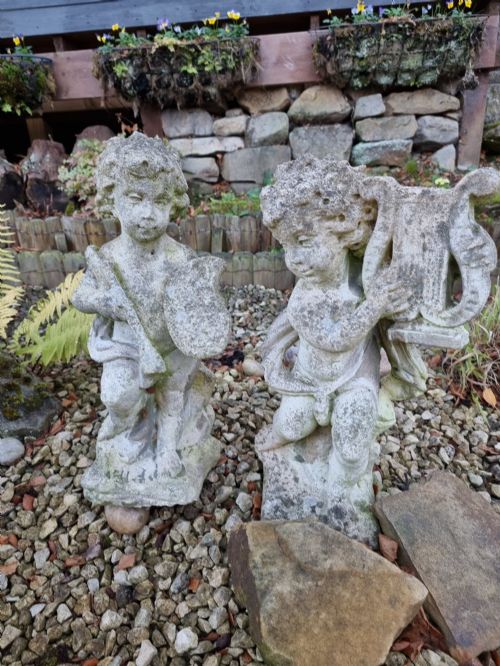
Garden cherub statues occasionally keep watch over the atmospheric pressure.
Distinctions in Execution
Superior examples demonstrate crisp execution in the timber carving, such as elaborate Victorian scrollwork or clean Edwardian inlay, alongside finely engraved brass scales. Lesser pieces rely on plain turned frames with standard printed card dials.
Renowned scientific makers achieve higher standards through robust mechanical gearing, bevelled glass plates and signed movements that maintain precision. Generic or unsigned items lack the specialised engineering found in signed pieces by established instrument makers.
Negretti & Zambra·Short & Mason·Hyde & Sons Sleaford·Wilh. Lambrecht·Poulenc Freres·J Hicks of London
The Vintage Weather Instrument Glossary
- Barograph
- A self-recording barometer that traces atmospheric pressure onto a rotating paper chart housed in a glass and wood case. These instruments run on clockwork mechanisms.
- Aneroid Barometer
- An instrument measuring atmospheric pressure without liquid, using a flexible metal box that expands or contracts with pressure changes. The movement connects to a dial pointer.
- Hygrometer
- A device measuring humidity in the air utilising materials like human hair or wet and dry bulb thermometers. Saussure hair hygrometers appear frequently in nineteenth-century scientific collections.
- Anemometer
- An instrument that measures wind speed and force through rotating cups or pressure plates. Examples include pedestal and pattern designs by specialist makers.
- Stick Barometer
- A vertical barometer containing a long glass tube filled with mercury against a calibrated scale. Georgian and Regency makers housed these in slender mahogany trunks.
Vintage Weather Instrument: Frequently Asked Questions
How do I read a barograph?
A barograph records pressure trends onto a paper chart fitted around a rotating drum driven by a clockwork movement. The pen arm moves up or down following the expansion of the aneroid metal box inside.
By observing the ink line over several days, you can track weather patterns and impending storms without relying on a single daily reading.
Where should I place a barometer?
Wall-mounted barometers and weather stations suit interior spaces away from direct heat sources and damp windows. Hallways and studies provide stable ambient temperatures essential for accurate mechanical response.
Ensure the instrument hangs securely from a sturdy wall fixing, as heavy oak and mahogany cases require solid support.
What is a pocket barometer used for?
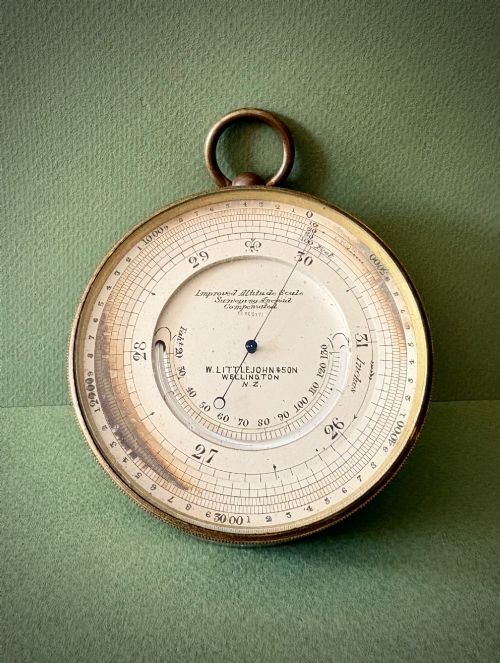
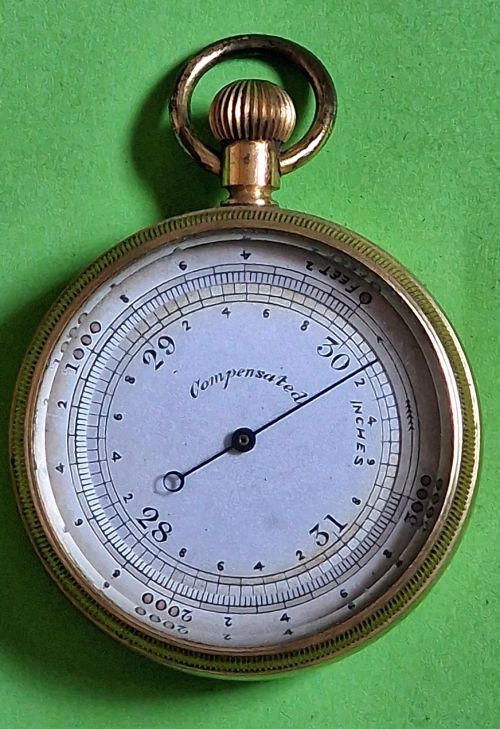
Pocket barometers served travellers, mountaineers and mariners who required portable pressure measurement for altitude estimation and weather forecasting. Many arrived in fitted leather cases for field transport.
These compact instruments often combined altitude scales with standard barometric pressure readings on silvered brass dials.
How do I distinguish Victorian from Edwardian styles?
Victorian weather instruments often feature dark carved walnut, heavy architectural proportions and ornate Rococo revival details. The craftsmanship leans toward dense ornamentation and visible mechanical complexity.
Edwardian pieces introduce lighter oak timbers, simpler geometric lines, and delicate inlay work that reflects changing domestic tastes of the early twentieth century.