
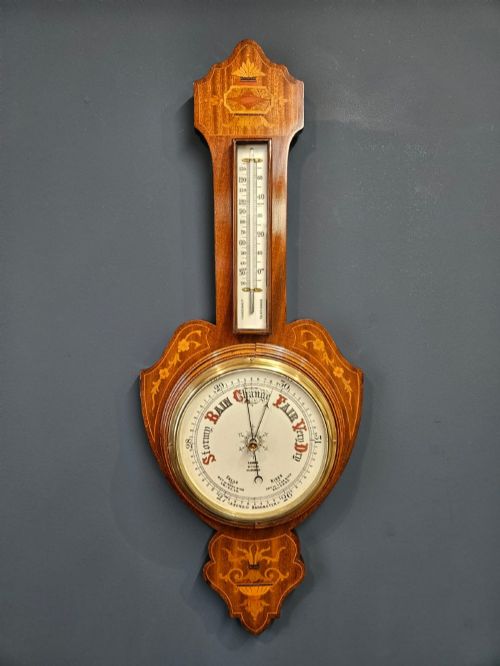
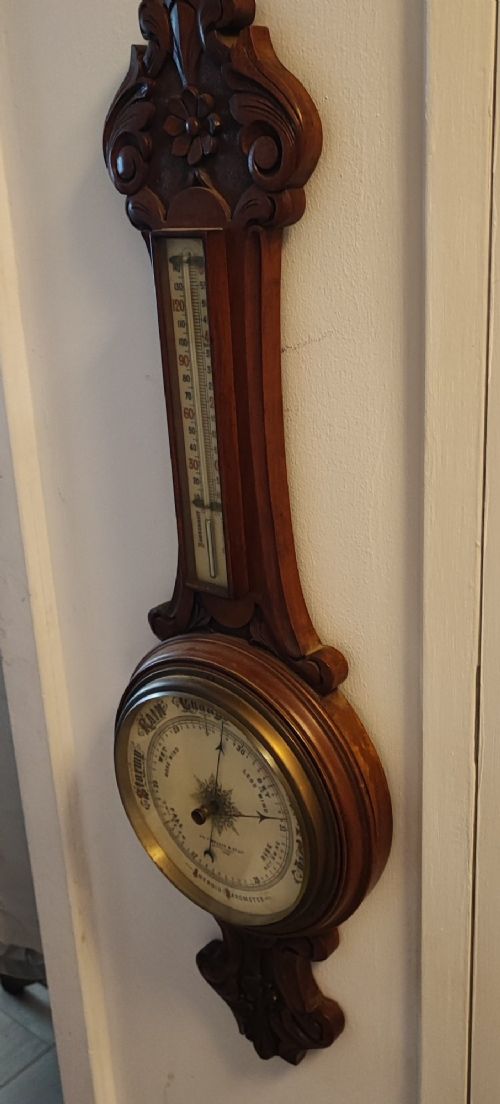
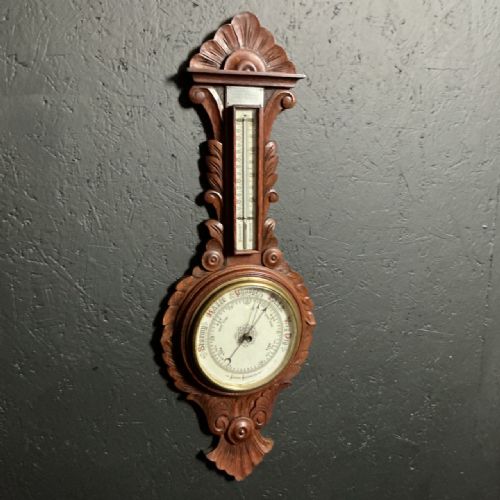
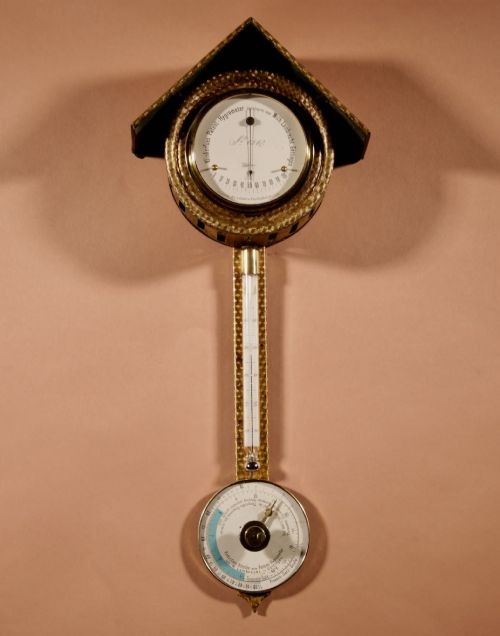





Brass Wall Barometer
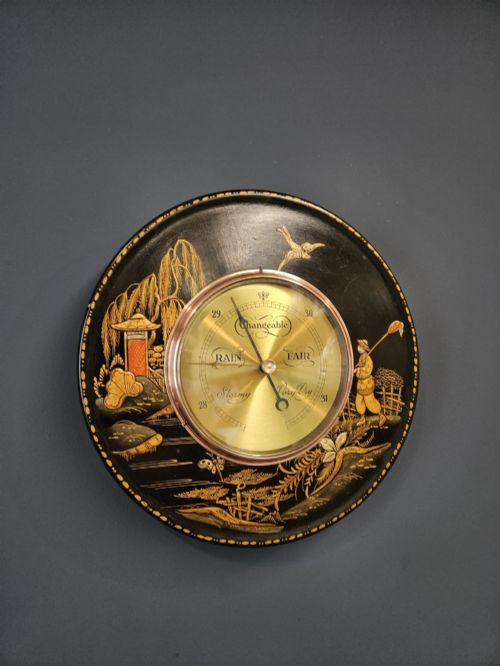
These brass wall barometers measure atmospheric pressure with precision while bringing polished metal and timber into any room.
What brass wall barometers are
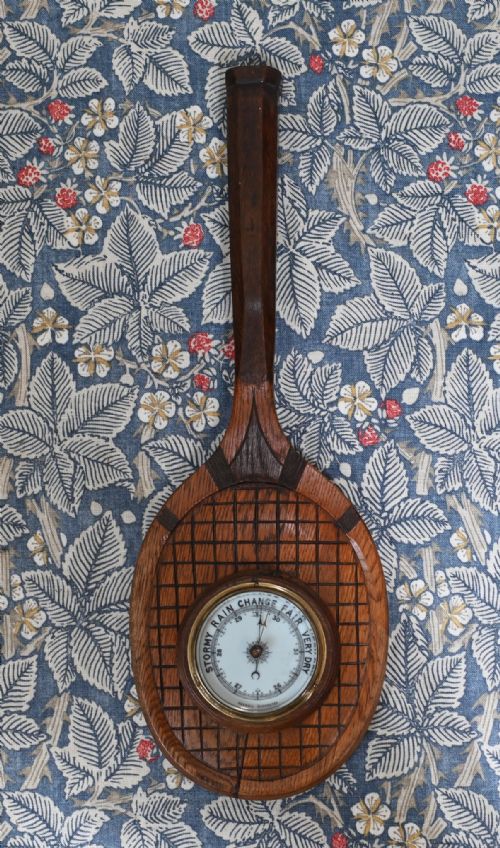
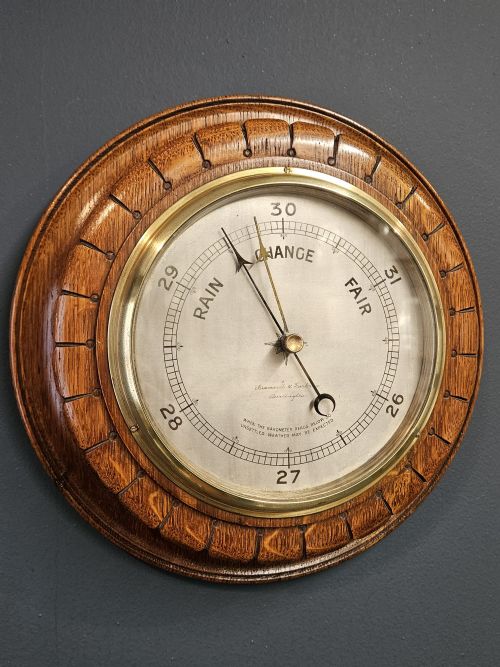
A brass wall barometer is an instrument designed to hang on a partition or panel, using brass casings to house its internal mechanism. These pieces record changes in atmospheric pressure to help forecast the weather.
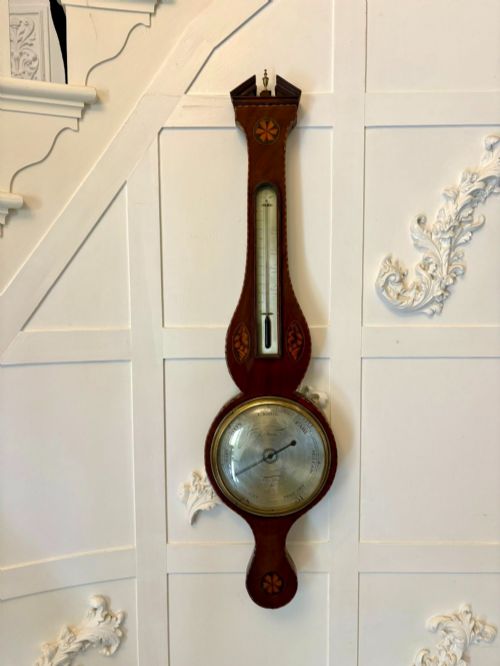
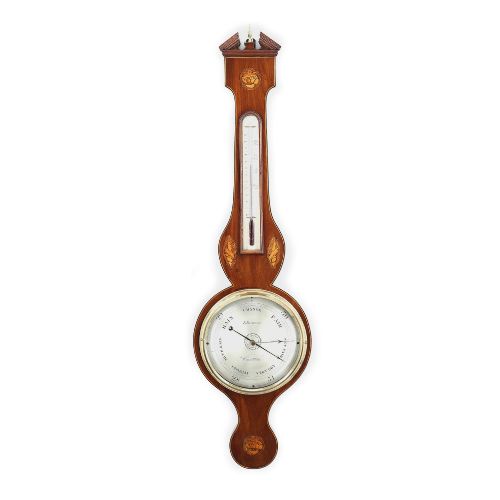
The selections available here span the Regency and Victorian periods, including George IV examples. Forms range from wheel barometers and stick barometers to desktop or wall marine variants.
Makers such as Elliott Brothers, Negretti & Zambra, Watkins, and H Marks appear across the records. Materials combine brass and glass with enamel dials and mahogany or oak backings, sometimes incorporating bone details.
How they were made
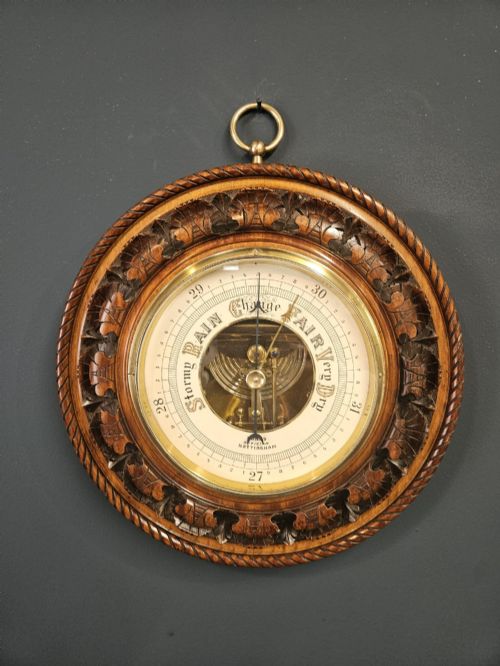
Casings utilise solid brass turned and polished to house the delicate movements, paired with protective glass viewing faces. Enamel dials provide a clear surface for numerical scales and maker inscriptions.
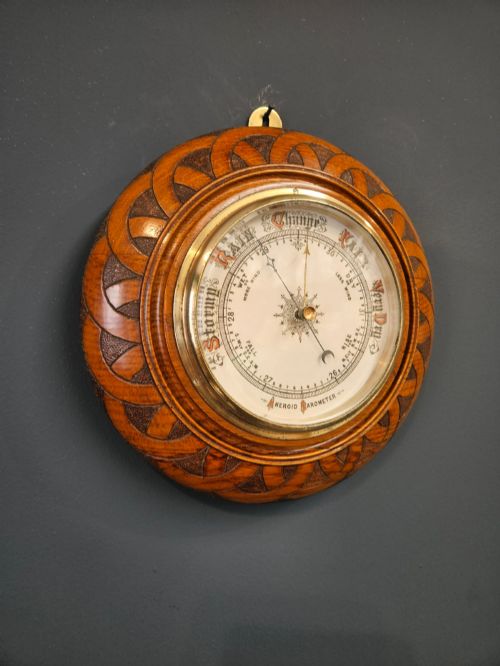
Backings and frames employ timbers such as mahogany and oak, shaped into stick cases or circular wheel configurations. Bone details appear on select components for graduation marks or adjustment indicators.
Retail Price Guide 2026
Typical UK retail prices for brass wall barometer, calculated from the Sellingantiques database of over a million retail prices indexed since 2003. This retail price guide relies exclusively on Sellingantiques data; no external sources or auction records are used, so the figures do not describe the wider market.
Listings span the Regency and Victorian periods, incorporating materials such as brass, glass, enamel, mahogany, oak, and bone.
What varies in quality
Quality rests in the crispness of the brass casting and the legibility of the enamel dial markings. Finer instruments display precise division on the scale and clean engraving on maker plates.
The selection of timber housing dictates structural refinement, where well-figured mahogany or oak elevates the object. Maker attribution also separates standard production items from signed workshop pieces.
Elliott Brothers·Negretti & Zambra·Watkins·H Marks
The Brass Wall Barometer Glossary
- Aneroid barometer
- An instrument that measures air pressure without liquid using a flexible metal capsule. This design allows instruments to be mounted on walls or desks in various orientations.
- Stick barometer
- A tall, narrow instrument containing a vertical tube of mercury to measure pressure. These forms represent early scientific precision in domestic interiors.
- Wheel barometer
- A dial barometer where movement changes are translated via a pulley and cord to a pointer on a circular face. The mechanism sits inside a wider wooden frame, frequently styled in the Regency taste.
- Enamel dial
- A fused glass surface on metal used to display numbers and text cleanly. These faces resist tarnishing and maintain readability over centuries.
- Marine barometer
- An instrument built to compensate for the motion of a ship at sea. These pieces often feature gimbal mountings and robust brass protective housings.
Frequently Asked Questions
How do I hang a brass wall barometer?
Secure a strong screw or hook into a wall stud or use appropriate wall anchors capable of supporting the weight of the timber and brass casing. Hang the instrument firmly at eye level away from direct heat sources.
Ensure the barometer hangs completely vertical so internal mechanisms move without friction. Adjust the setting pointer using the central glass knob to match current local weather readings.
What is the difference between a wheel and stick barometer?
A stick barometer displays pressure vertically through a long mercury column housed in a narrow wooden trunk. It represents a traditional and direct scientific approach to reading atmospheric changes.
By contrast, a wheel barometer translates movement through a mechanical pulley onto a round dial face. This circular format allows for decorative framing suited to period interiors.
How do I clean brass barometer cases?
Dust the brass surfaces regularly with a soft, dry cloth to prevent grime accumulation. Avoid harsh chemical polishes that strip original patination from older metal.
Keep glass viewing faces clear using standard glass cleaner applied to a cloth rather than sprayed directly onto the instrument. Protect enamel dials from moisture and abrasive materials during maintenance.
How do I date a Regency barometer?
Examine the timber framing and dial layout for characteristics of the Regency period, which spans the early nineteenth century. Circular wheel configurations and specific mahogany veneers often typify this era.
Look for engraved maker signatures on the dial or scale plates. Matching these names and addresses against historical trade records provides precise dating.