


Brass Maritime Barometer
A brass maritime barometer brings the weight of the sea and the precision of the nineteenth century into any room.
Brass Maritime Barometer
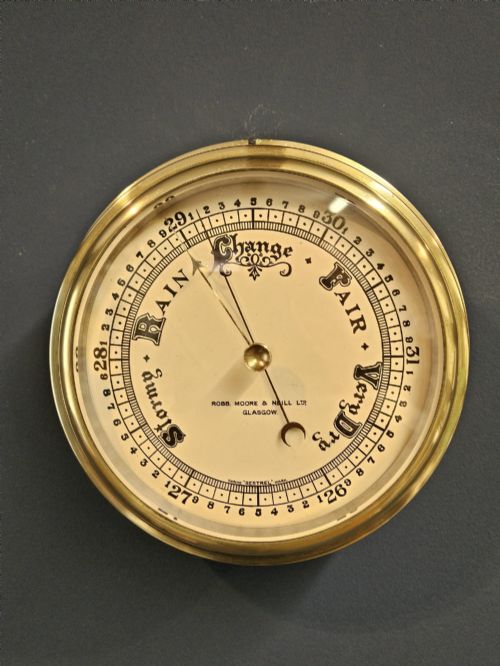
A brass maritime barometer is a weather instrument designed for sea or coastal use, housed in heavy metal and often mounted on rich woods like mahogany, rosewood, or oak. When you search for a brass maritime barometer, you are looking at instruments that trace weather shifts across the nineteenth and early twentieth centuries, from the Georgian era through to Edwardian times.
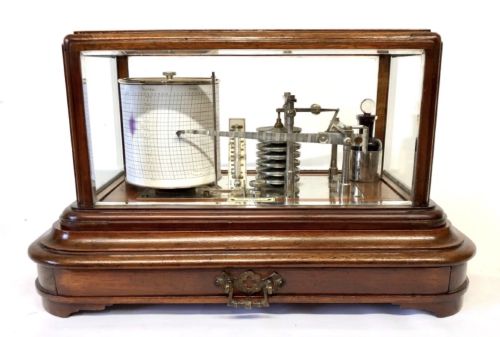
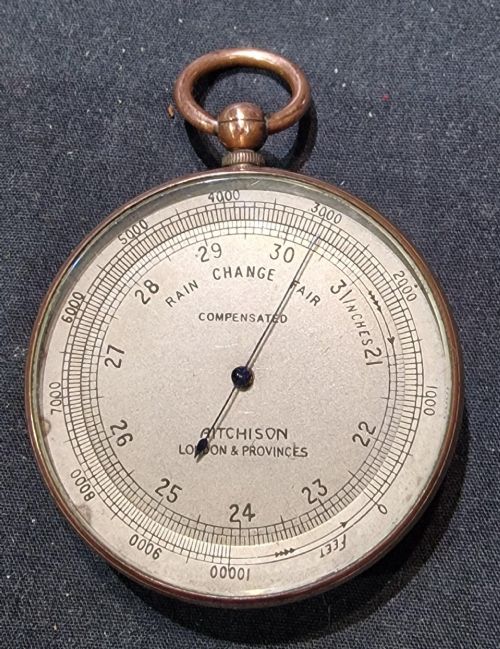
The versions you are most likely to meet on this page span Victorian marine stick barometers, aneroid dials, and specialised instruments like barographs or bulkhead pieces. Makers such as Elliott Brothers, Blake & Son, and M Pillischer supplied these precise instruments for ships and shore.
How they were made
These instruments combine heavy brass casings with turned wooden backboards in mahogany, rosewood, oak, or beechwood, protecting delicate internal mechanics. Silvered metal dials and glass faces display the barometric pressure readings clearly.
Maker signatures and retail locations are frequently engraved directly onto the silvered metal dials or brass bezels, alongside detailed vernier scales for accurate reading at sea.
Some models included warning needles you could manually set over the mercury column, allowing sailors to track whether the pressure had risen or fallen while they slept.
What varies in quality
Quality rests in the crispness of the engraved lettering on the silvered metal dial and the weight and casting of the brass bezel and case. Better examples retain their original mercury tubes in marine stick barometers or precise aneroid mechanisms signed by reputable makers.
The secondary woods and cabinetry also define the tier of the piece, where finely polished mahogany or rosewood mounts outlast simpler beechwood frames.
GAUPP & CO HONGKONG & SINGAPORE·Elliott Brothers·Blake & Son·M Pillischer·Gowland London
The Brass Maritime Barometer Glossary
- Aneroid barometer
- An instrument that measures air pressure without liquid, using a small flexible metal box called an aneroid cell. This design made barometers far more stable for use on moving ships.
- Marine stick barometer
- A tall, wall-mounted mercury barometer specifically housed in a gimbal or heavy wooden case to withstand the roll of a ship. These long tubes offer traditional mercury readings.
- Barograph
- A self-recording meteorological instrument that plots barometric pressure over time onto a rotating drum. They combine brass mechanisms with clockwork movements.
Brass Maritime Barometer: Frequently Asked Questions
What is a brass maritime barometer?
A brass maritime barometer is a weather-measuring instrument designed for navigation, featuring a sturdy brass housing and often mounted on woods like mahogany or oak.
These pieces range from traditional marine stick barometers to circular aneroid dials and barographs used during the Victorian and Edwardian eras.
How do I read a marine stick barometer?
You read a marine stick barometer by observing the height of the mercury column against the silvered metal scale. A vernier scale allows for precise measurement changes.
Rising mercury typically indicates improving weather, while falling mercury warns of approaching storms.
Where were these barometers made?
Many of these instruments were manufactured in London by established opticians and instrument makers such as Elliott Brothers or M Pillischer. Others bear signatures from merchants operating across global trade routes like Hong Kong and Singapore.
London workshops produced a significant proportion of the marine stick and aneroid barometers found today.
How do I care for a brass barometer?
Keep the brass case polished gently without using harsh abrasives that might wear away the original finish or engraved details. Protect the glass face and avoid placing the instrument in areas with extreme temperature fluctuations.
Ensure wall-mounted models are secured firmly to support the weight of the brass and hardwood backboard.