
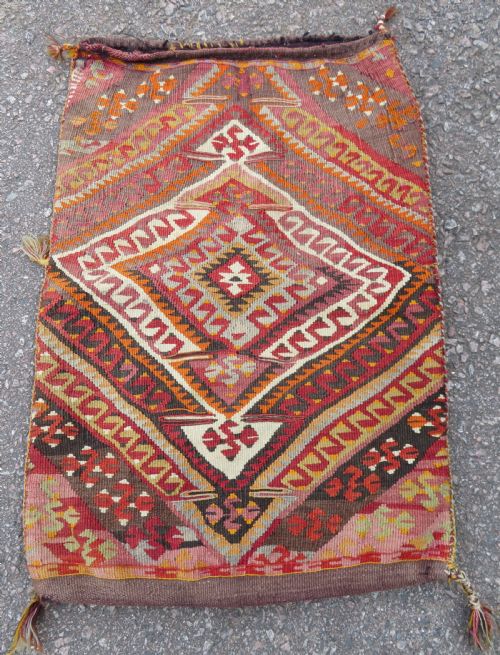


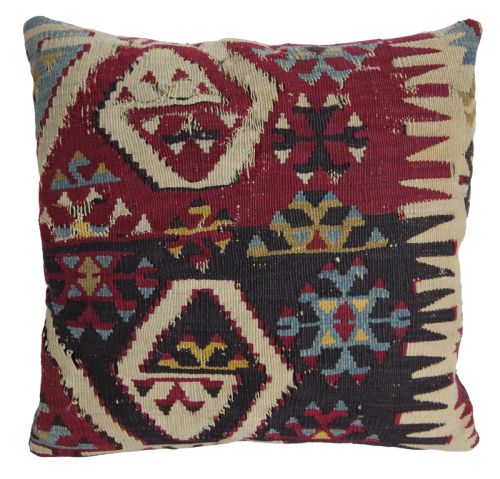


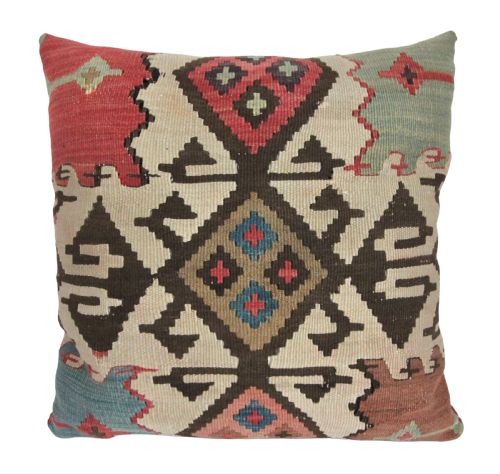
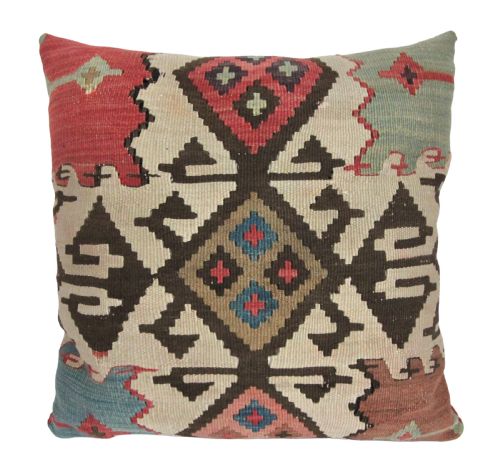


Vintage Turkish Rug Cushion
These vintage turkish rug cushion examples bring rich Anatolian warmth and texture to an interior through authentic, repurposed tribal textiles.
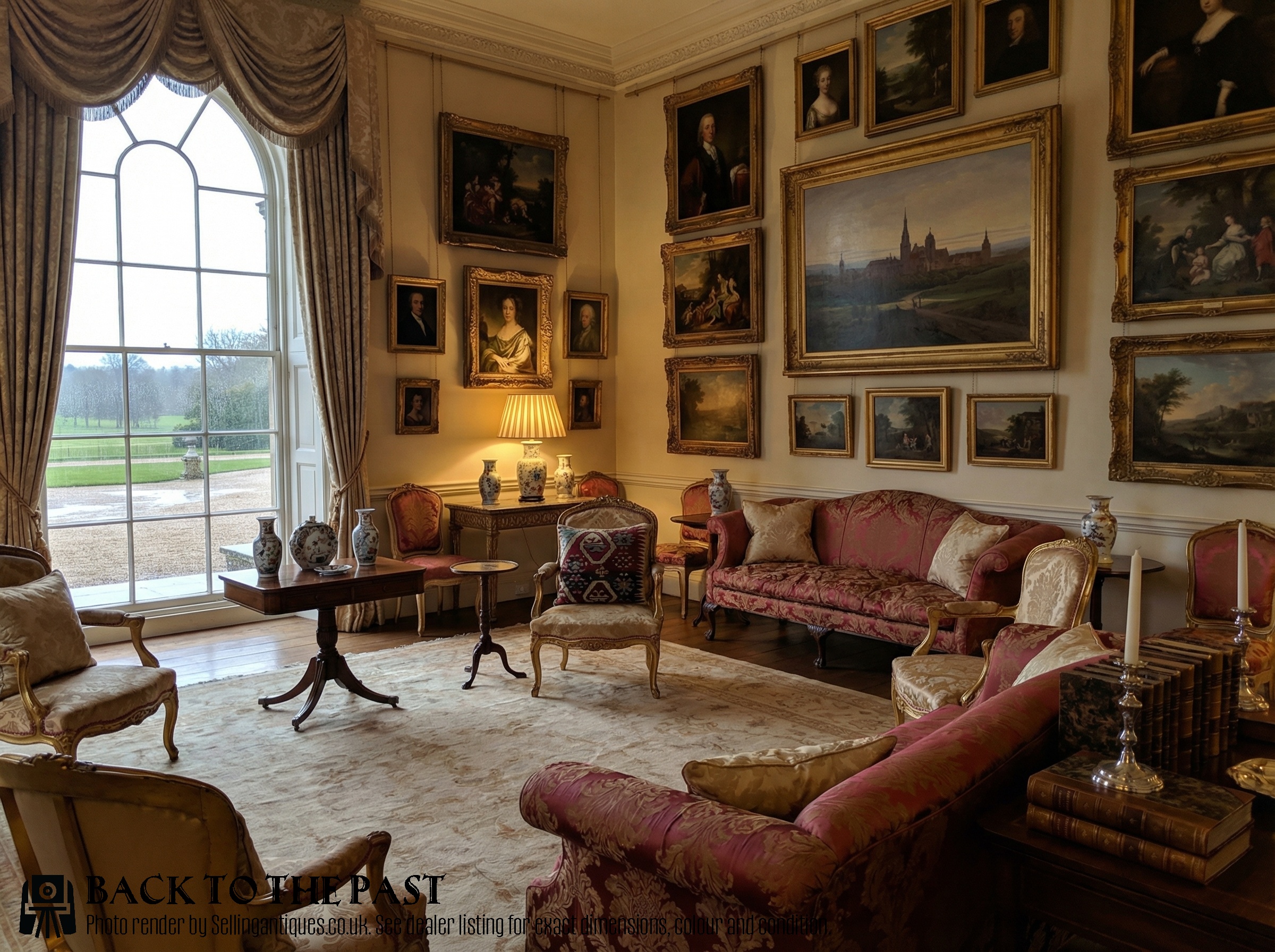
Vintage Turkish Rug Cushion
When you search for a vintage turkish rug cushion, you are looking at decorative soft furnishings fashioned from authentic, older flat-woven floor coverings and storage bags. The pieces available here consist primarily of antique kilim cushions alongside bag faces and Juval fragments dating from the mid nineteenth century to the early twentieth century.
These items originate from various Anatolian tribal and nomadic traditions, carrying distinct regional patterns woven generations ago. The most common form you will meet is the scatter-sized kilim cushion, which repurposes durable wool and cotton textiles into usable home accessories.
How they were made
The construction of a vintage turkish rug cushion begins with traditional hand-woven flatweaves produced by nomadic and village weavers. Artisans utilised durable wool and cotton yarns, often spun by hand and dyed using natural colourants before being woven on upright or horizontal looms.
What varies in quality
Quality in a vintage turkish rug cushion rests primarily on the integrity and age of the original textile source. Pieces featuring tightly spun wool, complex tribal motifs, and well-preserved natural dyes stand apart from simpler or later productions.
The degree of wear and the skill involved in the conversion process also influence the overall character of the piece. Superior examples maintain the vitality of their Anatolian designs without compromising the durability required for everyday seating.
The Vintage Turkish Rug Cushion Glossary
- Kilim
- An un-pile flat-woven carpet or rug produced in countries of the former Ottoman Empire, Persia and Central Asia. These textiles form the main face of most decorative cushions.
- Juval
- A large face bag or storage sack traditionally woven by nomadic tribes such as the Kurds for household storage. Their intricate designs are frequently repurposed into scatter cushions.
- Bag Face
- The decorative front panel of a tribal nomadic bag, harvested for its superior weaving and preserved as a smaller textile art piece. They bring dense iconography to cushion form.
- Anatolian
- Pertaining to the region of Asia Minor that constitutes the majority of modern Turkey. This area has a rich history of distinct tribal and village rug-weaving traditions.
- Flatweave
- A textile produced by interlocking warp and weft threads without knotting, creating a smooth surface. This technique defines the structure of kilims and related nomadic bag faces.
Vintage Turkish Rug Cushion: Frequently Asked Questions
How do I clean a vintage turkish rug cushion?
These wool and cotton textiles require gentle care to preserve their natural fibres and historic dyes. Professional specialist cleaning is strongly recommended over home laundering.
Regular light vacuuming with a low suction attachment helps remove surface dust. Avoid placing them in direct sunlight for prolonged periods to prevent colour fading.
Are these cushions made from authentic old rugs?
The pieces listed here are constructed from genuine antique textiles dating back to the nineteenth and early twentieth centuries. Artisans cut and repurpose fragments from older kilims and nomadic bags.
This gives worn or damaged rugs a second life as functional home decor. Each cushion retains the authentic patterns and materials of its tribal origins.
How do I date a vintage turkish rug cushion?
Dating relies on identifying the stylistic markers of the textile used for the face, such as traditional Anatolian tribal motifs. The specific weave structure and the character of the wool or cotton yarns provide further clues.
Pieces originating from the mid nineteenth century exhibit distinct regional colour palettes and spinning techniques compared to early twentieth-century examples.
How do I style these cushions at home?
These textured cushions work well as statement pieces on plain sofas, armchairs, or beds. Their tribal designs complement both contemporary minimalist interiors and rustic schemes.
Mixing different Anatolian patterns creates a layered, collected look. Ensure they are placed in areas with moderate seating traffic to balance daily enjoyment with textile preservation.