





Oriental Flatweave Pillow
These oriental flatweave pillow examples are antique and vintage cushions fashioned from hand-woven tribal textiles, offering authentic traditional texture for your home.

Oriental Flatweave Pillow
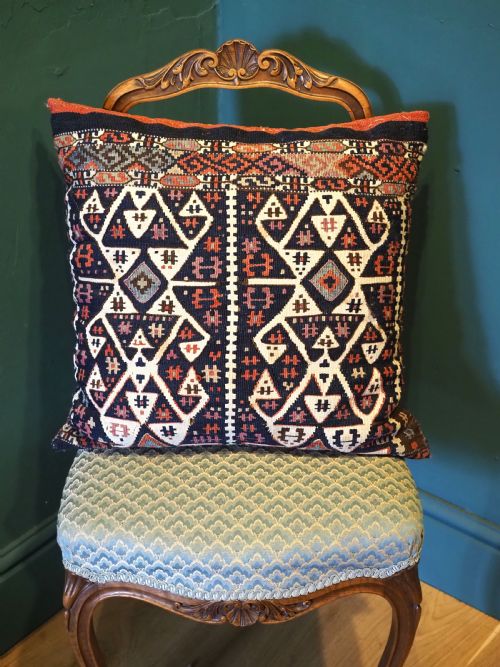
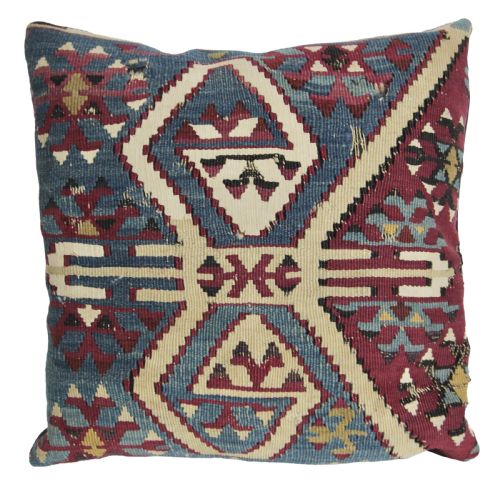
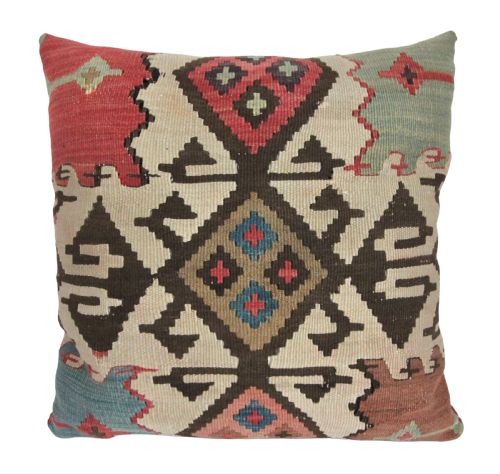
When you search for an oriental flatweave pillow, you are looking at antique and vintage cushions and throw cushions fashioned from older woven pieces. These items include Turkish Malatya saddle bag kilims, carpet cushions, and tribal bag face cushions.
The versions you are most likely to meet on this page span several decades, originating from periods such as 1850, 1870, 1900, and 1920. They repurpose traditional Anatolian tribal weaving into functional soft furnishings for contemporary interiors.
How they were made
The foundation of these cushions relies on traditional hand-woven techniques utilising wool and cotton. Artisans created flatweave textiles like kilims and saddle bags without a pile, producing durable fabrics with distinct geometric designs.
Older textile fragments and complete bag faces were subsequently adapted into cushions and soft furnishings. This method preserves historic weaving while transforming utilitarian tribal objects into decorative home accessories.
Materials utilised across these items are strictly limited to wool and cotton within the recorded evidence.
What varies in quality
Quality in these cushions is determined by the integrity of the underlying textile and the skill of the original hand-weaving. Earlier pieces from the mid-nineteenth century often display finer wool preparation and more complex tribal motifs.
The condition of the flatweave fabric and the fidelity of the traditional Anatolian designs also distinguish superior examples. Retaining authentic structural details from saddle bags and bag faces adds character and historical depth to the finished cushion.
The Oriental Flatweave Pillow Glossary
- Kilim
- A flatweave textile produced by tightly interweaving warp and weft strands without creating a pile. This technique results in a smooth, tapestry-like fabric.
- Saddle bag
- A utilitarian double pouch used by nomadic and tribal peoples for transport on animals. Fragments of these bags are frequently repurposed into cushions.
- Bag face
- The decorative front panel of a tribal storage sack. These panels are prized in flatweave cushions for their complete and balanced geometric compositions.
- Anatolian tribal
- Pertaining to the traditional nomadic and village weaving traditions of the region bridging Europe and Asia. Such pieces are known for distinctive regional patterns.
- Flatweave
- A textile category encompassing rugs and bags woven without knotted piles. It relies on the interlacing of vertical and horizontal threads.
Oriental Flatweave Pillow: Frequently Asked Questions
What is an oriental flatweave pillow?
An oriental flatweave pillow is a decorative cushion created from antique or vintage woven textiles such as kilims and saddle bags. These items repurpose traditional fabrics into functional home furnishings.
They bring historical Anatolian tribal patterns directly into modern living spaces as throw cushions and soft furnishings.
How old are these cushions?
The pieces available span several periods, with dates recorded from 1850, 1870, 1900, and 1920. Each cushion incorporates textiles originating from these specific eras.
Older examples date back to the mid-nineteenth century, while others represent vintage production from the early twentieth century.
What materials are used?
These cushions are constructed primarily from wool and cotton. The woven faces utilise traditional wool yarns, while backing materials and internal structures often involve cotton.
This combination provides both the authentic texture of historic flatweaves and the durability required for everyday soft furnishings.
Where do the designs originate?
The designs originate from traditional Anatolian tribal weaving traditions. They feature patterns typical of village and nomadic craftwork from the region.
Specific styles include traditional Anatolian, Anatolian tribal, and tribal bag face compositions.