
Vintage Tea Box
A vintage tea box brings craftsmanship to the table, offering a glimpse into how people stored dried leaves centuries ago.
Vintage Tea Box
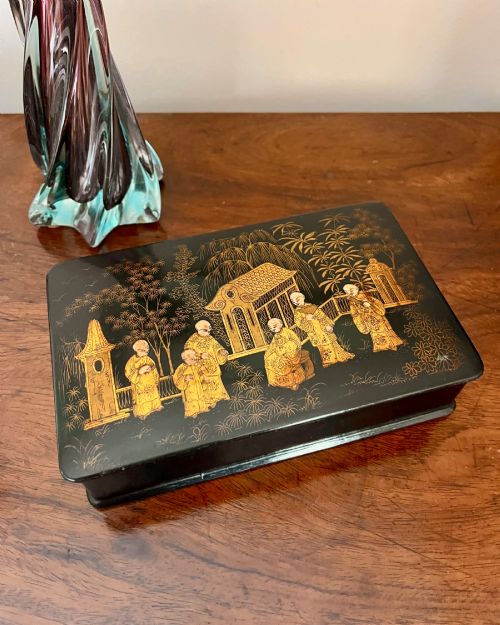
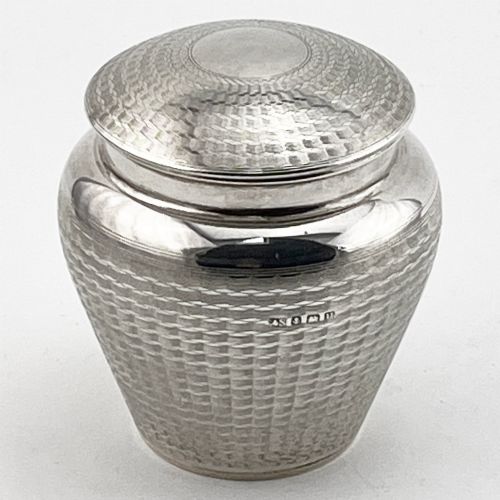
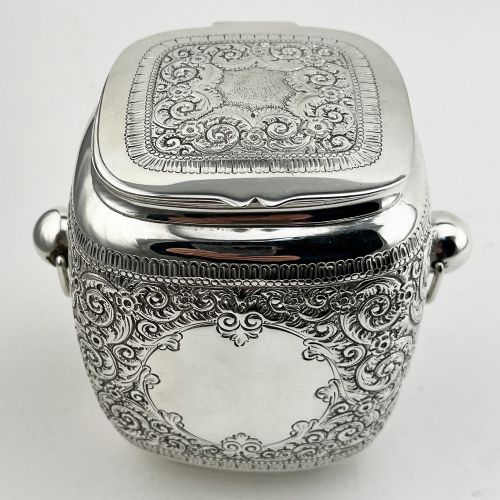
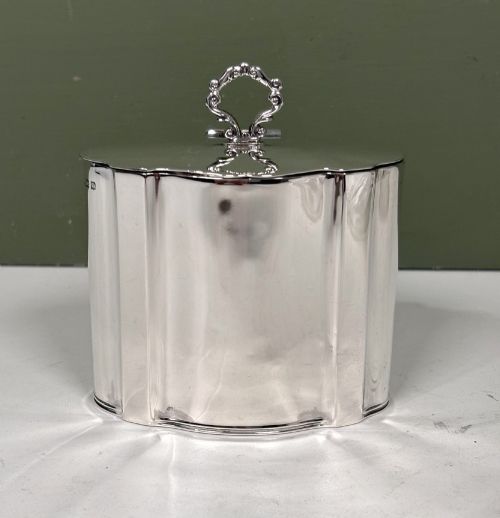
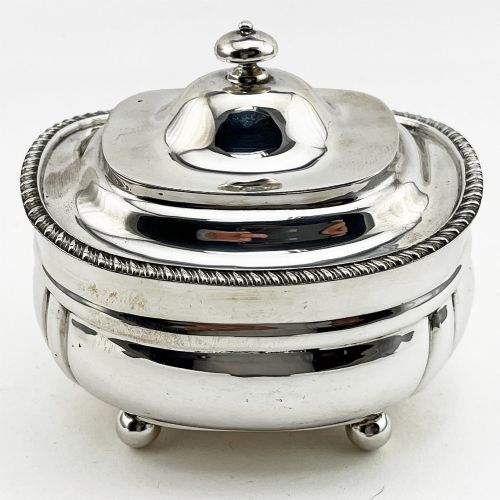
When searching for a vintage tea box, buyers encounter traditional wooden caddies alongside silver and ceramic vessels. These items served a practical purpose in period homes, keeping dry leaves secure and protected from moisture.
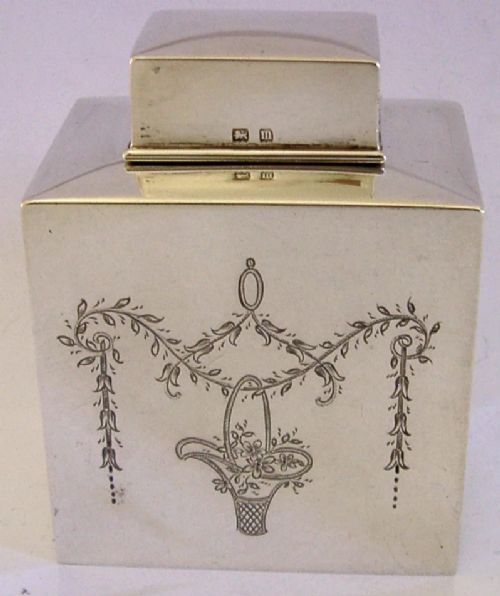
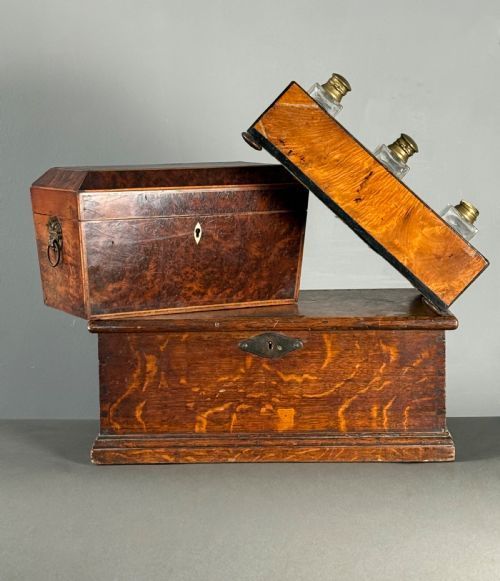
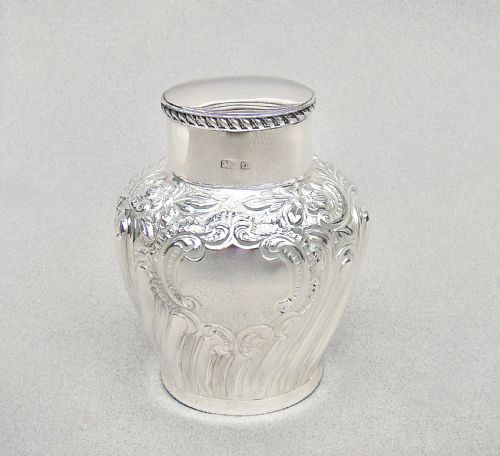
The selections span several historical eras, including Georgian, Victorian and Edwardian periods. Wooden examples often take the form of mahogany or walnut containers, while later pieces utilise sterling silver or silver plate.
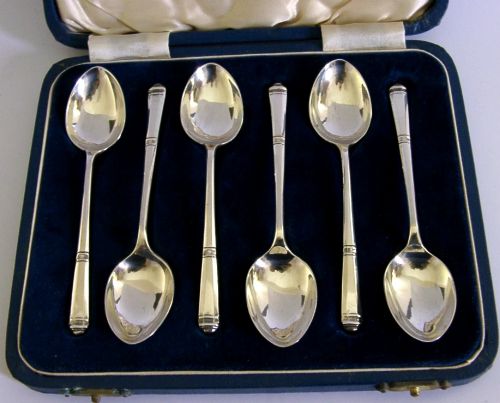
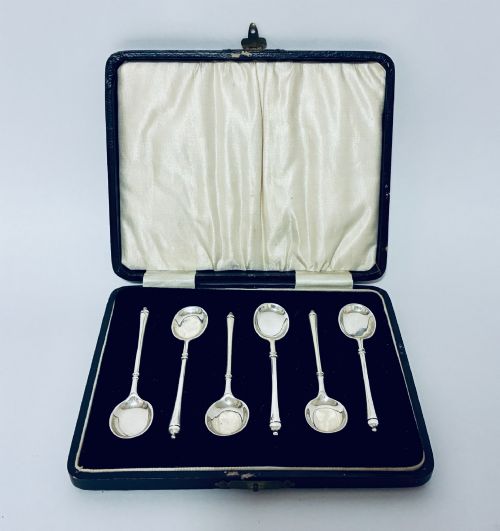
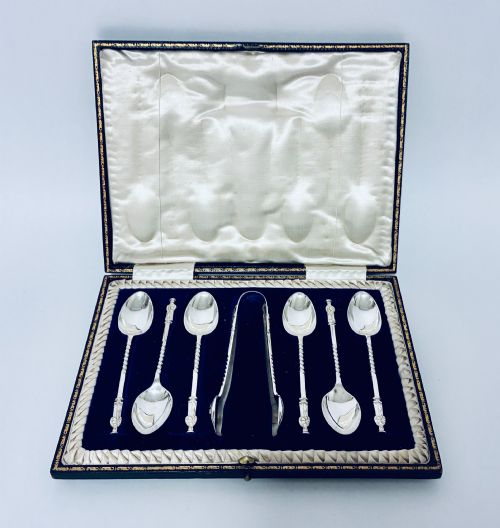
Many survivors retain internal compartments or fitted spaces for mixing leaves, reflecting the rituals of tea preparation. Alongside traditional caddies, the category includes biscuit barrels, decorative boxes and related silverware.
How they were made
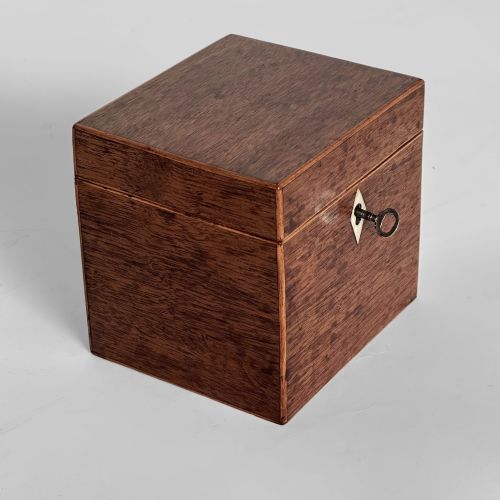
Cabinet makers utilised dense timbers such as mahogany, walnut and burr yew, often enhancing surfaces with contrasting stringing or intricate Tunbridge inlay. Carpenters shaped these woods into dome, cube or rectangular forms, fitting them with working locks and key escutcheons.
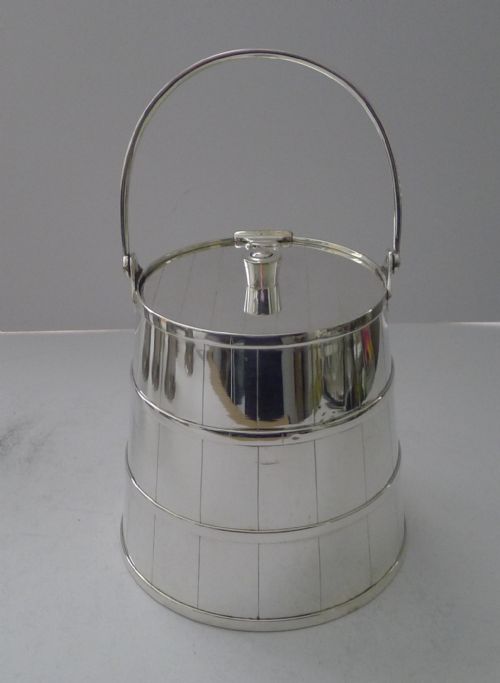
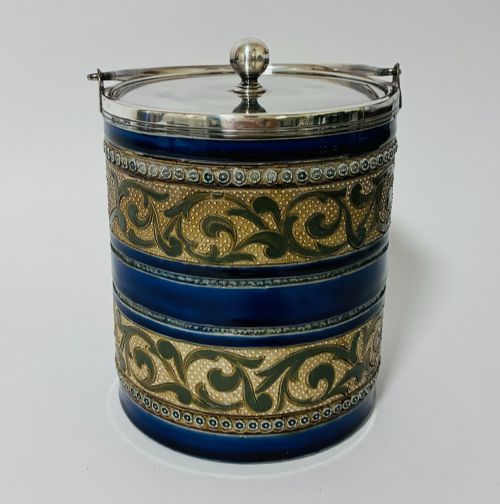
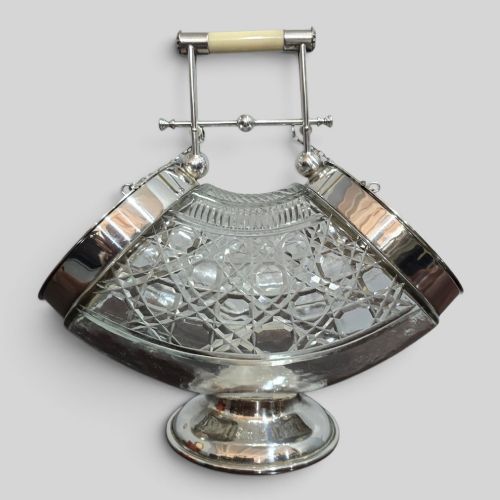
Metal versions relied on sterling silver and silver plate, shaped by silversmiths who added embossed details, lion mask handles or hinged lids. Ceramic biscuit barrels combined glazed bodies with plated mounts, bone fittings or applied mother of pearl elements.
Materials span sterling silver, silver plate, mahogany, walnut, bone, velvet and brass across multiple manufacturing decades.
What varies in quality
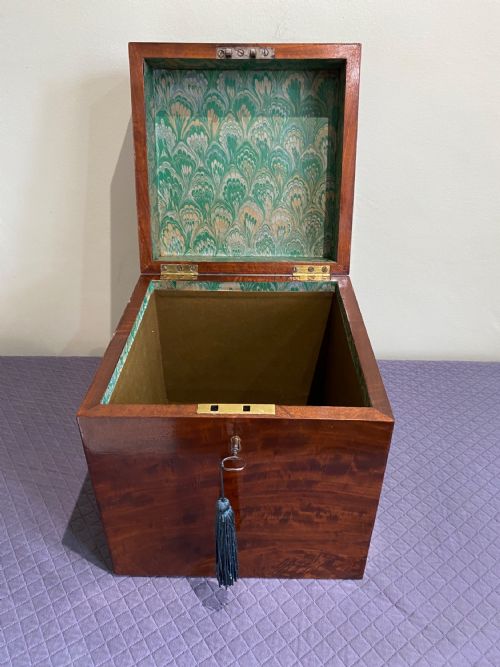
The standard of a vintage tea box depends heavily on the precision of its construction and the integrity of its materials. Fine examples exhibit tight wood joints, matching grain patterns and original interior elements such as mixing bowls or foil linings.
Makers who invested time in detailed inlay, cast silver mounts or functioning secret drawers produced superior pieces. Condition also plays a role, as boxes retaining their original keys and unblemished polish command greater interest from collectors.
Martin Hall & Co·Thomas Hayes·Mappin & Webb·Zimmermann·Turner & Simpson Ltd
The Vintage Tea Box Glossary
- Tea Caddy
- A container designed specifically for storing dry tea leaves. Early examples often included internal lidded compartments.
- Tunbridge Ware
- A type of woodwork featuring tiny pieces of coloured wood assembled into mosaic patterns. This technique decorated many Victorian and Regency boxes.
- Biscuit Barrel
- A ceramic or metal vessel with a fitted lid used for storing biscuits on the dining table. They frequently featured silver plated mounts and swing handles.
- Mother of Pearl
- An iridescent inner layer of mollusc shell used for inlay and decorative detailing on boxes. Craftsmen cut thin sections to form floral or geometric motifs.
- Hallmark
- An official stamp applied to precious metals indicating the standard of purity, the assay office and the year of manufacture. These marks help date silver caddies precisely.
Vintage Tea Box: Frequently Asked Questions
How were tea caddies used?
Tea was an expensive commodity in the eighteenth and nineteenth centuries, kept under lock and key by the head of the household. Servants brought the caddy to the parlour where the host measured out the leaves for each pot.
Many boxes included two compartments for black and green teas, plus a central mixing bowl for blending them. The key remained with the owner to prevent theft by staff.
What is the difference between a tea box and a caddy?
The terms are often used interchangeably by buyers and dealers alike. Strictly speaking, a caddy was designed to hold loose tea leaves, whilst a tea box might encompass storage chests or decorative containers.
Older examples in wood or silver tend to be called caddies, while later or more generic containers are frequently described simply as boxes.
How do I date a wooden tea box?
Dating relies on timber choice, construction methods and hardware styles. Georgian pieces often feature solid mahogany with hand-cut dovetails and simple brass escutcheons.
Later Victorian and Edwardian examples introduced machine-sawn elements, exotic veneers, elaborate Tunbridge inlay and varied interior configurations.
Can I still use these for storing tea?
Many vintage tea boxes remain functional, though original foil linings may have degraded over time. Modern users often place fresh tea inside an inner airtight bag before placing it back in the wooden or silver container.
Silver and ceramic biscuit barrels work well for dry goods, provided the interior plating or glaze is clean and intact.