
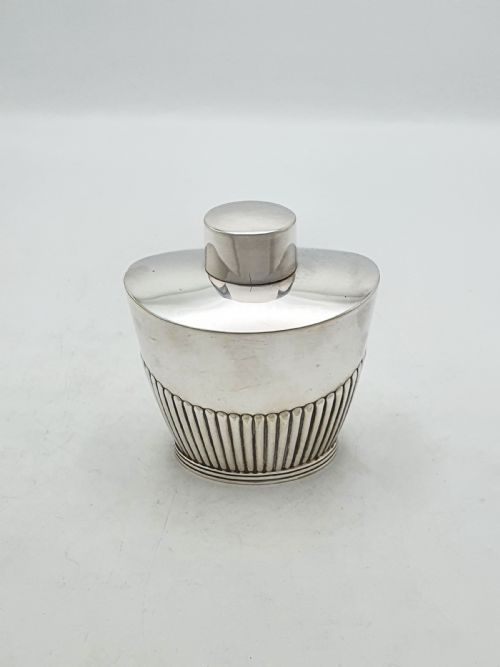


Fluted Silver Caddy
A fluted silver caddy holds precious loose leaf tea while offering tactile, symmetrical decoration that catches candlelight.
Fluted Silver Caddy
A fluted silver caddy is a small container designed to store tea leaves safely away from dampness and prying servants in polite households. The pieces found here span Georgian, Victorian, and Edwardian periods, stretching from the eighteenth century into the twentieth.
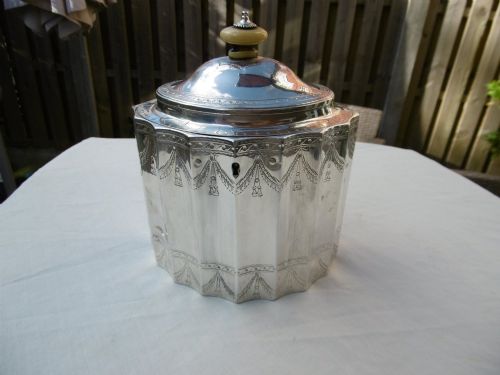
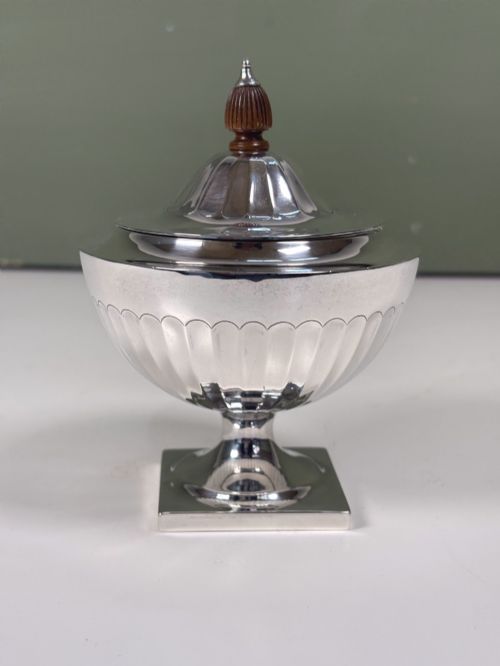
Most examples take the form of tea caddies or associated caddy spoons, alongside occasional biscuit boxes and tea canisters. Forms range from straight-sided oval vessels with bulbous bodies to bombe shapes and half-fluted designs.
Makers fashioned these items in sterling silver and silver plate, sometimes incorporating wood, ebonised wood, and bone elements for handles or knobs. Neoclassical and Georgian Revival styles appear alongside pure Victorian and Edwardian manufacturing.
Materials and construction
Silversmiths utilised solid sterling silver and silver plate as the primary mediums, hammering and shaping metal over wooden or iron stakes to create hollow vessels. Chasing and repoussé techniques produced the characteristic vertical channels that define the fluted surface.
Internal components often featured secondary materials like wood or bone, particularly for insulating handles against heat or securing lids. Ebonised wood occasionally provided contrasting dark accents against polished silver bodies.
Some caddy spoons take the delightful form of a jockey cap, bringing a touch of sporting whimsy to the tea table.
Judging the standard
The weight of the metal and the thickness of the gauge dictate the physical substance of the piece, separating substantial boxes from thin stampings. Superior examples display crisp, even fluting executed by skilled hands rather than shallow or blurred surface impressions.
Maker marks and hallmarks stamped into the metal establish provenance and guarantee the purity of the material. Well-preserved hinges and tight-fitting lids indicate precision in the original assembly.
Martin Hall And Co·Robert Hennell·Mappin And Webb·William Neale·Goldsmiths And Silversmiths Co
The Fluted Silver Caddy Glossary
- Fluting
- Parallel concave grooves run vertically along the body of the caddy. This decorative technique catches light and adds textural depth to the silver surface.
- Caddy spoon
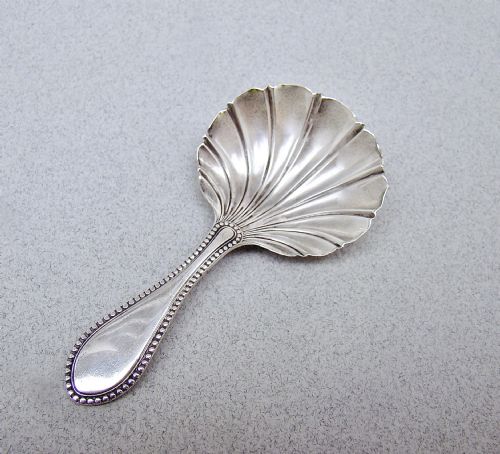
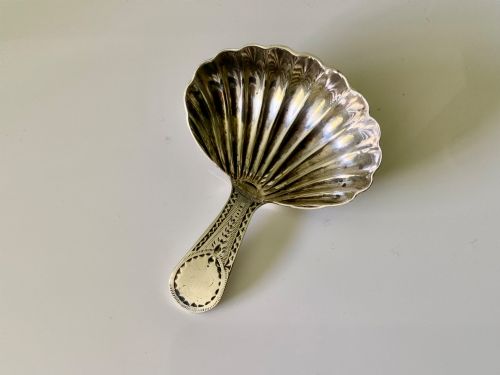
- A short-handled spoon designed specifically for measuring loose tea leaves from the caddy. Bowls often feature scalloped or shell shapes.
- Sterling silver
- An alloy consisting of pure silver and other metals, usually copper, to increase durability. Items meeting this standard carry appropriate hallmarks.
- Hallmark
- A series of official marks stamped on items to certify the purity of the metal, the maker, and the year of assay. These stamps provide a reliable guide to origin.
- Bombe
- A swollen, outward-curving profile characteristic of certain eighteenth and nineteenth-century forms. This shape gives the caddy a rounded, sculptural presence.
Fluted Silver Caddy: Frequently Asked Questions
What is a fluted silver caddy used for?
These vessels stored expensive loose leaf tea securely in the drawing room or dining room. The secure lid protected the volatile leaves from ambient moisture and odours.
Wealthy hosts kept tea locked away to prevent theft by servants, unlocking the caddy themselves when preparing social brews.
How do I clean a silver caddy?
Maintenance requires gentle washing in warm soapy water using a soft cloth, followed by thorough drying. Avoid abrasive pastes that wear away thin silver plating.
Natural tarnish develops over decades and many collectors prefer leaving this dark patina intact rather than polishing the metal to a bright shine.
Are these caddies made of solid silver?
The materials vary between solid sterling silver and silver plate over a base metal core. Hallmarks stamped into the metal indicate whether a piece is solid sterling.
Listings specify the exact composition for each item, distinguishing between solid sterling examples and silver-plated alternatives.
How can I tell the period of a caddy?
Assay office stamps and maker marks provide direct dates through official hallmarking systems. Stylistic clues like neoclassical shapes or Victorian ornamentation also suggest specific eras.
Comparing the manufacturing technique and weight helps place the item within Georgian, Victorian, or Edwardian traditions.