
Vintage Taper Holders
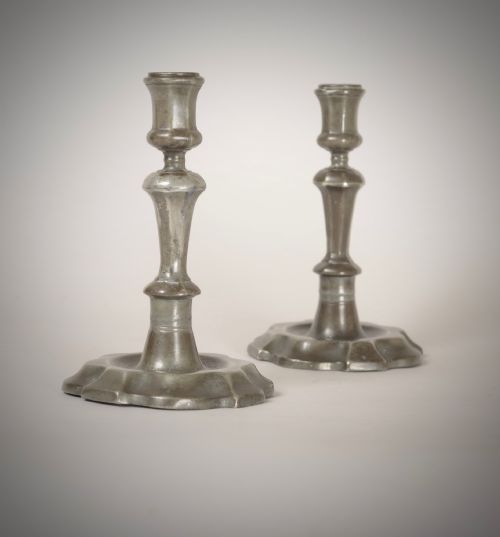
These vintage taper holders bring candlelight to a room in brass, silver plate, pewter, and sterling silver.
Vintage Taper Holders
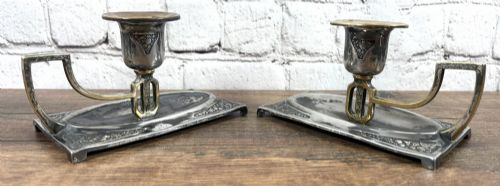
Vintage taper holders appear in forms such as candlesticks, chambersticks, and desk candlesticks spanning the eighteenth, nineteenth, and twentieth centuries. Buyers searching for vintage taper holders encounter items shaped by Georgian, Victorian, Edwardian, Art Nouveau, Art Deco, Neoclassical, Rococo Revival, and Empire styles. The selection ranges from tall brass church pieces to smaller domestic chambersticks designed for carrying or desktop use.
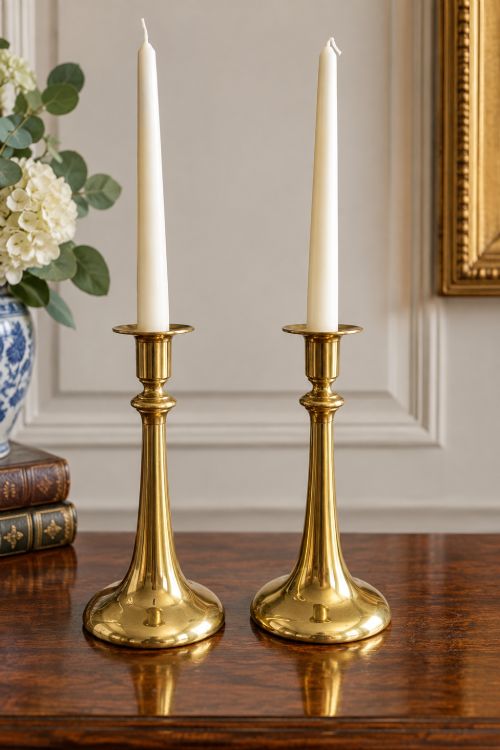
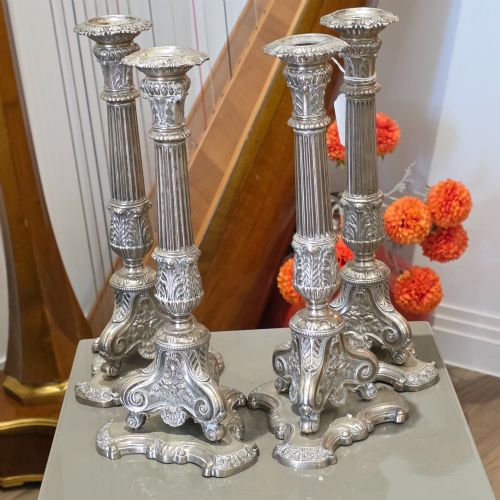
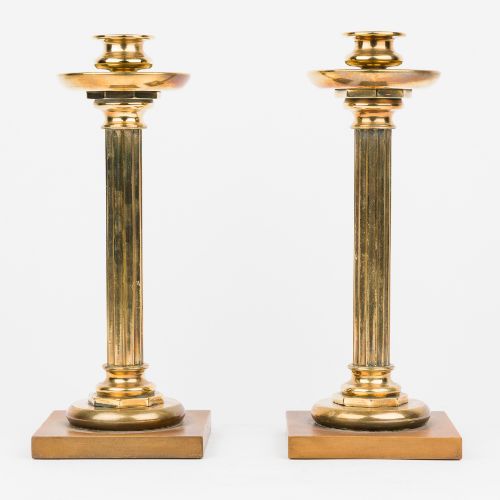
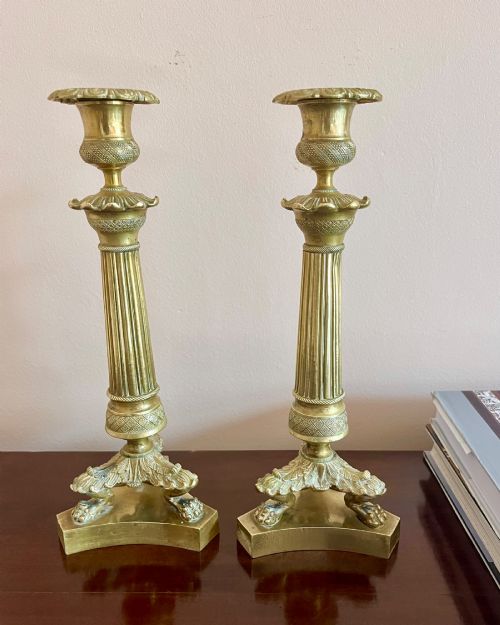
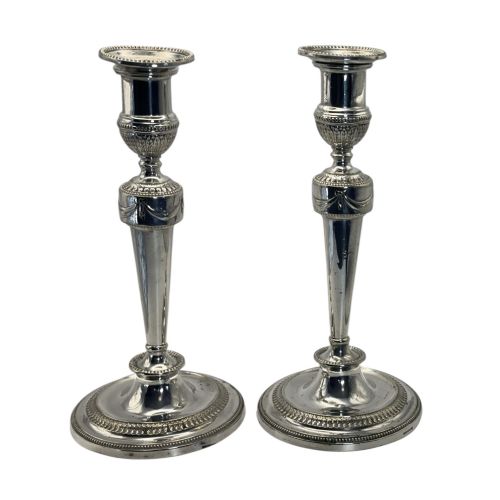
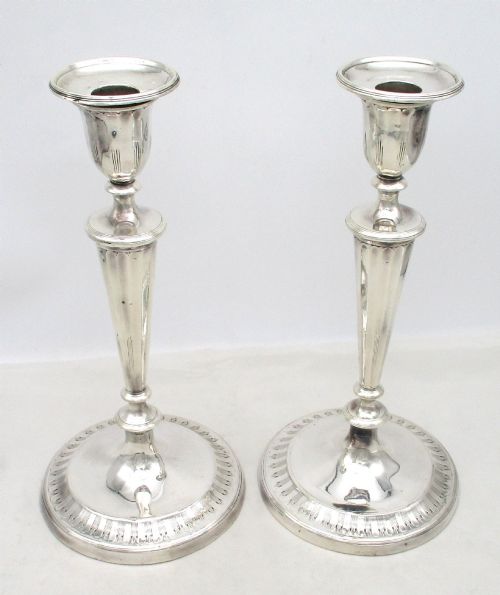
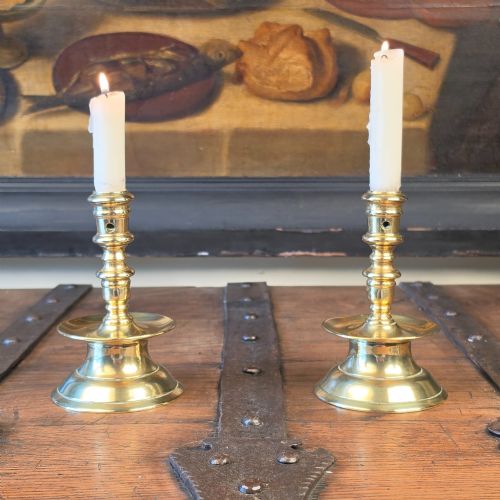
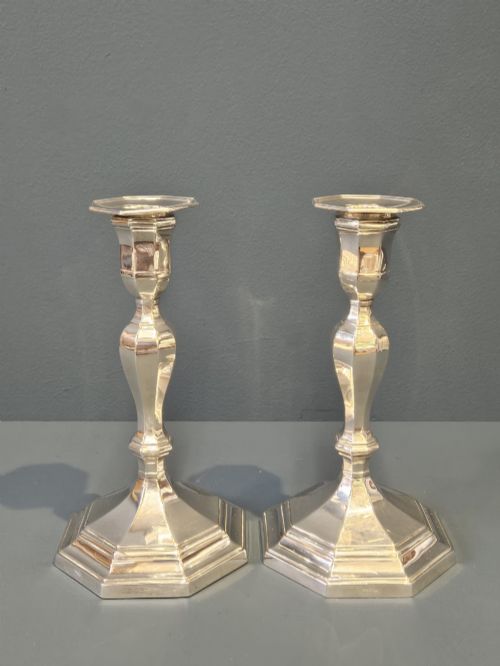
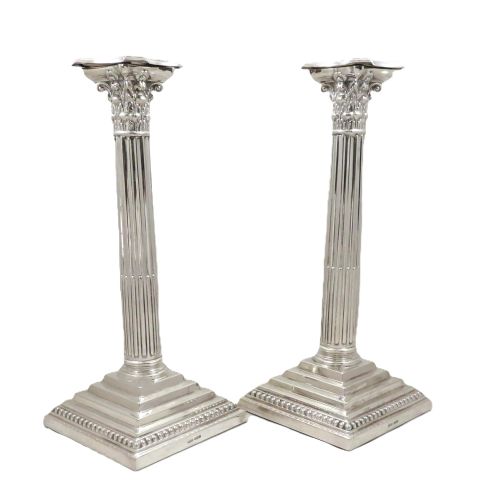
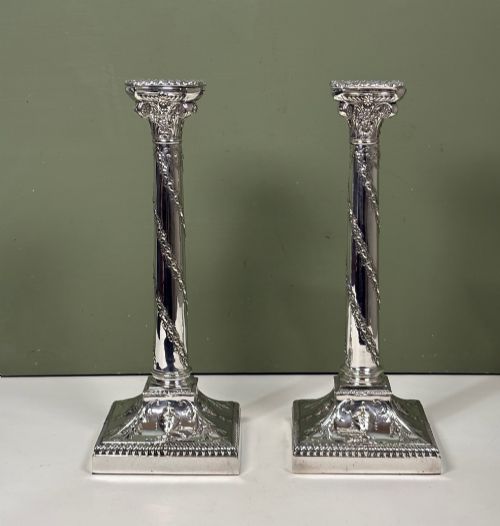
Brass examples dominate the selection, often taking the form of paired Georgian petal bases or Victorian ornate designs. Silver plate and sterling silver versions appear frequently, including Corinthian column forms and telescopic designs from the nineteenth and early twentieth centuries. Pewter, bronze, copper, ironstone, and glass also contribute to the variety found within these listings.
How they were made
Metalworking techniques dictate the construction of these pieces, with brass and pewter items frequently cast in sections and joined or seamed together. Silver plating is applied over base metals, while sterling silver and solid brass objects rely on shaping, turning, and detailed casting. Certain periods utilise specialised construction methods, such as the mechanical components found in telescopic candlesticks.
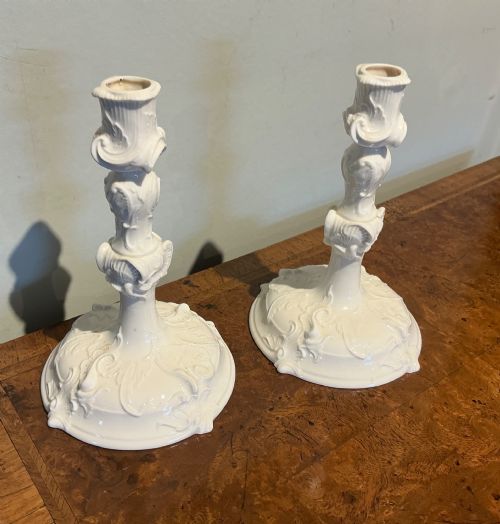
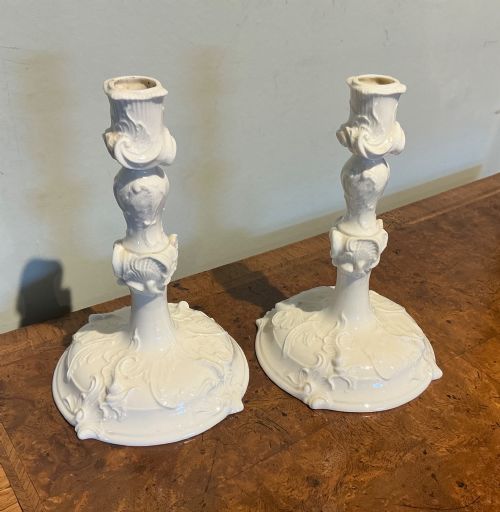
Ceramic and glass examples introduce different manufacturing traditions, represented by ironstone pottery and moulded glass from twentieth-century makers. Surface treatments range from polished brass and patinated bronze to silver plate and tortoiseshell combinations. These techniques reflect the workshop practices of Georgian, Victorian, and later craftspeople.
Some Victorian taper holders happily combined heavy pewter with tortoiseshell, proving that nineteenth-century desks deserved material drama just as much as the parlor.
What varies in quality
Quality in vintage taper holders rests upon the precision of casting and the integrity of the materials employed. Heavy gauge brass and solid sterling silver demonstrate a more substantial construction than lighter plated alternatives. Finer specimens display crisp detailing in ornamentation, whether botanical motifs on Art Nouveau pieces or classical fluting on Corinthian columns.
The reputation of the maker or manufacturer also influences the standing of a piece, with established houses and named metalworkers or potteries providing verifiable benchmarks. Completeness of matched pairs and original components, such as ejector mechanisms in brass sticks, distinguishes standard production items from superior examples.
Conrad Eduard Mappe·Mappin and Webb·Nymphenburg·Rene Lalique·WMF
The Vintage Taper Holders Glossary
- Chamberstick
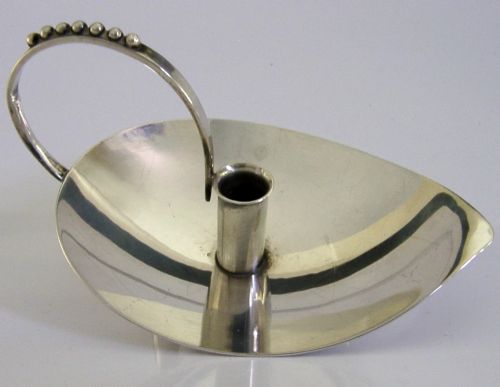
- A low candle holder featuring a pan to catch dripping wax and a handle for carrying from room to room. These domestic items were common in bedrooms and hallways before electric lighting.
- Ejector candlestick
- A brass candlestick containing an internal sliding mechanism operated by a thumbpiece to push out the remaining candle stub. This design dates back to the eighteenth century.
- Old Sheffield plate
- An early form of silver plating produced by fusing a sheet of silver onto a copper core before rolling and fabrication. Items made this way often reveal faint traces of copper along edges.
- Petal base
- A candlestick base shaped like a series of overlapping flower petals, frequently seen on Georgian and Victorian brass examples. This weighted or multi-lobed form provides added stability.
- Telescopic candlestick
- A design featuring sliding tubular sections that allow the height of the holder to be adjusted. These metal items were popular during the Georgian period for dining tables.
Vintage Taper Holders: Frequently Asked Questions
What is a chamberstick?
A chamberstick is a low candlestick equipped with a wide drip pan and a loop handle. They were originally used to light a path through dark corridors at night.
Unlike standard table candlesticks, their portable design allowed people to carry them easily between rooms before the introduction of domestic electricity.
How do I identify a Georgian candlestick?
Georgian candlesticks often feature heavy cast brass construction with square, round, or petal-shaped bases. Their proportions tend to be sturdy and architectural.
They frequently employ simpler casting methods than later Victorian pieces, sometimes showing seaming lines from manufacturing processes characteristic of the eighteenth century.
What is Old Sheffield plate?
Old Sheffield plate is a composite material made by fusing a thin layer of silver to a thick copper base. This technique preceded modern electroplating.
Under magnification or along exposed edges, the underlying copper often shows through as a warm reddish tint, which helps identify the period of manufacture.
How were telescopic candlesticks used?
Telescopic candlesticks allowed users to adjust the height of the light source by sliding the upper shaft inside the lower tube. They were versatile dining table accessories.
This adjustability accommodated different candle lengths and helped control the height of the flame relative to guests seated across the table.