




Traditional Brass Sconces
Traditional brass sconces bring warm, period illumination to a room, spanning styles from Georgian restraint to Victorian Gothic revival.
Traditional Brass Sconces
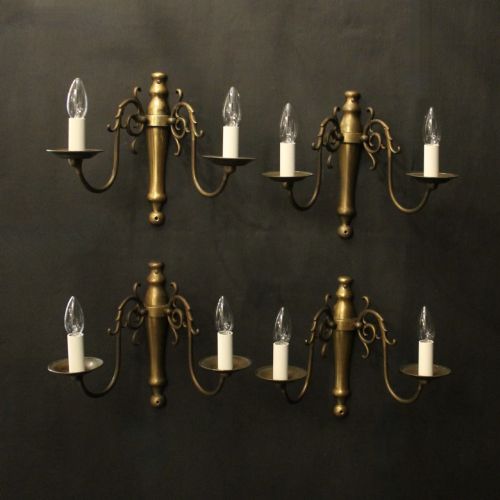
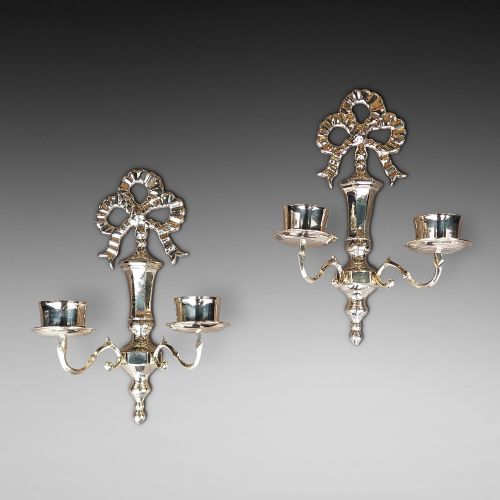
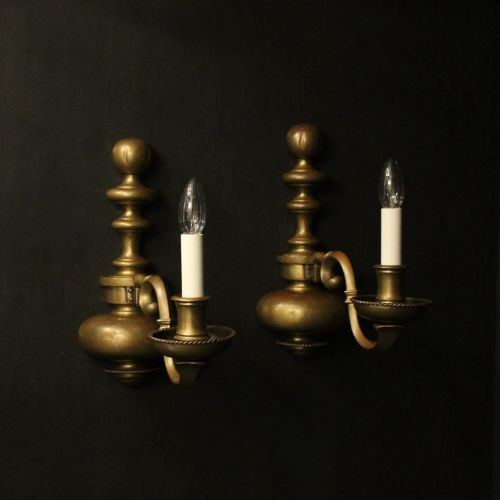
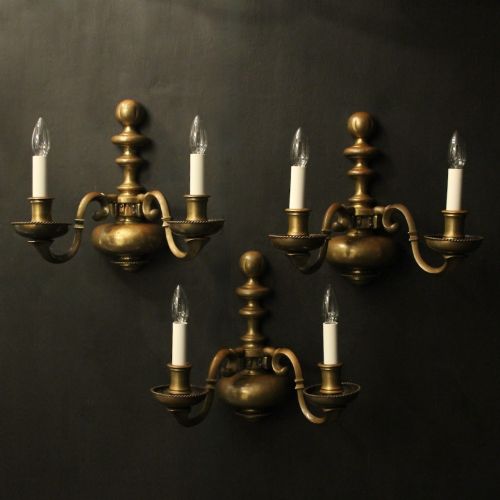
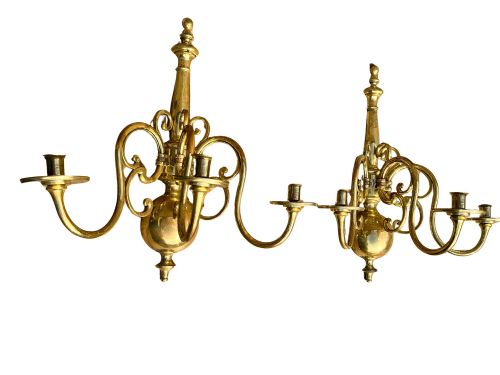
Traditional brass sconces encompass wall-mounted light fixtures and candle holders originating from the eighteenth century through to the early twentieth century. Buyers seeking this phrase typically encounter pairs of twin-arm wall lights, single candle brackets, and heavier ecclesiastical or coach fixtures.
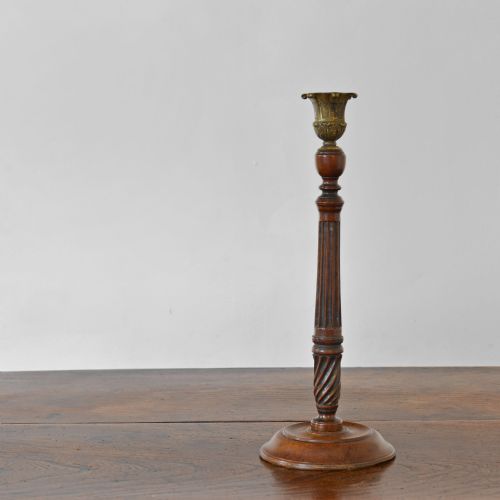
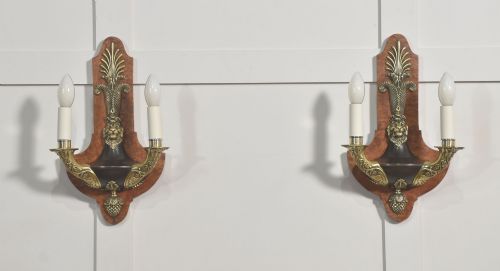
The selection ranges from early Georgian mahogany and brass combinations to ornate Edwardian and Victorian designs, alongside French Rococo and neoclassical interpretations. Many examples utilise cast brass, bronze, or gilded metal, often paired with glass components.
Wall lights and candle sconces form the core of the available selection, frequently accompanied by related items such as carriage lamps and candlesticks. These fixtures reflect the domestic and architectural lighting needs of their respective periods.
Materials and construction methods
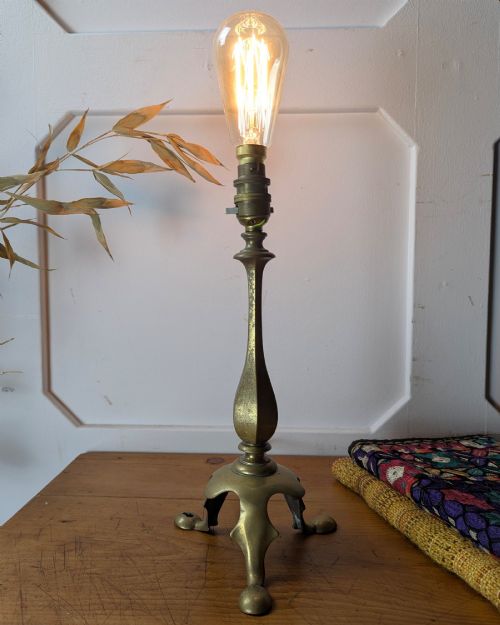
Makers shaped traditional brass sconces using cast brass, patinated bronze, and gilded brass, frequently combining the primary metal with secondary materials like oak, mahogany, glass, and crystal. Structural elements often involved turning wood columns or casting heavy metal frames in distinct regional styles.
Surface finishes vary from polished and repolished brass to dark patinated bronze and gilt applications, demonstrating period-specific preferences for brightness or subdued reflection. Construction techniques include hand-finishing, turning, and assembly via threaded components or rivets.
Listings feature brass alongside bronze, copper, mahogany, oak, crystal, and glass across multiple centuries.
Distinctions in quality and execution
Quality in traditional brass sconces rests upon the crispness of the casting, the weight of the metal components, and the harmony of secondary materials such as turned timber or glass drops. Superior pieces display finely articulated detail in arms, drip pans, and backplates.
The integrity of the construction and the depth of the metal patina separate standard utilitarian brackets from finer decorative works. Original mounts, balanced proportions, and careful chasing elevate the standing of an individual pair.
F. & C. Osler
The Traditional Brass Sconces Glossary
- Sconce
- A wall-mounted lighting fixture designed to hold candles or electric lamps. These fixtures project illumination outward from vertical surfaces.
- Backplate
- The flat or shaped metal section that secures a sconce to the wall. It often incorporates decorative embossing or neoclassical motifs.
- Twin-arm
- A configuration featuring two branching candle holders extending from a central support. This layout provides balanced light distribution.
- Patina
- The surface sheen and coloration developed by metal over decades of exposure and handling. A natural patina indicates age and authentic use.
- Chasing
- The manual method of refining cast metal details with punches and chisels. This technique sharpens surface ornamentation.
Traditional Brass Sconces: Frequently Asked Questions
What periods do these sconces date from?
The pieces span from the eighteenth century through the Victorian and Edwardian eras up to the nineteen-thirties. Georgian and nineteenth-century examples sit alongside later revivals.
Stylistic cues such as neoclassical symmetry or Gothic detailing help identify the era of manufacture alongside material composition.
Were these designed for candles or electricity?
Many traditional sconces began as candle holders before undergoing conversion to electricity during the twentieth century. Some retain original candle cups and drip pans.
Others were manufactured as porch lanterns or carriage lamps, adapting heavy brass and glass to sheltered outdoor or transport use.
How do I match a pair to my interior?
Consider the scale of the backplate and the projection of the arms relative to your wall space. Finish matters just as much, balancing bright gilded brass against darker patinated bronze.
Pairing items with complementary wood elements like mahogany or oak ties the metalwork into existing period furniture.
How are different regional styles identified?
English traditional designs often favour restrained classical lines, whereas French Rococo and Empire styles lean into ornate cast ornamentation and gilding. Neoclassical pieces display strict symmetry and urn motifs.
Examining the casting weight and assembly methods reveals the distinct workshop practices of different regions.