




Regency Twin Wall Light
Regency twin wall light pieces bring classical symmetry to a room, offering two-armed illumination styled in the manner of the early nineteenth century.
Regency Twin Wall Light
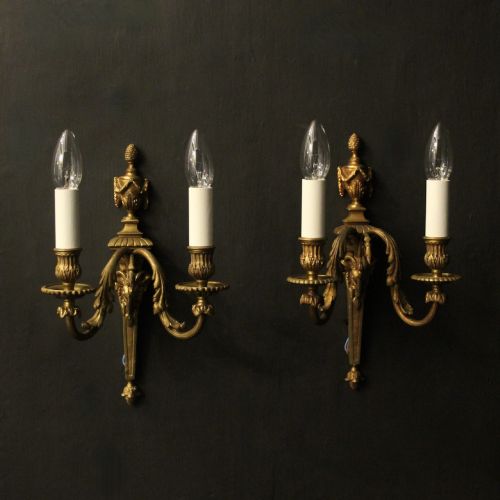
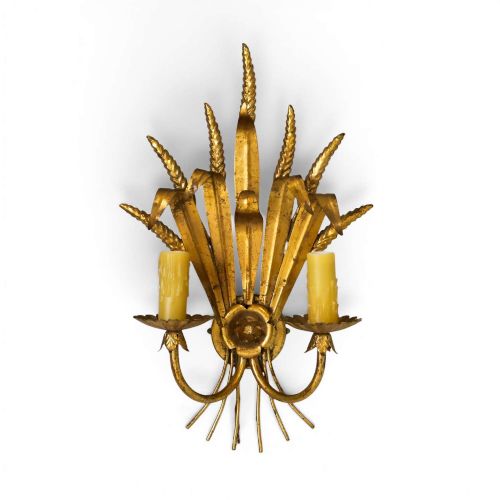
A regency twin wall light takes the form of a double-branched sconce designed to mount directly onto a wall surface. These fixtures draw upon historical classical design, channelling neoclassical restraint and empire grandeur through twin arms.
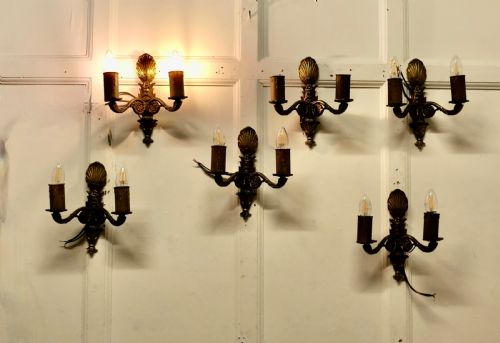
The versions met most frequently on this page date from the twentieth century, spanning decades such as the nineteen-twenties and nineteen-thirties, alongside revival pieces and mid-century interpretations. They appear as individual fittings, matched pairs, or larger sets intended for balanced interior schemes.
Makers and manufacturers of these wall lights adopted various stylistic labels including Regency, Regency Revival, French Empire, and English Classical. The underlying forms remain consistent in their provision of twin branches for illumination.
How they were made
Construction relies heavily upon cast metal, brass, and gilded bronze or gilded brass to form the rigid backplates and branching arms. Metalworkers shaped these components through casting and tooling before applying metallic finishes.
Gilt metal and giltwood provide alternative surface treatments, capturing the decorative sheen characteristic of classical revival interiors. Detail is further enhanced in certain pieces through the inclusion of cut glass and crystal elements.
Regency Twin Wall Light Retail Price Guide 2026
Typical asking prices for regency twin wall light among the pieces listed under this phrase on Sellingantiques today, from the lower quarter to the upper quarter. They describe what is for sale here now, not the wider market.
Some wall lights feature six distinct arms, ensuring a room receives twice as much decorative illumination as a standard pair.
What varies in quality
The standard of a regency twin wall light rests upon the crispness of its metal casting and the depth of its gilt finish. Heavier brass and bronze components demonstrate superior material substance compared to lighter alloy alternatives.
Refinement in design execution separates standard production fittings from finer interpretations. The precision of neoclassical detailing and the quality of cut glass integration dictate the upper tier of the range.
The Regency Twin Wall Light Glossary
- Sconce
- A wall-mounted lighting fixture designed to carry one or more lamps or candles. These pieces project outward from the vertical surface to illuminate surrounding spaces.
- Gilt bronze
- Metalwork treated with a gold or gilt surface coating to achieve a rich decorative appearance. This technique was widely employed in French Empire and classical revival pieces.
- Neoclassical
- A design style drawing inspiration from the classical art and architecture of ancient Greece and Rome. It prioritises symmetry, restraint, and formal proportion.
- Cut glass
- Glassware shaped and patterned through abrasive cutting wheels to create faceted surfaces. This material reflects and refracts light when placed near a light source.
Regency Twin Wall Light: Frequently Asked Questions
How do I wire a vintage wall light?
Most twentieth-century wall lights are adapted for modern electrical circuits by threading insulated flex through the existing metal channels and backplate.
Qualified electricians should handle the installation to ensure all internal connections meet current safety standards and local regulations.
What rooms suit twin wall lights?
These fixtures work well in hallways, living rooms, and dining areas where balanced illumination is required on either side of a mirror, fireplace, or architectural feature.
Pairing multiple sconces creates a rhythmic spread of light across larger wall expanses.
Are these lights original nineteenth-century pieces?
The listings here primarily comprise twentieth-century interpretations, including pieces from the nineteen-twenties, thirties, and fifties executed in historical revival styles.
Stylistic markers such as Regency Revival or French Chateau indicate later manufacturing dates that emulate earlier periods.
How should I clean antique brass?
Dusting with a dry, soft cloth prevents the accumulation of grime without disturbing the natural patina built up over decades of age.
Harsh chemical polishes should be avoided as they can strip away original gilding and surface finishes.