
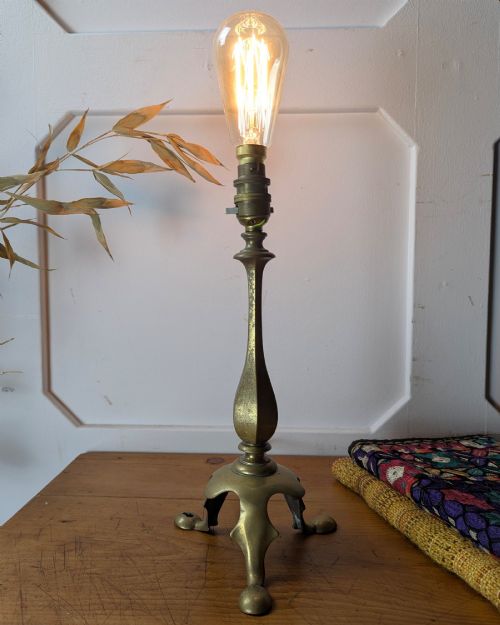
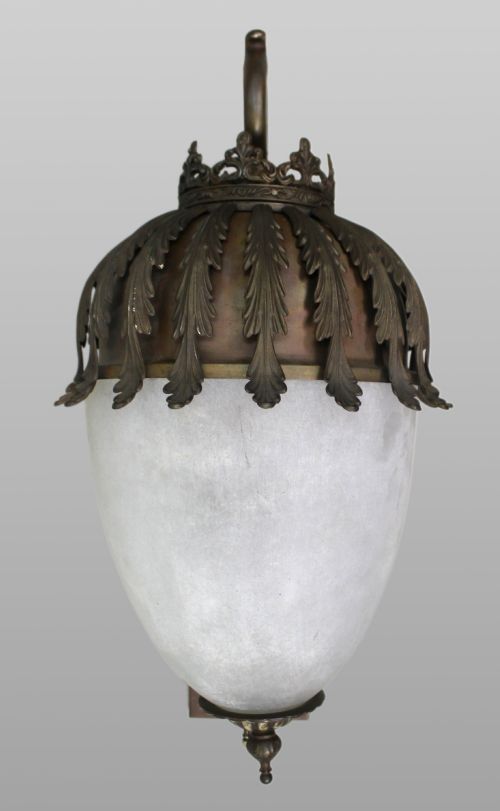
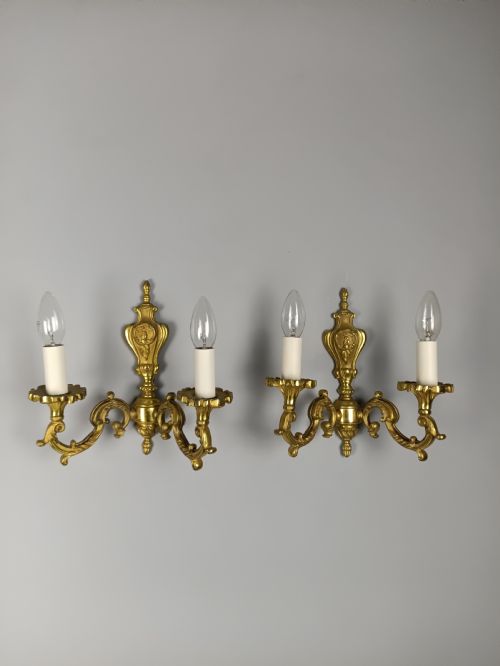
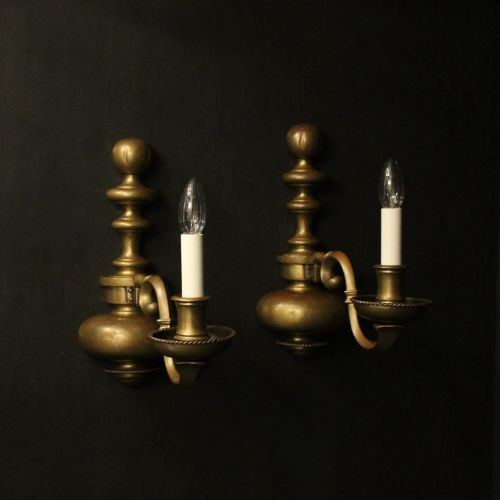
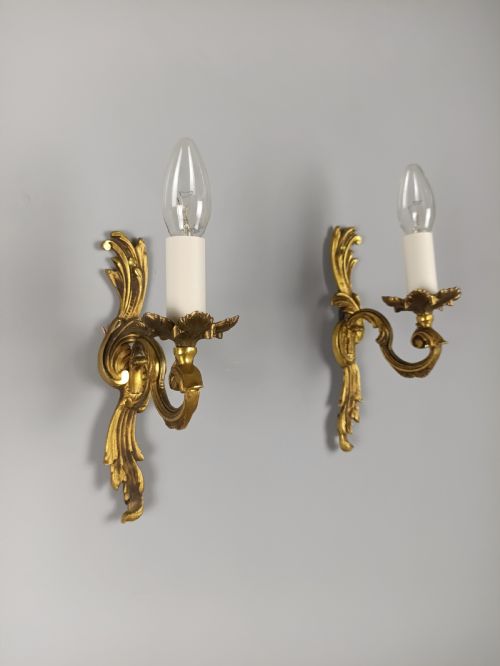
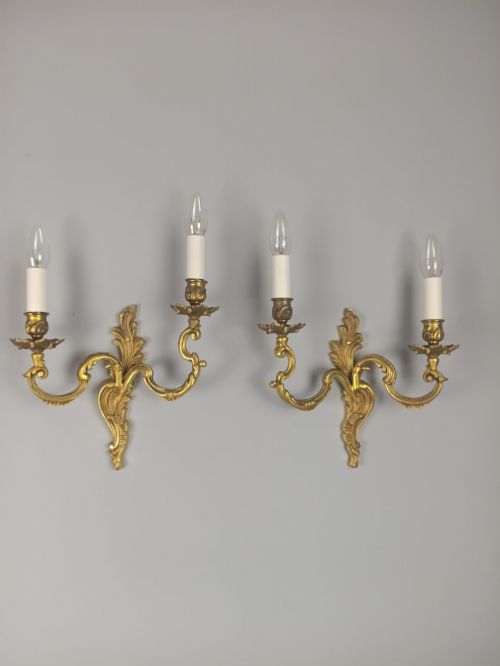

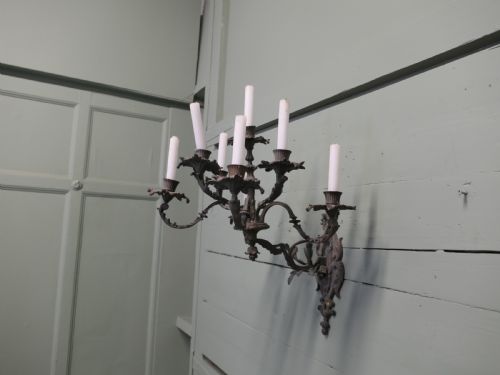


Cast Brass Wall Lights
Cast brass wall lights bring genuine period weight and warmth to a room, offering enduring illumination shaped by 19th-century and early 20th-century hands.
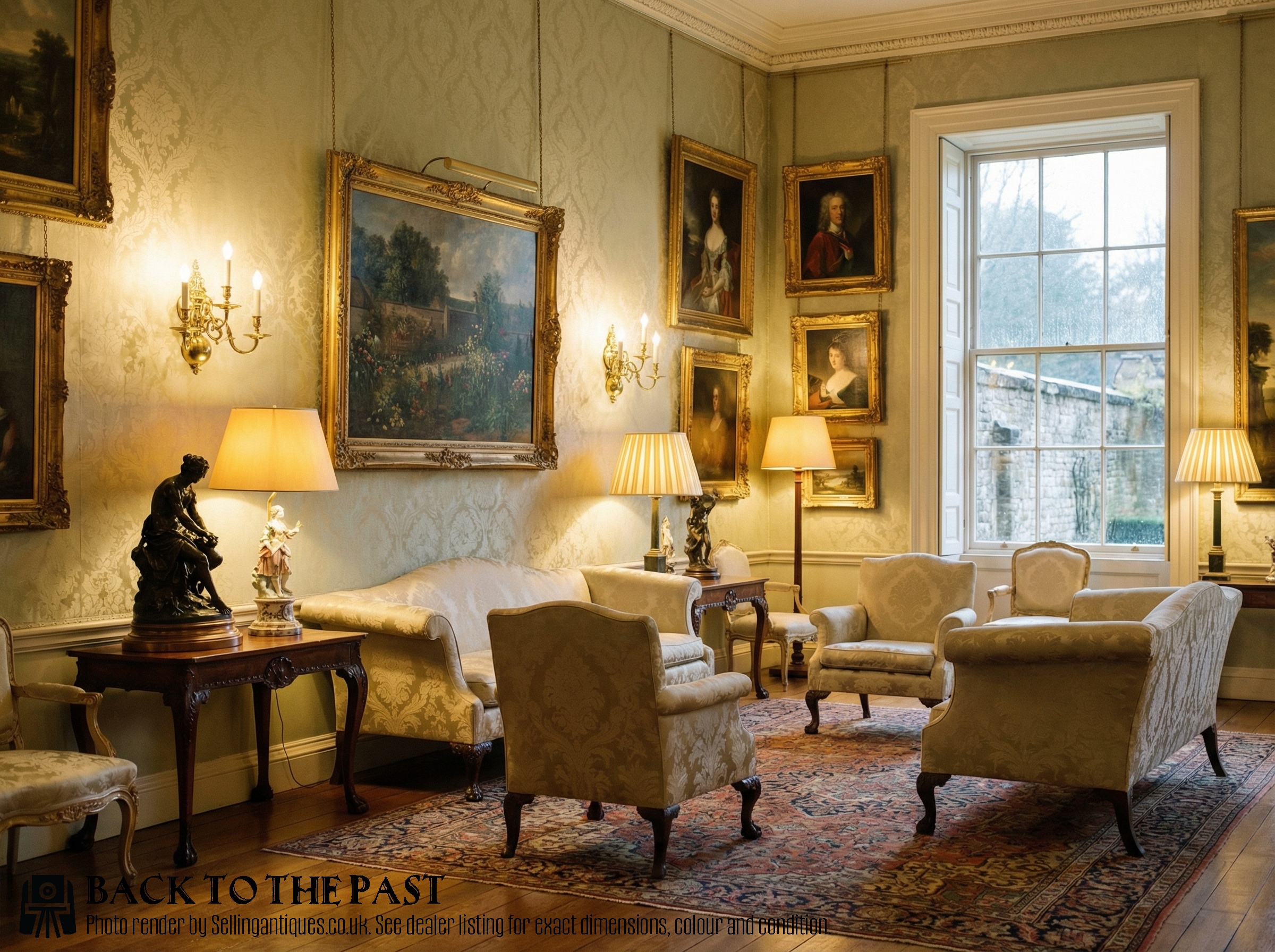
Cast Brass Wall Lights
Cast brass wall lights span the 19th century through the 1930s, encompassing French Rococo, Victorian, Edwardian, and Neoclassical designs. Buyers encountering this selection will find single arms, twin arms, and larger multi-light configurations originating from French, English, and Italian workshops.
These fixtures serve to mount directly onto interior walls, providing both practical illumination and sculptural presence. Common formats include matched pairs and larger sets suitable for formal rooms or hallways.
The material palette draws heavily on cast brass, bronze, and gilded brass, occasionally accented with crystal drops or glass shades. Pieces range from restrained domestic brackets to ornate, multi-armed fixtures influenced by historical revival styles.
Method and material
Foundry workers produced these fixtures using traditional sand-casting or lost-wax techniques, pouring molten brass or bronze into bespoke moulds to achieve robust structural forms. This process allowed makers to yield thick backplates, sturdy arms, and substantial mounting brackets designed to bear the weight of multiple candle or gas holders.
Surface finishing involved hand-chiselling, polishing, and frequently applying gilding, ormolu, or silvering to enhance the metallic sheen. Artisans incorporated decorative motifs such as ribbons, cherubs, and classical scrolls directly into the metalwork during casting before assembling the final components with threaded pins and screws.
Current listings feature pieces spanning the 1880s through the 1930s, utilising cast brass, bronze, and gilded metal.
Distinctions in craftsmanship
Quality rests primarily in the crispness of the casting and the depth of the subsequent hand-chasing. Superior examples display sharp relief in ornamental details like acanthus leaves or cherub faces, whereas lesser pieces exhibit softer, blurred contours from worn moulds.
The thickness of the metal and the integrity of the joints dictate longevity. Heavier brass castings with well-engineered arm connections and original surface gilding sit at the upper end of the scale, outperforming lighter, thinly cast assemblies that lack structural substance.
The Cast Brass Wall Lights Glossary
- Cast brass
- An alloy of copper and zinc melted and poured into a mould to create solid, three-dimensional decorative objects and hardware. This method produces thicker and more durable components than sheet metal stamping.
- Ormolu
- A finely ground high-carat gold-mercury amalgam applied to a bronze or brass base. This historic French technique provides a rich, warm golden finish that resists tarnish over centuries.
- Gilded bronze
- Bronze metal treated with a thin layer of gold leaf or gold wash. It combines the structural strength of bronze with a bright decorative surface.
- Wall sconce
- A wall-mounted lighting fixture designed to hold candles, gas burners, or electric bulbs. These brackets project outward to illuminate surrounding wall spaces.
Cast Brass Wall Lights: Frequently Asked Questions
How do I wire antique wall lights for modern use?
Most period wall lights require professional rewiring to meet modern electrical safety standards. A qualified electrician can thread contemporary heat-resistant flex through the hollow cast arms without damaging the historic metalwork.
Original backplates often retain their historic mounting holes, allowing the electrician to secure the fixture safely to standard wall junction boxes.
Were these lights originally for gas or candles?
Many 19th-century examples were originally configured for candles or oil, while later Victorian and Edwardian pieces frequently accommodated gas or early electricity. Gasolier variants feature specific key taps and heavier hollow tubing designed to channel gas to the burners.
Over the decades, the vast majority of surviving fixtures have been converted to electricity, though many retain their original thumb-turns or decorative drip pans.
How should I clean antique brass wall lights?
Dust the metal gently with a soft, dry cloth to prevent grime accumulation. Avoid harsh chemical polishes that strip away historic patination or damage original gilding and ormolu surfaces.
If cleaning is necessary, use mild soap and warm water on a damp cloth, drying the metal thoroughly afterward to prevent water spotting.
How do I date a cast brass wall light?
Dating relies on examining the casting style, assembly methods, and surface wear. Rococo Revival and heavy Victorian pieces typically date to the 19th century, while cleaner lines and Arts and Crafts influences often point toward Edwardian or 1920s production.
fasteners, screw types, and mounting bracket designs also offer reliable clues to the period of manufacture.