

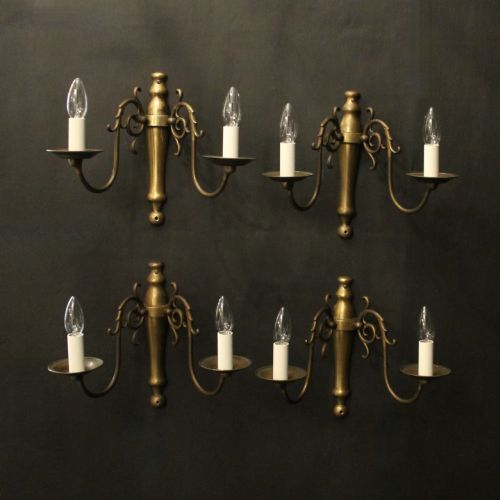
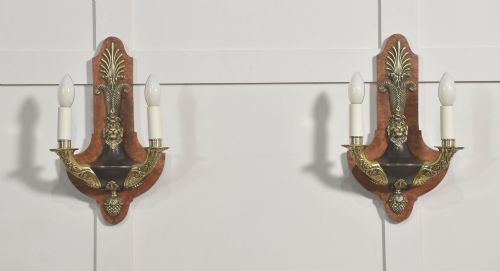
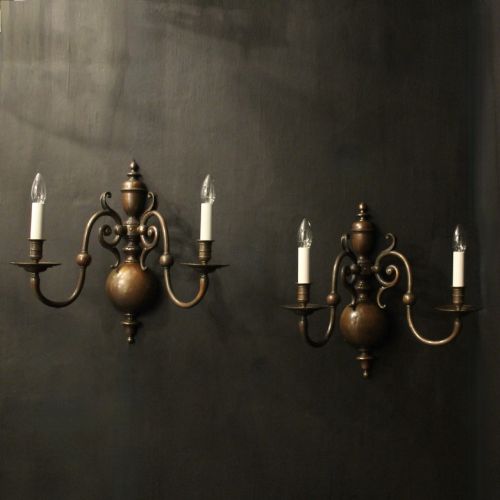
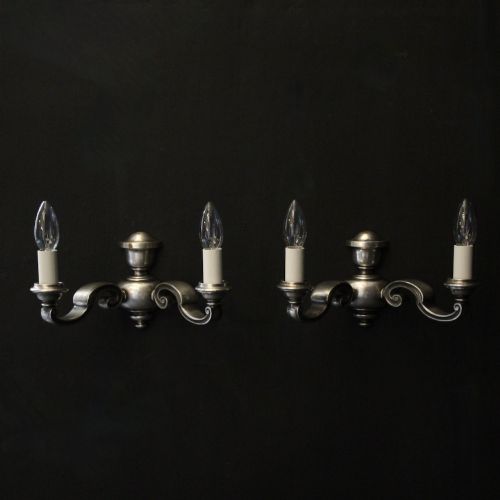



Traditional Twin Light Sconces
Traditional twin light sconces bring historic illumination to walls, offering balanced dual-branch lighting shaped by Victorian, Edwardian, and earlier revival styles.
Traditional Twin Light Sconces
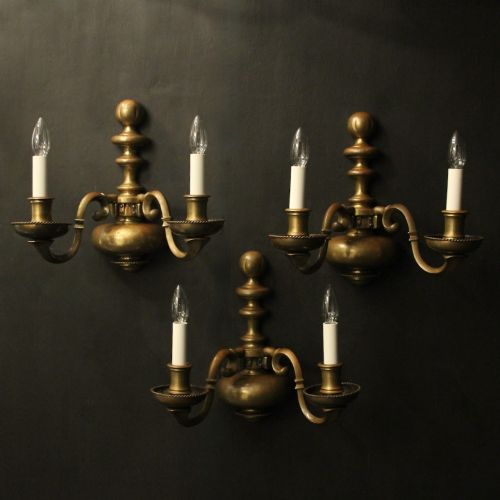
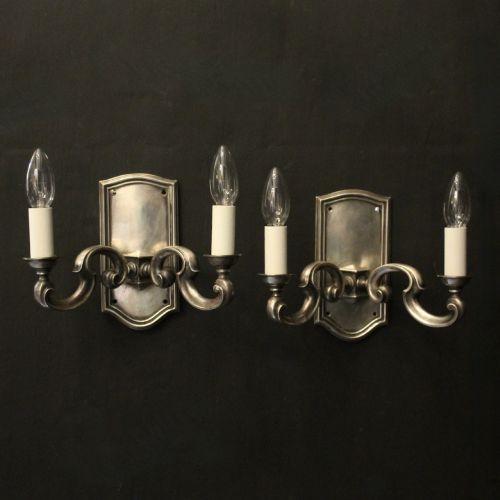
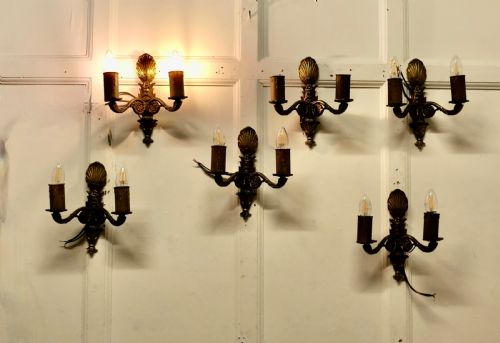
Traditional twin light sconces are double-branch wall lights designed to hold candles or electric bulbs, taking the form of wall sconces, wall lights, and adapted candlesticks. When searching for traditional twin light sconces, buyers encounter fixtures originating from the nineteenth and early twentieth centuries, spanning periods from eighteen-sixty up to nineteen-thirty.
The pieces appearing on this page include matching pairs and larger sets produced in English workshops alongside continental interpretations. Styles lean heavily into Georgian revival, Edwardian elegance, French Rococo, and Neoclassical grandeur, providing symmetrical illumination for corridors, reception rooms, and dining spaces.
What varies in quality
Quality separates fixtures by the crispness of their cast ornament and the weight of the metal used in the backplates and arms. Heavier castings in solid brass or bronze maintain structural integrity better over decades of wall mounting.
The finesse of secondary materials also dictates the grade of the piece, particularly where cut glass prisms or burr walnut panels accompany the metalwork. Coarser surface finishing or thin silver plating indicates standard commercial production rather than high-end decorative work.
Traditional Twin Light Sconces Retail Price Guide 2026
Typical asking prices for traditional twin light sconces among the pieces listed under this phrase on Sellingantiques today, from the lower quarter to the upper quarter. They describe what is for sale here now, not the wider market.
Some nineteenth-century sconces retain stubborn traces of old candle wax tucked deep inside their drip pans, proving their original purpose.
F. & C. Osler
The Traditional Twin Light Sconces Glossary
- Twin-branch
- A wall light or sconce featuring two distinct arms extending from a central backplate to hold separate candles or bulbs.
- Backplate
- The structural metal or wooden plate fastened directly to the wall that supports the projecting arms of the sconce.
- Gilt brass
- Brass treated with a thin layer of gold or gold-coloured wash to impart a bright, reflective metallic finish.
- Cut glass
- Glass decorated by cutting facets into the surface, frequently used on sconces to catch and multiply the ambient light.
- Neoclassical
- A revival style drawing on classical Greek and Roman motifs, characterised by symmetry, urns, and restrained classical ornamentation.
Traditional Twin Light Sconces: Frequently Asked Questions
How do I mount traditional twin light sconces safely?
Wall fixtures require secure attachment to studs or solid masonry using appropriate fixings suited to the weight of brass, bronze, or glass components. Wiring must comply with modern electrical standards if the sconces have been converted from candle power.
Professional installation is recommended to support the combined weight of the backplate and twin arms securely against the plaster.
Were these sconces originally meant for candles or electricity?
Many nineteenth-century and early twentieth-century examples started life holding candles before being converted to electricity during later domestic modernisations. Surviving pieces often show adaptations where burner nozzles or drip pans received bulb holders.
Inspect the internal channels and backplates to understand how previous generations altered the wiring or socket arrangements to suit changing household technology.
How should I clean polished brass and silver-plated sconces?
Dust metal wall lights regularly with a soft, dry cloth to prevent grime accumulation in the cast crevices and around the twin arms. Avoid harsh chemical cleaners that strip patination or damage delicate silver plating.
For lacquered brass surfaces, simply wipe gently, while unlacquered metal may require occasional specialist metal polish applied sparingly with cotton wool.
How do I date a pair of antique wall sconces?
Dating relies on identifying the prevailing design style, such as Edwardian neoclassical revival or Victorian cast brass ornamentation, combined with manufacturing clues on the backplate. Screw types, casting seams, and mounting brackets often indicate whether a piece dates from eighteen-sixty or nineteen-thirty.
Comparing the materials - such as burr walnut combined with bronze - helps place the object within its correct stylistic decade.