



Turned Brass Candleholders
Turned brass candleholders bring the weight and bright metalwork of Georgian, Victorian, and Edwardian interiors straight onto your table.
Turned Brass Candleholders
When you search for turned brass candleholders, you encounter robust domestic lighting pieces spanning the eighteenth, nineteenth, and early twentieth centuries. The selection here leans heavily towards Victorian and Georgian examples, alongside pieces from the Edwardian era and seventeenth-century revivals.
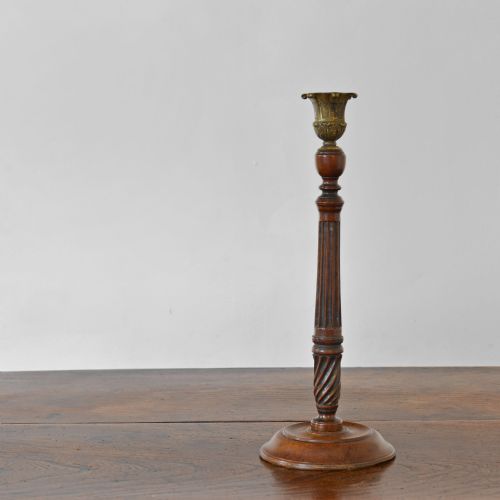
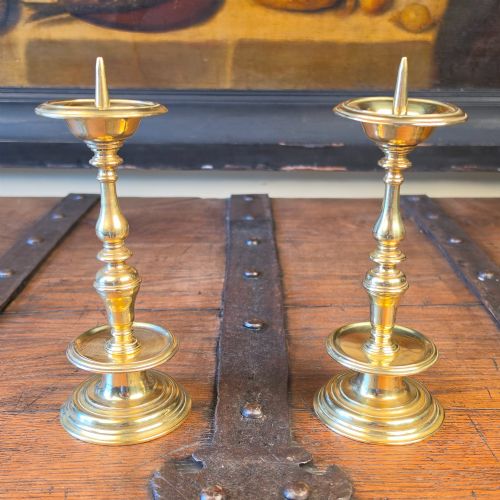
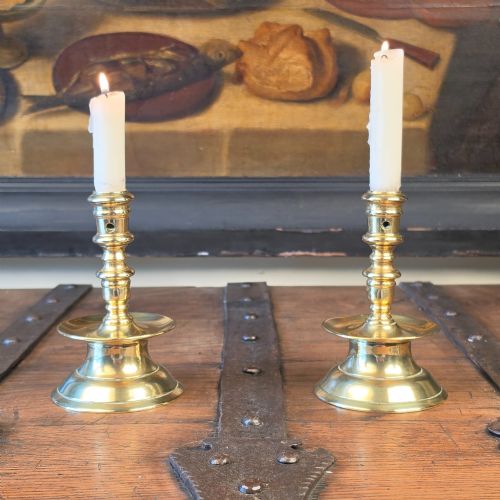
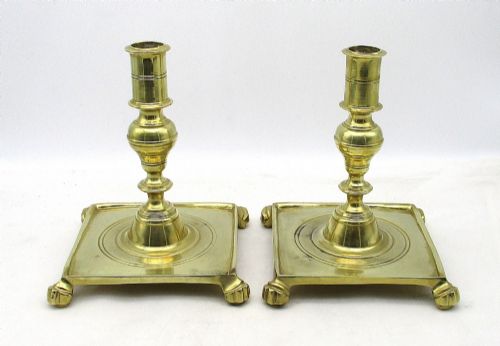
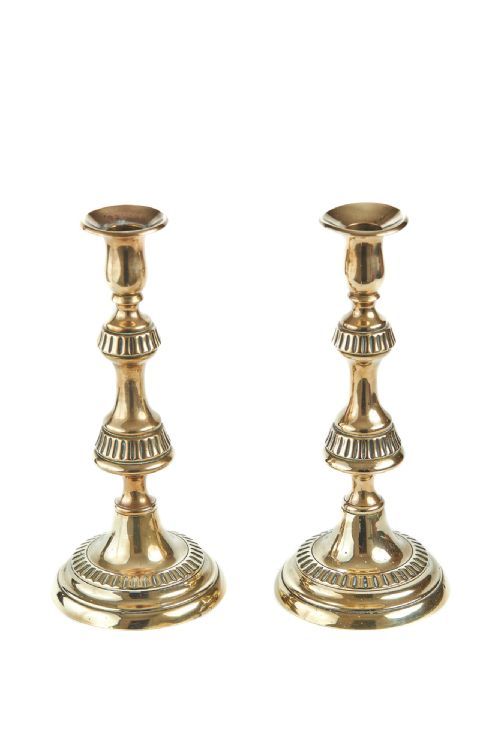
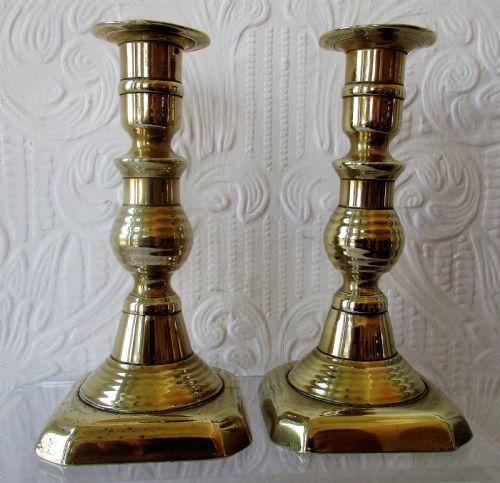
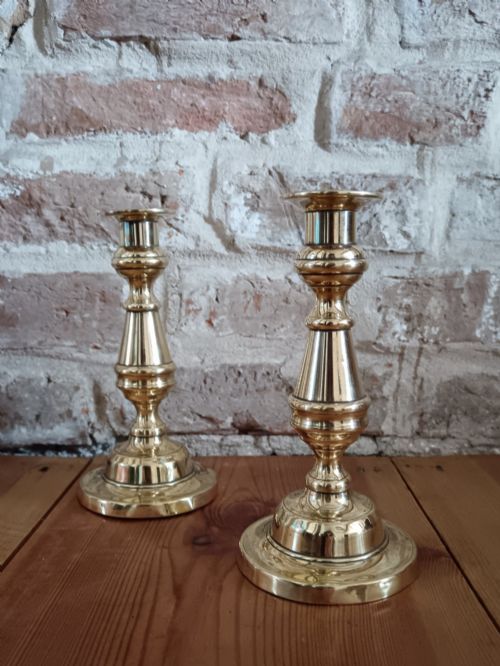
You will find these items taking the form of candlesticks, often offered as matched pairs with turned columns. Some designs integrate timber elements, pairing brass with mahogany, teak, or oak.
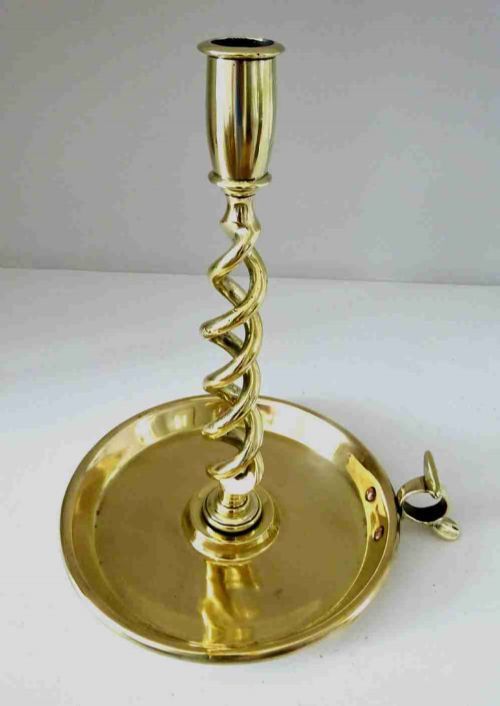
The silhouettes range from simple vase-shaped and tear-drop columns to barley twist shafts and ejector mechanisms designed to push out remaining wax stub. Certain variants sit upon fitted bases or feature hexagonal profiles dating to the early eighteenth century.
How they were made
Makers utilised solid brass, often shaped through turning and casting techniques to achieve the characteristic profiles of the period. Individual components were cast and subsequently worked on a lathe, resulting in clean lines and balanced proportions.
Many examples combine brass with dense hardwoods such as mahogany, oak, and teak. Wood-turning methods created bobbin-turned or barley twist shafts, topped and bottomed with brass sockets and fitted bases.
Current listings feature items executed in solid brass, mahogany, teak, and oak, spanning styles from the seventeenth-century revival to Edwardian maritime.
What varies in quality
The standard of a piece rests upon the crispness of the turning and the weight of the metal used in the casting. Heavier, solid brass examples demonstrate a substantial feel, whereas lighter items lack that fundamental density.
Proportion and detail set the finer specimens apart from standard domestic wares. Well-defined tear-drop or vase-shaped columns, precise joinery between wood and metal, and intact mechanical parts like ejectors elevate the overall standard.
Frederick J Smith And Co
The Turned Brass Candleholders Glossary
- Ejector candlestick
- A type fitted with an internal sliding mechanism designed to push out the remaining stub of a candle. This clever device became popular during the late Georgian and Regency periods.
- Barley twist
- A spiral carving resembling the twist of barley sugar, frequently seen on wooden and brass shafts. This decorative turn adds considerable texture and movement to the silhouette.
- Knop
- A knob or protuberance on the stem of a candlestick, providing both visual weight and a secure gripping point. They appear frequently on earlier forms.
- Sconce
- The socket at the top of a candlestick designed to hold the candle firmly in place. On mixed-material pieces, this component is commonly formed of brass.
Turned Brass Candleholders: Frequently Asked Questions
How do I date brass candlesticks?
Dating relies on observing base construction, column profiles, and manufacturing marks. Earlier eighteenth-century forms often show hexagonal bases and heavy cast knops.
Victorian and later examples introduce machine threads, sharper lathe turnings, and occasional stamped factory marks.
Are these pieces made entirely of brass?
While many examples utilise solid brass throughout, several items combine metal with turned hardwoods. Mahogany, teak, and oak frequently form the central shafts.
These mixed pieces pair timber columns with brass sockets and fitted bases to create striking textural contrast.
How should I clean antique brass?
Antique brass benefits from gentle dusting and minimal intervention to preserve its historic surface. Heavy commercial polishes remove the warm patina built up over centuries.
Allowing the metal to retain its natural ageing highlights the crisp details of the lathe work.