



Period Brass Candle Stands
These period brass candle stands are substantial metal lights designed to illuminate rooms, built from Georgian through to Victorian eras.
Period Brass Candle Stands
Period brass candle stands encompass heavy candlesticks and multi-light fixtures designed for domestic and ecclesiastical interiors across the eighteenth and nineteenth centuries. When searching for period brass candle stands, buyers encounter sturdy Georgian baluster forms alongside ornate Regency and Victorian examples.
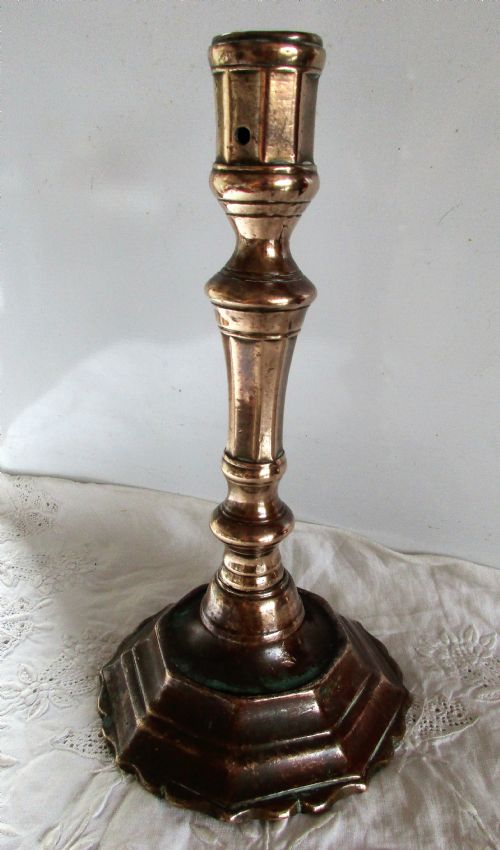
The selection ranges from early eighteenth-century hexagonal bases and seamed ejector designs to French Empire and French Restoration ormolu pieces incorporating marble. English brass examples sit alongside French ormolu and Japanese bronze variants to populate the current selection.
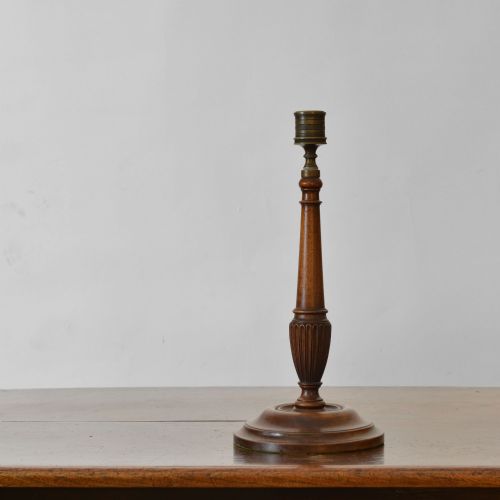
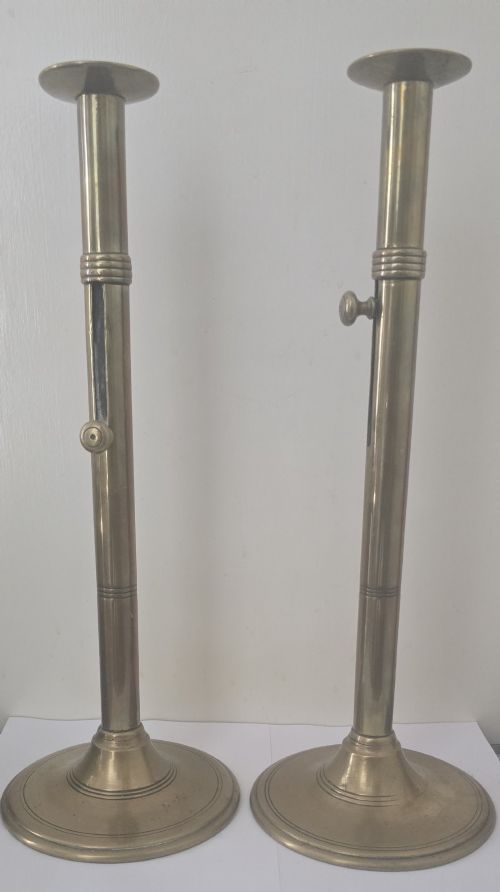
Tall columnar stands and desk candlesticks appear frequently, demonstrating how these metal objects served both formal dining spaces and intimate writing rooms. Buyers meet pairs most often, preserved across centuries for placement on mantelpieces and side furniture.
Materials and Construction
Early examples utilise seamed brass construction, where sheet metal was rolled and joined before being secured to cast bases, a method visible in mid-eighteenth-century production. Later nineteenth-century pieces employ more advanced casting techniques to achieve complex baluster profiles and fluted columns.
Makers integrated secondary materials such as marble bases, gilt bronze, and patinated bronze to add weight and decorative contrast to the primary brass structure. Ormolu details and applied finishes enhance the visual depth of French Restoration and Regency pieces.
Some pairs include clever side ejectors designed to launch old candle stubs out with a flick of the thumb.
Evaluating Quality and Finish
Quality rests in the crispness of the casting and the weight of the metal utilised in the construction of the shaft and base. Finer examples retain sharp architectural details, well-defined petal or hexagonal bases, and intact mechanical ejector mechanisms.
The integrity of the surface patina separates superior pieces from over-polished alternatives, as age-related patination demonstrates honest survival through the centuries. Original matching pairs with minimal solder repair command greater appreciation among collectors than mismatched or heavily altered items.
The Period Brass Candle Stands Glossary
- Ejector
- A concealed internal mechanism featuring a small side lever designed to push the spent candle stump out of the socket. This practical device helps date eighteenth and nineteenth-century brass lighting.
- Pricket
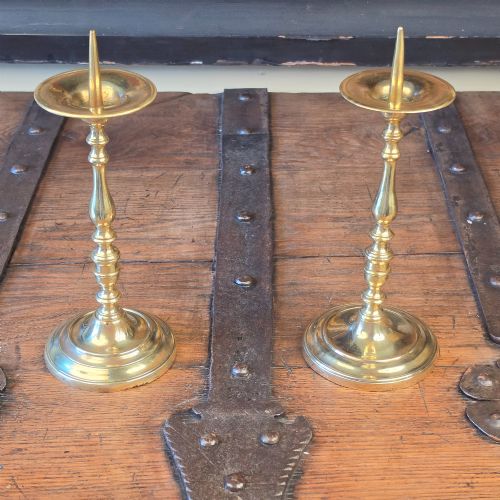
- A sharp metal spike set in the centre of the drip pan to impale large candles, common in ecclesiastical and liturgical settings. These differ from standard socket candlesticks.
- Ormolu
- Finely ground high-zinc brass applied as a gilt finish to bronze mounts, particularly favoured by French makers during the Empire and Restoration periods. The technique yields a rich golden lustre.
- Baluster
- A moulded architectural shaft that swells gracefully towards the base, providing structural stability and visual balance to candlesticks. This silhouette defines many Georgian and Victorian designs.
- Gueridon
- A small occasional table or stand used to support decorative objects and lighting fixtures. These tripod or pedestal furniture pieces often share spaces with heavy bronze and brass candlesticks.
Period Brass Candle Stands: Frequently Asked Questions
How do I use these stands today?
These metal stands accommodate taper candles to provide ambient lighting on dining tables, sideboards, and mantelpieces in contemporary homes. Their solid weight ensures stable placement during use.
Ensure you match the candle diameter carefully to the socket size to prevent tilting and wax spillage onto surrounding surfaces.
What is a pricket candlestick?
A pricket candlestick uses a sharp metal spike rather than a socket to hold the candle firmly in place. This form originates from church and chapel lighting traditions.
Collectors find these unusual variants in nineteenth-century interpretations of earlier ecclesiastical styles.
How do I clean period brass?
Dust these metal pieces gently with a soft, dry cloth to maintain the accumulated patina built up over centuries. Avoid aggressive chemical polishes that strip away historical character.
Preserving the natural oxidation ensures the object retains its genuine antique appearance and long-term collector value.
How do I date an antique stand?
Examine the base construction, metal coloration, and manufacturing marks such as seaming lines or ejector levers. Georgian items often display heavy cast brass construction and simpler geometric forms.
Victorian and Regency pieces frequently introduce more ornate neoclassical motifs, gilding, or secondary materials like marble.