


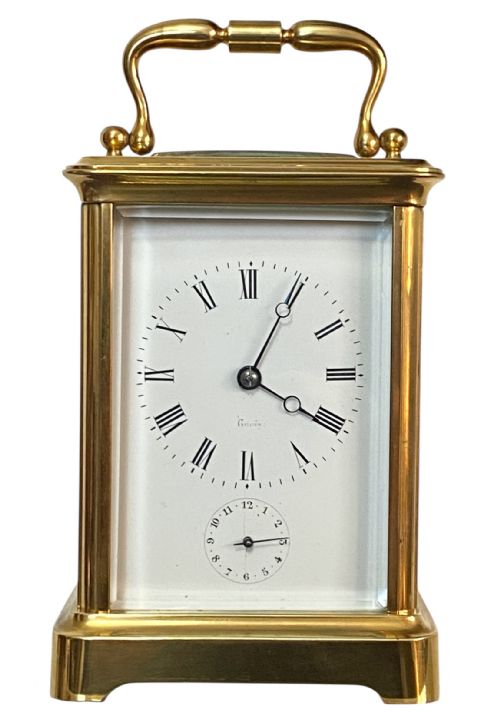
Vintage Swiss Table Clock
A vintage swiss table clock brings together precision movement and decorative metalwork, serving as a reliable desk or mantel centrepiece.
Vintage Swiss Table Clock
A vintage swiss table clock encompasses various formats designed for desks, tables and mantelpieces, ranging from travel pieces to sophisticated perpetual motion systems. When exploring vintage swiss table clock options, buyers encounter everything from Edwardian strut clocks to Mid-Century Modern designs.
The selections span multiple eras including Victorian, Art Deco, and the 1950s and 1960s. Common forms include carriage clocks, desk clocks, and skeleton timepieces manufactured by notable makers.
Materials and Construction
These timepieces utilise brass, gilt brass, chrome-plated metal, and rhodium for their housing structures, often paired with glass panels or bell-jar casings. Leather cases and enamel details, such as champlevé enamel, appear on specific Edwardian and carriage formats.
Movements incorporate jewelled bearings, such as 15-jewel mechanisms, alongside eight-day wind setups and perpetual motion technology driven by temperature variations in the atmosphere.
One model takes the shape of a miniature street lamp post.
Distinctions in Execution
Quality separates through the refinement of the casing finish, such as heavy gilt brass versus standard plated metal, and the complexity of the internal movement. Clocks featuring additional complications like alarms, grande sonnerie striking mechanisms, or specialised dials demonstrate higher manufacturing ambition.
The integrity of original components, including dials, hands, and fitted leather cases, influences the overall standard of the piece. Precision engineering in jewelled or perpetual movements marks the upper tier of production.
Harrods of London·Imhof·Van Cleef and Arpels·Luxor·Asprey·J F Bautte Et Cie
The Vintage Swiss Table Clock Glossary
- Atmos clock
- A mechanical timepiece created by Jaeger-LeCoultre that powered itself by changes in ambient temperature through a sealed expansion chamber.
- Strut clock
- A portable timepiece supported by a hinged prop or stand at the back for angled desk placement.
- Carriage clock
- A small, spring-driven timekeeper originally made for travellers, typically featuring a rectangular brass case with glass sides and a top carrying handle.
- Skeleton timepiece
- A clock designed with open framework plates that expose the inner gear train and escapement to view.
Vintage Swiss Table Clock: Frequently Asked Questions
How do Atmos clocks work without winding?
An Atmos clock operates using a hermetically sealed capsule containing a gas and liquid mixture that expands and contracts with minor temperature fluctuations. This mechanical expansion winds the mainspring continuously.
Because the temperature changes supply the necessary energy, the clock runs without manual intervention or batteries.
What is an eight-day movement?
An eight-day movement is a mechanical gear system designed to run for slightly more than a week on a single wind. This reduced the frequency required for manual winding.
These movements frequently appear in desk clocks and carriage clocks from the early to mid twentieth century.
Where were these clocks placed historically?
These timepieces were typically positioned on office desks, bedside tables, or drawing room mantelpieces. Their portable nature allowed owners to move them between rooms easily.
Travel variations often included fitted leather protective cases for journeys.
How are Art Deco models distinguished?
Art Deco pieces utilise geometric cases, skyscraper silhouettes, and chrome-plated metal finishes. The dial designs often feature clean numbering and minimalist hands.
Such styling reflects the industrial design preferences of the 1930s.