




Antique Style Desk Timepiece
An antique style desk timepiece brings precision and decorative presence to a study, combining period materials like ormolu, brass and marble.
Antique Style Desk Timepiece
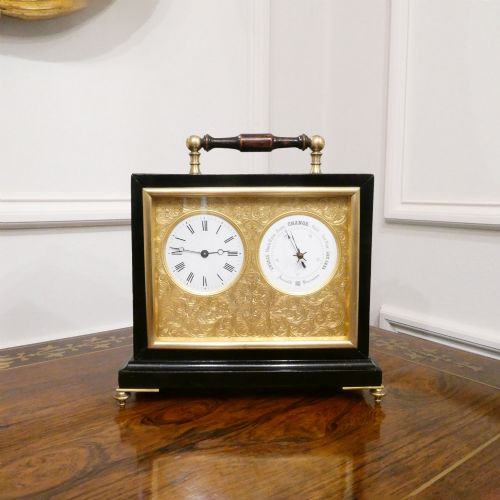
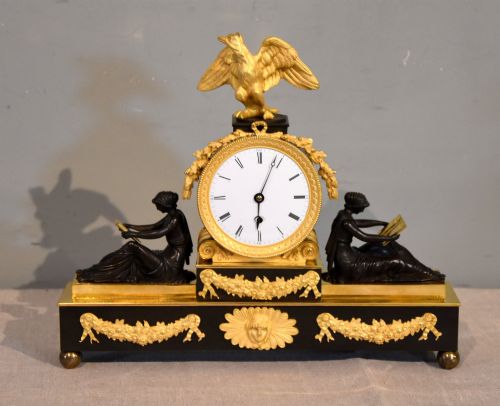
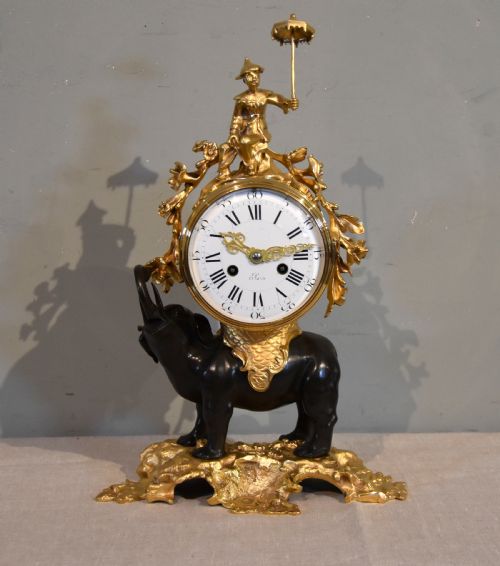
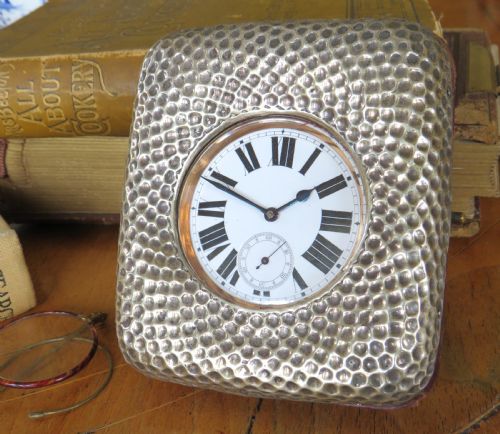
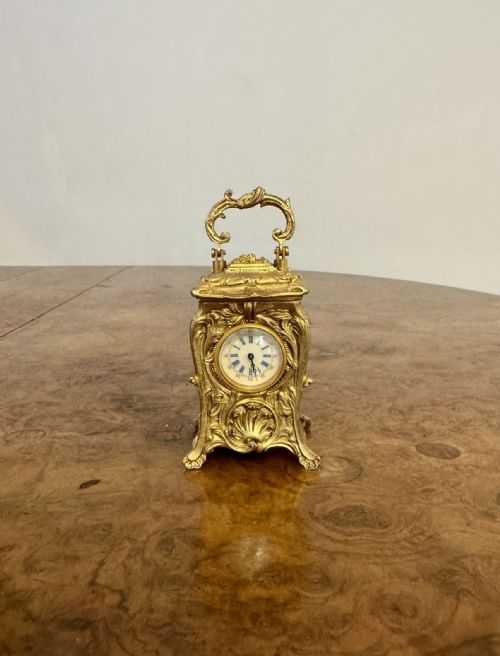
An antique style desk timepiece is a compact horological object designed for tabletops, mantels and writing desks, drawing on nineteenth-century forms. The selection encompasses carriage clocks, strut clocks, miniature bed-side pieces and small mantel clocks spanning Regency, Victorian and Edwardian periods.
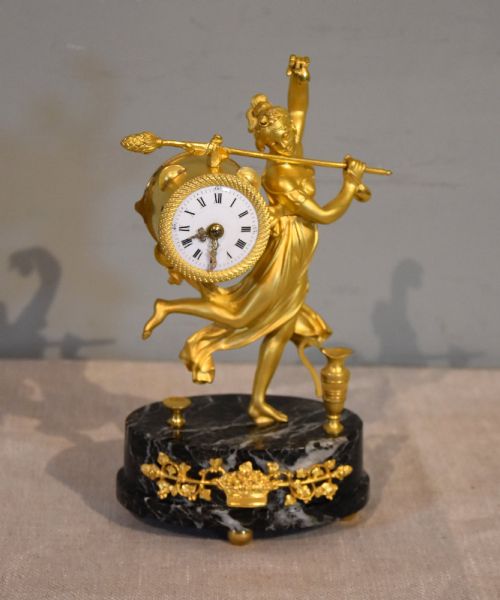
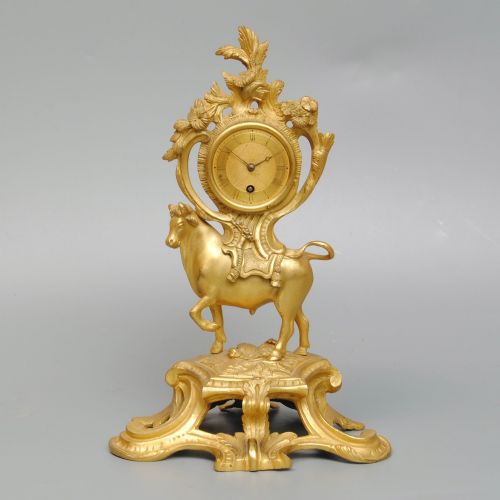
Makers and workshops from London and France produced these pieces in styles ranging from French Rococo Revival and Louis XVI to plain brass carriage designs. Buyers encounter everything from simple glass-cased crystal regulators to elaborate figural bronzes featuring lions, elephants and marble bases.
How they were made
Craftsmen utilised cast brass, gilt bronze and ormolu to form intricate cases, often mounting them on green or white marble plinths. Dial faces frequently incorporate white enamel with delicate numerals, protected behind bevelled glass panels.
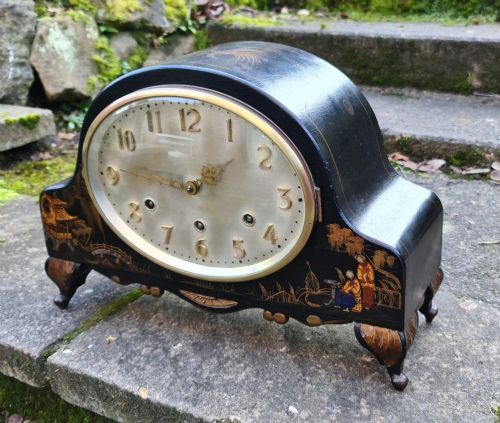
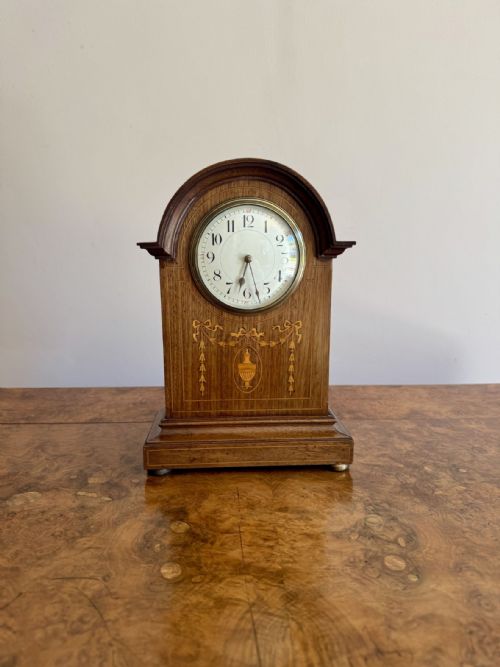
Cabinetmakers also employed mahogany and lacquered woods for larger mantel and desk housings, incorporating inlaid details and brass carrying handles on travel pieces.
Listings feature 19th-century, Regency, Victorian, and Edwardian periods, constructed in brass, marble, mahogany, and ormolu.
What varies in quality
The refinement of the casting and champing on ormolu and gilt brass elements separates standard production from superior examples. Crisp detailing on figural mounts and substantial marble plinths indicate finer workshop origins.
Movement complexity and signature attribution also distinguish pieces, with signed dials from notable makers carrying greater horological interest than unsigned equivalents.
Richard Winter of Chieveley·Baetens London·Pickford of London·Viner London·Howell & James·Leon Message·Jollet et Cie·Samuel Marti·Imhof·Tiffany·J C Vickery London·McCabe London
The Antique Style Desk Timepiece Glossary
- Timepiece
- A clock that indicates the time without striking hours or quarters. This mechanism focuses purely on visual timekeeping rather than acoustic signals.
- Ormolu
- Gilded bronze produced by applying a mercury and gold amalgam to cast bronze. This technique creates a rich golden surface found on many French and English decorative cases.
- Crystal regulator
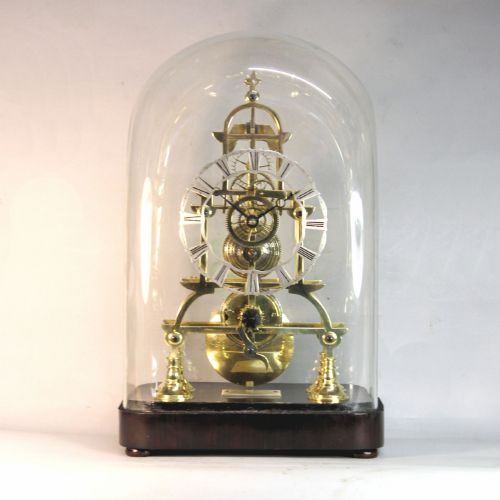
- A mantel clock housed within glass panels that reveal the mechanical movement from multiple angles. These often feature an enamel dial and mercury-filled pendulum.
- Carriage clock
- A portable spring-driven timepiece with a carrying handle, originally designed for officers travelling in carriages. They frequently feature glass sides to display the escapement.
- Strut clock
- A portable timepiece supported by a hinged prop or strut on the back, intended for standing on desks and dressing tables. They are commonly encased in silver, brass or leather.
Antique Style Desk Timepiece: Frequently Asked Questions
How do I wind a desk timepiece?
Most antique desk timepieces utilise a key inserted into the dial or backplate to tension the mainspring.
Care should be taken not to overwind the movement, stopping as soon as resistance is felt.
Where should I place a carriage clock?
Position your clock on a stable, level surface away from direct sunlight, draughts and damp areas.
Desks, mantelpieces and side tables provide ideal settings where the movement can be viewed clearly.
How do I tell Victorian from Edwardian styles?
Victorian pieces often lean towards heavy, ornate revival styles like Rococo or Gothic, utilising rich marbles and deep bronze finishes.
Edwardian designs tend to be lighter, incorporating inlaid mahogany cabinets and refined brasswork influenced by earlier Georgian aesthetics.
What is the difference between a clock and a timepiece?
A standard clock includes a striking train that chimes the hours or plays musical tunes using bells or gongs.
A timepiece contains only the going train required to drive the hands and show the hours.