



Vintage Stacked Tables
Vintage stacked tables solve space problems with clever engineering, offering multiple surfaces that hide away neatly when floor space matters.
Vintage Stacked Tables
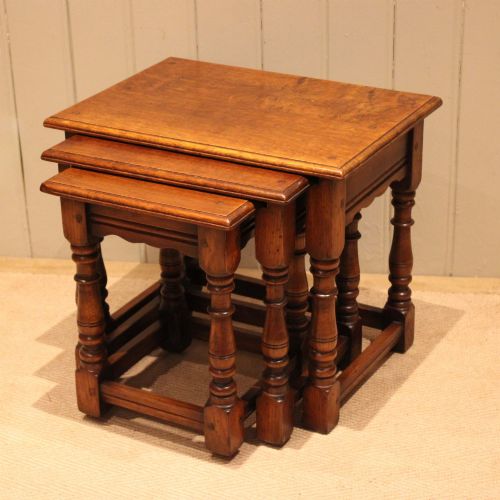
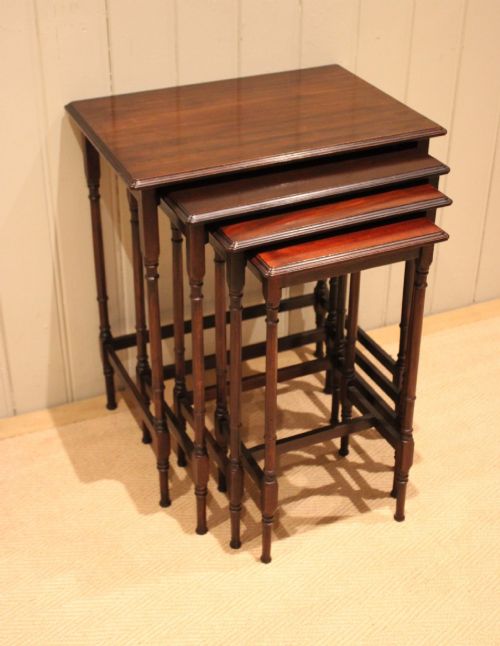
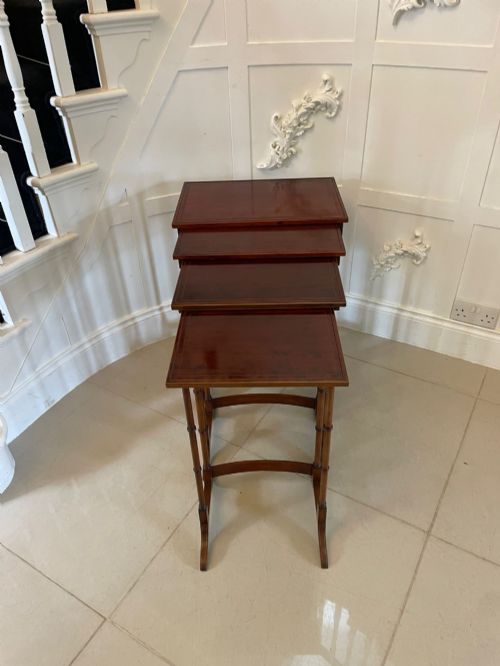
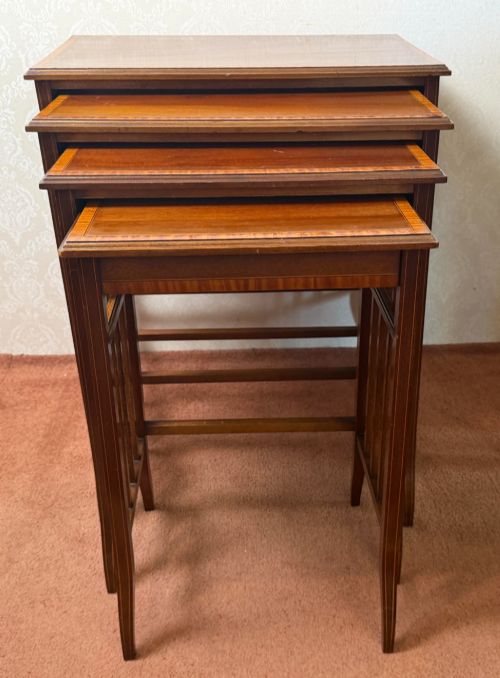
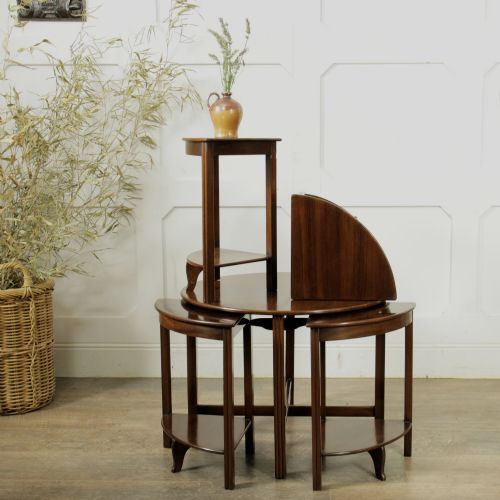
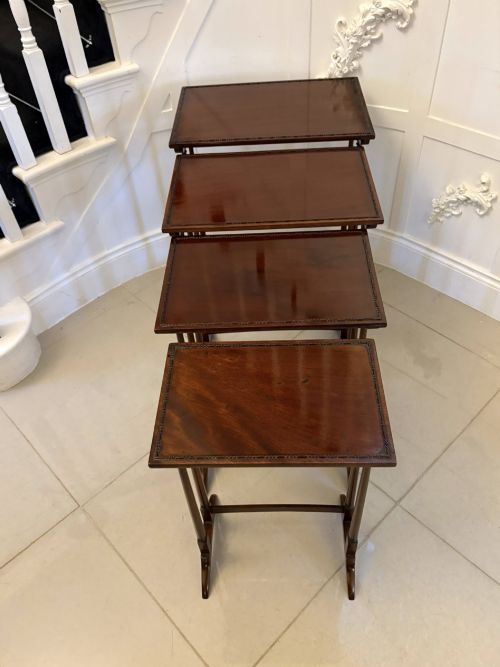
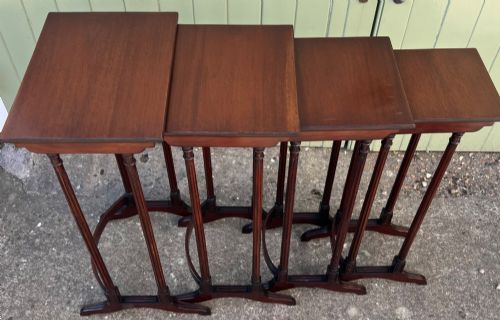
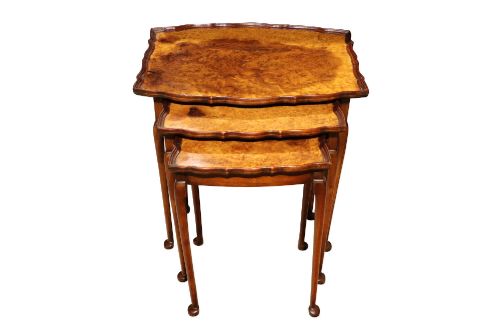
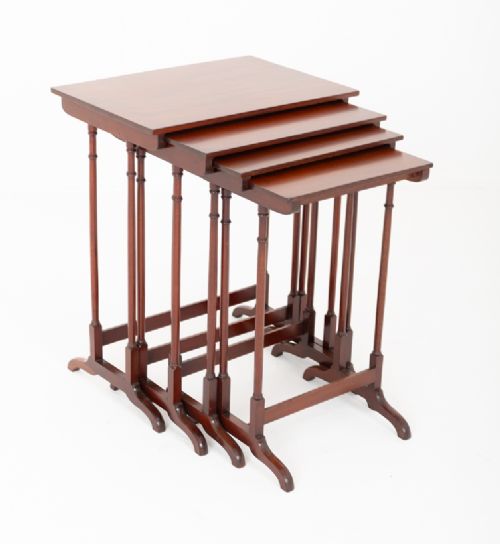
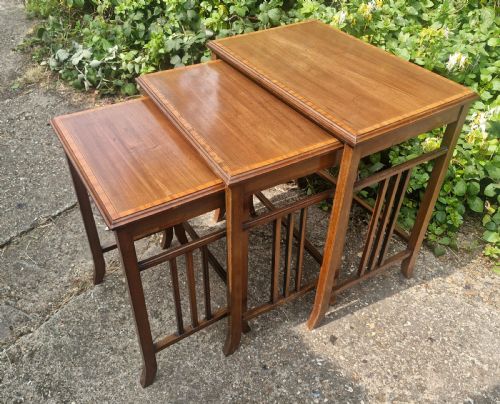
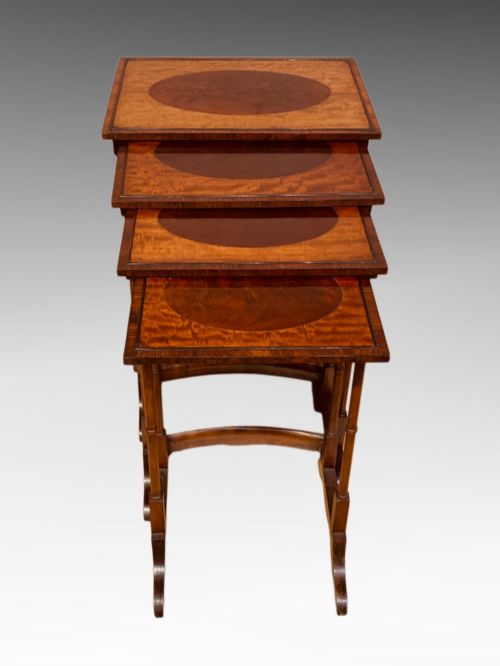
Vintage stacked tables, most frequently encountered as nests of tables or quartetto sets, comprise graduating surfaces designed to slide beneath one another. These sets appear primarily in Edwardian and early twentieth-century formats, alongside nineteenth-century examples and Art Deco designs.
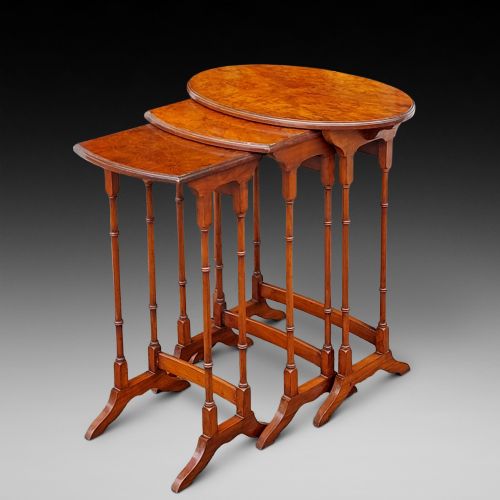
The form spans sets of three, four, or five tables, allowing them to function together as a single compact unit or scatter across a room for entertaining. Mahogany remains the dominant timber, accompanied by walnut, burr walnut, rosewood, and satinwood.
Originating largely from domestic English production alongside French workshops, these pieces adapt readily to modern interiors. They provide practical side surfaces without demanding permanent floor space.
How they were made
Cabinetmakers constructed these tables using dense hardwoods like mahogany and walnut, frequently applying decorative veneers such as burr walnut, satinwood crossbanding, and exotic rosewood to the top surfaces. Inlaid details in contrasting timbers or brass wire often define the Edwardian and French pieces.
Structural integrity relied on precise joinery, particularly for the slender legs and framing required to let each smaller table slide smoothly into position above the next. Some variations incorporate specialised top treatments, including embossed leather or Chinoiserie lacquer work.
Listings feature mahogany, walnut, satinwood, oak, and rosewood across periods ranging from Victorian to Art Deco.
What varies in quality
The distinction between standard utility sets and exceptional examples lies in the choice of timber figure, the crispness of any inlay, and the precision of the nesting mechanism. Finer pieces employ highly figured burr veneers or carefully selected satinwood rather than plain secondary woods.
Hand-finished details, such as delicate stringing, carved edge mouldings, or signed maker attribution, separate mass-produced furniture from superior workshop output. The overall stability of the frame when fully assembled indicates the original standard of construction.
Émile Gallé·Heal's
The Vintage Stacked Tables Glossary
- Quartetto nest
- A set of four graduating tables designed to slide neatly one beneath another. The term derives from musical quartets, reflecting the harmony of the nested group.
- Crossbanding
- A decorative border of veneer laid around the perimeter of a table top so that the grain runs at right angles to the central panel. This technique frames the primary timber and adds visual depth.
- Inlay
- Pieces of contrasting wood, shell, or brass set into the surface of a table to create patterns or lines. It demonstrates advanced cabinetmaking skill.
- Parquetry
- Geometric patterns formed by small pieces of wood veneer fitted together across a surface. French walnut examples frequently utilise this decorative method.
- Chinoiserie
- European decorative style reflecting Chinese artistic motifs, often rendered in lacquer and painted decoration. It appears on select twentieth-century occasional tables.
Vintage Stacked Tables: Frequently Asked Questions
How were nesting tables used historically?
These tables served primarily in drawing rooms and parlours for serving tea, holding books, or accommodating guests during gatherings. When not in use, the smaller tables slid beneath the largest one to save space.
Their modular design made them versatile additions to Victorian and Edwardian domestic interiors where rooms served multiple daily functions.
How do I distinguish Edwardian sets from later periods?
Edwardian sets typically feature lighter mahogany timbers, delicate satinwood inlay, and tapered or slender turned legs. They lean towards traditional aesthetic revivals.
Later Art Deco examples from the nineteen-thirties introduce bolder grains like Indian rosewood, simpler geometric lines, and occasional asymmetrical proportions.
Can I use vintage stacked tables daily?
These tables adapt well to modern living, offering convenient movable surfaces for drinks or laptops beside seating. Their compact footprint suits contemporary apartments.
Gentle handling and coasters help preserve fragile polished veneer and inlaid surfaces during everyday use.