


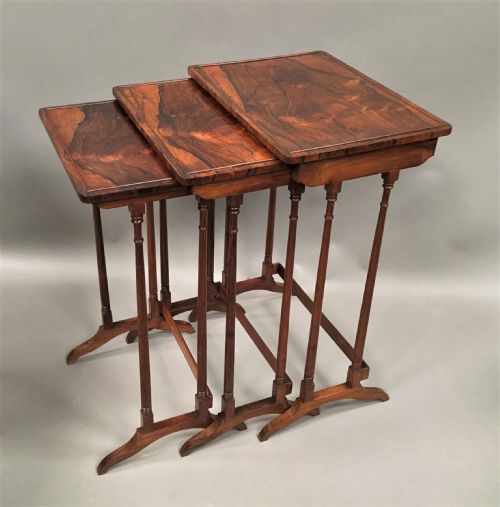
Regency Furniture Nest
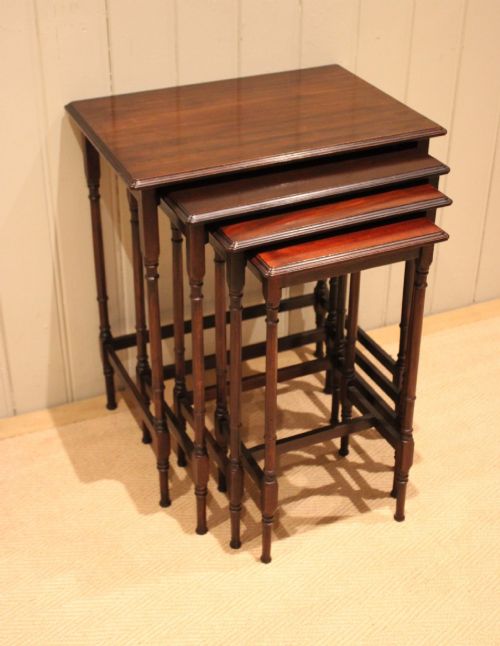
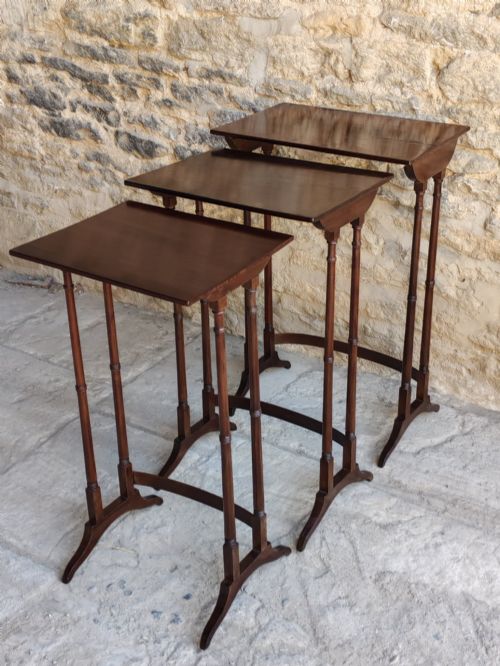
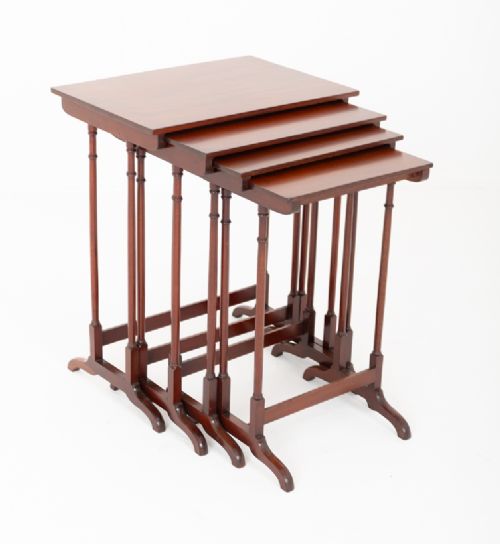
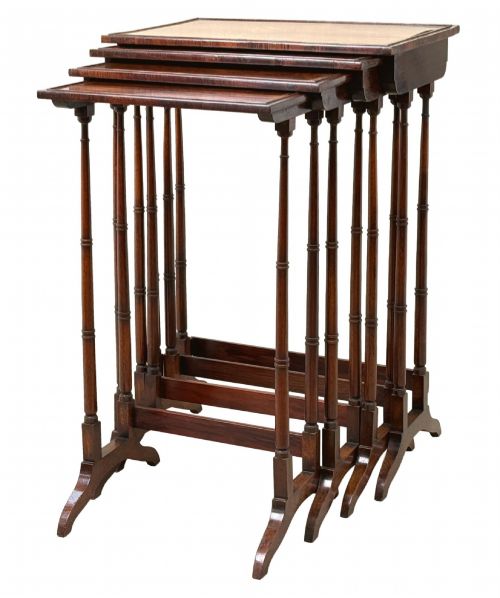
These regency furniture nest examples offer versatile graduating tables that slide neatly together to save floor space.
Regency Furniture Nest
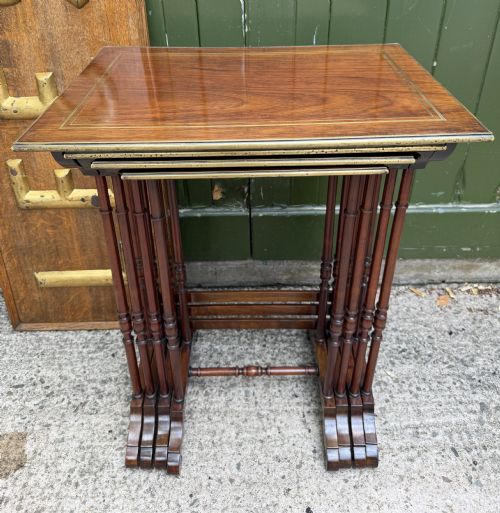
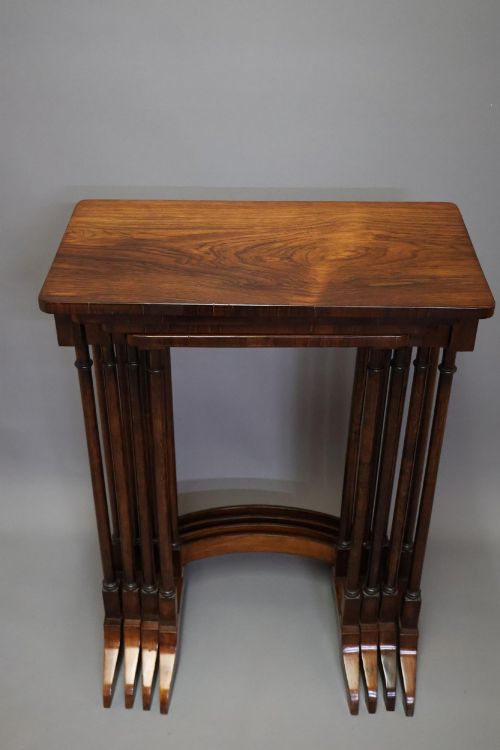
When you search for a regency furniture nest, you find sets of graduating tables designed to slide one beneath another when not in use. The form appears as nests of three or four tables, frequently known historically as quartetto tables.
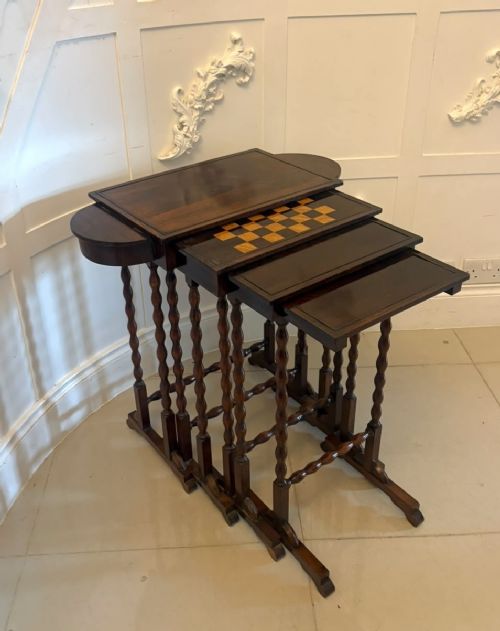
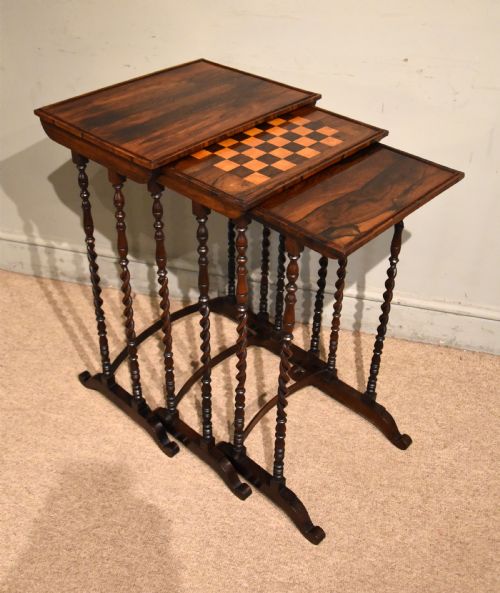
The pieces on this page span the Regency period itself alongside later revivals from the nineteenth and early twentieth centuries. Alongside standard occasional tables, the selection includes specialised forms such as an integrated chess table and brass trolley tables.
How they were made
Cabinetmakers constructed these tables using dense hardwoods including mahogany and rosewood, often enhanced with contrasting veneers such as satinwood, burr walnut, and boxwood. Workshops applied fine stringing and intricate brass inlay to accent the timber grains.
Surface decoration extends beyond natural wood finishes to include Chinoiserie lacquer work. Structural framing incorporates fitted supports designed to allow the smaller tables to glide smoothly into position.
Listings feature woods such as rosewood, mahogany, satinwood, and burr walnut alongside brass inlay and lacquer finishes.
What varies in quality
Quality rests primarily on the choice of timber and the precision of the cabinetwork uniting the graduating frames. Better examples utilise figured rosewood or mahogany with crisp inlay and secure joints that maintain smooth operation.
Maison Baguès·W&C Wilkinson London
The Regency Furniture Nest Glossary
- Quartetto tables
- A set of four graduating tables designed to nest together. This term was frequently used during the Regency period.
- Inlay
- A technique where contrasting materials are set into the surface of the wood to create decorative patterns. Brass and lighter woods like boxwood were commonly utilised.
- Veneer
- A thin layer of figured wood applied over a secondary timber base. This method allowed makers to display striking grain patterns on table tops.
- Chinoiserie
- European decorative style reflecting Chinese artistic traditions. It often appears as painted lacquer decoration on furniture surfaces.
Regency Furniture Nest: Frequently Asked Questions
What is a quartetto table?
A quartetto table is a set of four graduating occasional tables designed to nest inside one another.
This format became popular during the Regency era for space-saving entertaining in polite drawing rooms.
How were nesting tables used?
They served as portable surfaces for tea, reading materials, or games that could be separated around a room as needed.
When the company departed, the smaller tables slid back into the largest frame to clear the floor.
How do I spot a revival piece?
Revival pieces often date from later periods such as the late nineteenth century or around nineteen twenty.
Inspect the timber finish, construction methods, and hardware to distinguish nineteenth-century production from the original Regency era.
What woods are typical?
Rosewood and mahogany form the primary structure of these tables.
Makers accented these dark timbers with lighter decorative elements including satinwood, boxwood, and brass inlay.