




Brown Wood Nest of Tables
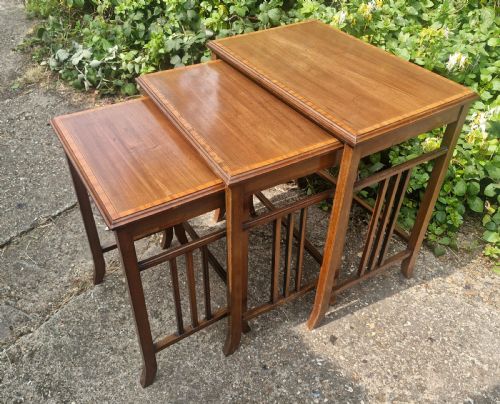
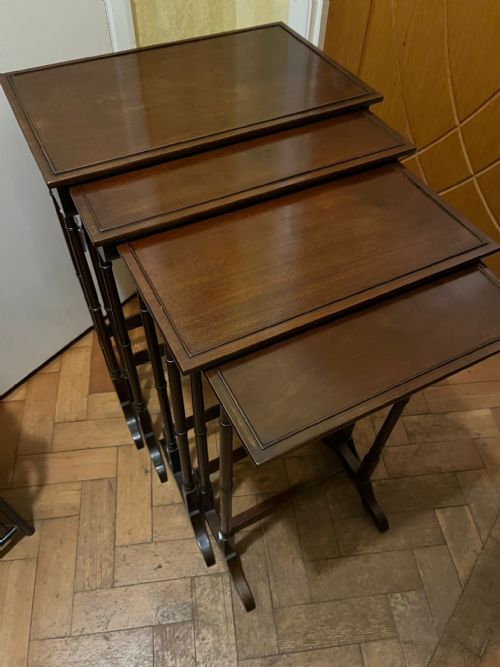
A brown wood nest of tables offers a clever space-saving design that stacks multiple surfaces neatly together until needed.
Brown Wood Nest of Tables
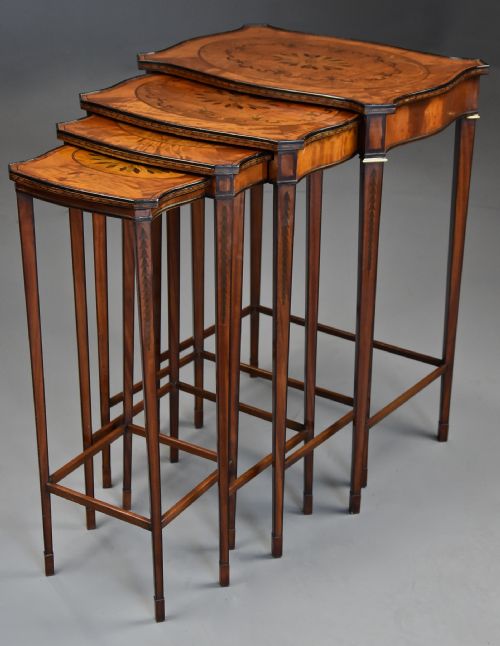
A brown wood nest of tables brings together sets of graduated occasional tables that slide neatly beneath one another to save floor space in a room. When buyers search for a brown wood nest of tables, they encounter forms ranging from standard rectangular sets to circular, oval, and serpentine shapes.
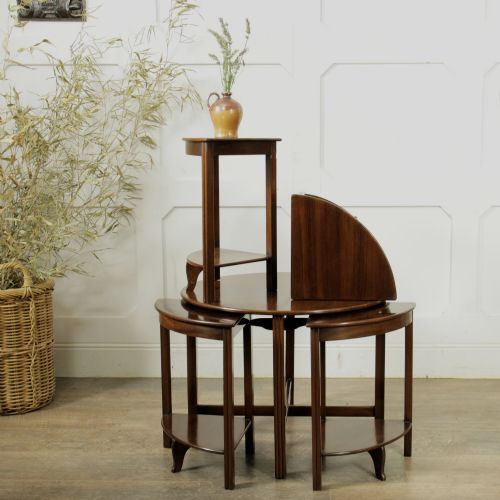
The pieces span multiple eras and design influences, including Edwardian, Victorian, and Regency periods alongside Art Deco and Chinese Export styles. Mahogany remains the most common timber found in these nested sets, frequently accompanied by walnut, rosewood, and satinwood.
Materials and Construction
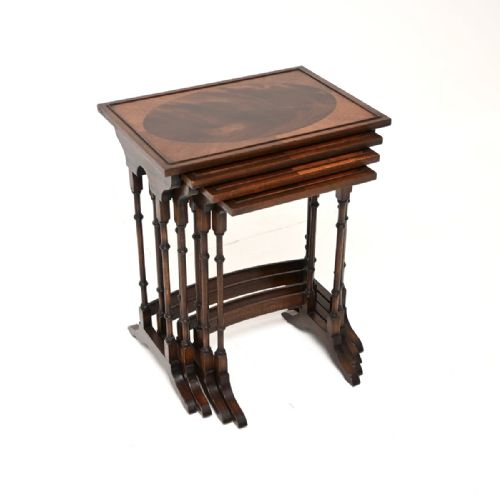
Cabinetmakers constructed these tables using a variety of dense hardwoods like mahogany, teak, and walnut, often applying decorative veneers such as yew or rosewood to the table tops. Inlaid details incorporating boxwood and satinwood appear frequently on Edwardian pieces, adding geometric or botanical borders.
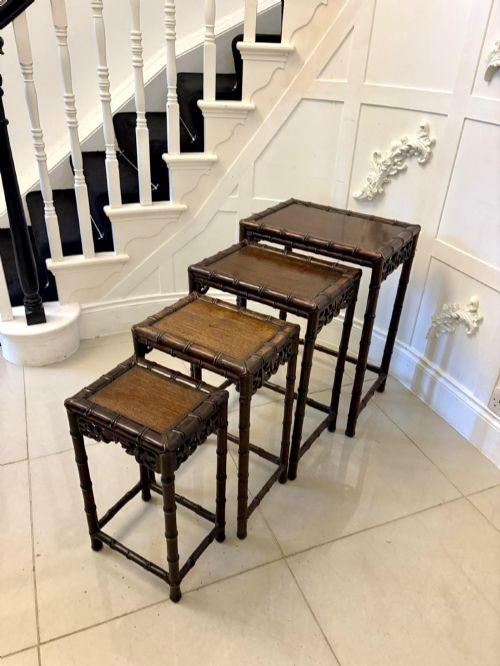
Joinery methods range from simple turned legs and stretcher supports to complex carved bamboo imitation frames, parquetry tops, and marquetry pictorial panels. Structural integrity relies on tight joints that allow each graduated table to slide smoothly into position without scraping the timber below.
Some Victorian tables are carved from faux bamboo, proving that Victorians loved a convincing botanical illusion just as much as we do.
Assessing Craftsmanship and Distinction
Quality in these nested tables rests on the selection of timber veneers, the crispness of inlaid details, and the precision of the graduating frame sizes. Finer examples display meticulous marquetry work, such as Killarney ware or detailed Chinoiserie carvings, whereas simpler utilitarian versions rely on plain polished surfaces.
The structural balance when all tables are extracted determines the overall success of the piece, as lesser items wobble or fail to align correctly. Superior sets maintain stability across all three or four tables while retaining slim profiles that permit seamless stacking.
Émile Gallé·Heal's·Gillows
The Brown Wood Nest of Tables Glossary
- Quartetto
- A matched set of four small occasional tables designed to nest together. These pieces typically feature slender legs and graduated dimensions.
- Marquetry
- The art of applying pieces of veneer to a structure to form decorative patterns and pictures. This technique often appears on Victorian tabletop surfaces.
- Parquetry
- A geometric mosaic of wood pieces used for decorative floors and tabletops. It creates repeating patterns across the surface of the wood.
- Chinoiserie
- European decorative art imitating Chinese artistic styles. This aesthetic appears on carved oriental nesting tables from the early twentieth century.
- Inlay
- A technique where contrasting materials are embedded into the surface of a base timber to form ornamental designs. Boxwood and satinwood frequently form these linear insertions.
Brown Wood Nest of Tables: Frequently Asked Questions
What is a quartetto nest of tables?
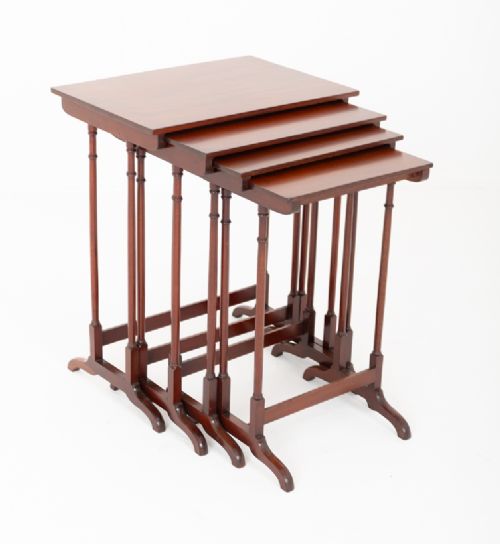
A quartetto set consists of four individual tables designed to stack inside one another in a graduated sequence. These sets gained popularity during the Regency and Edwardian periods for flexible entertaining.
They occupy the footprint of a single small table while providing multiple distinct surfaces for drinks or books.
How do I identify an Edwardian nest?
Edwardian nests often feature lighter mahogany timbers decorated with delicate boxwood stringing or satinwood inlay. They frequently take oval, circular, or serpentine forms.
These pieces reflect the lighter, more graceful furniture styles favoured at the turn of the twentieth century.
What timbers were used for these tables?
Cabinetmakers primarily relied on mahogany, walnut, rosewood, and teak for the main frames and tabletops. Decorative veneers and contrasting woods like satinwood and boxwood provided ornamental detail.
Some regional or export varieties also utilised Chinese hardwoods or specialised local timbers.
How were nesting tables used historically?
Historically, these tables served as occasional furniture deployed around a sitting room when guests arrived for tea or card games. When the gathering concluded, the smaller tables slid back into the main frame to clear the room.
This practical design made them essential furnishings for compact Victorian and Edwardian drawing rooms.