
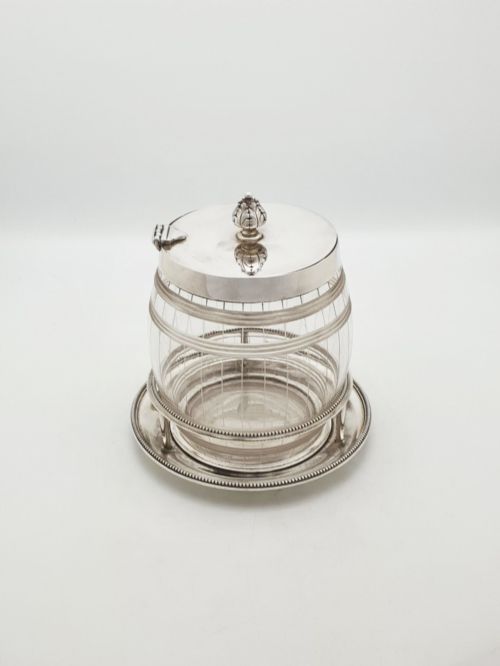
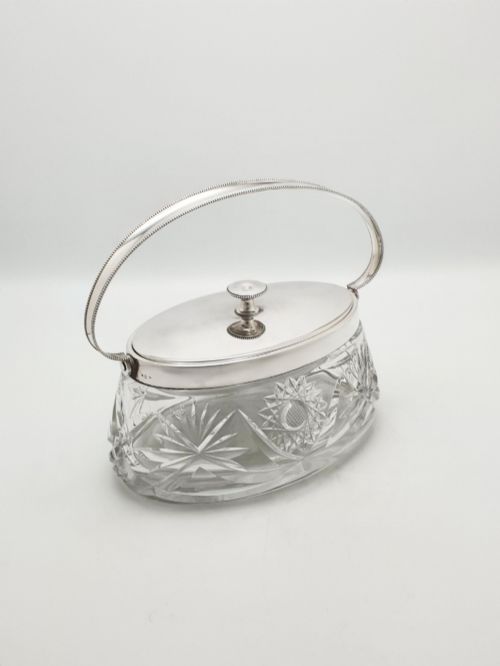


Vintage Silver Biscuit Box
A vintage silver biscuit box sits on the table as a heavy, handsome container designed to keep biscuits dry while looking splendid.

Vintage Silver Biscuit Box
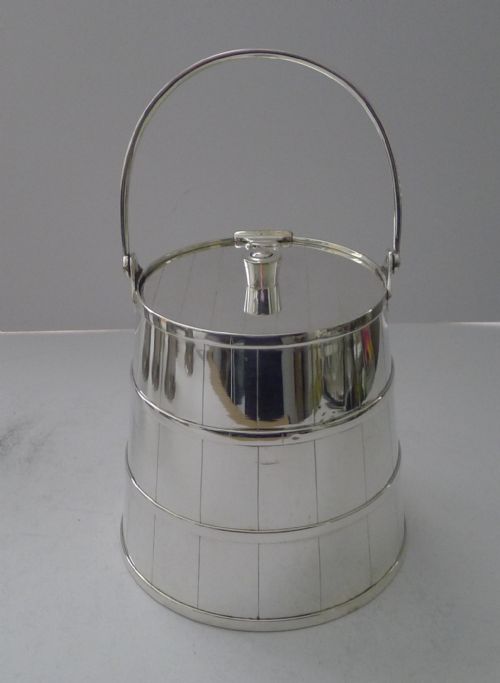
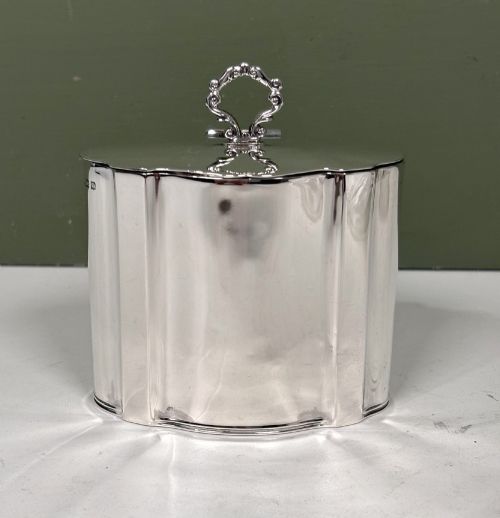
When you search for a vintage silver biscuit box, you are looking at substantial vessels used to serve dry goods in the Victorian, Edwardian, and early twentieth-century dining room. These pieces appear in forms ranging from straightforward cylindrical barrels to elaborate novelty shapes and mounted cut glass.
The versions most common on this page combine silver plate with cut glass, ceramic, stoneware, or oak. They date from the mid-nineteenth century through the art deco era, reflecting shifts in dining habits from formal Victorian service towards lighter twentieth-century styles.
How they were made
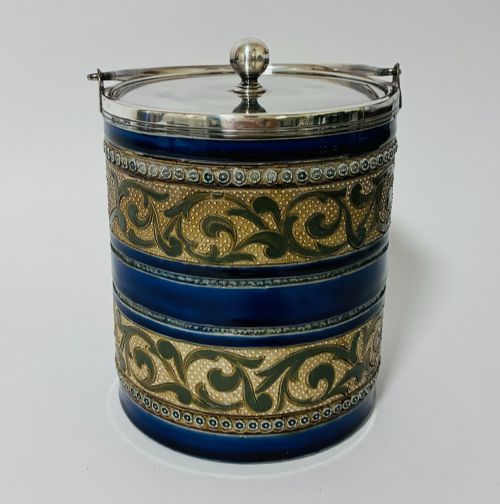
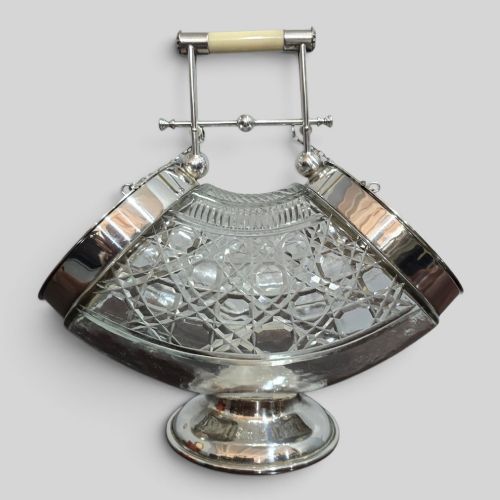
Makers constructed these containers using a base of solid silver, electroplated nickel silver, or silver plate combined with materials like cut glass, Doulton Lambeth stoneware, ceramic, and English oak. Glass vessels feature hobnail cutting, faceting, or twisted profiles, while metal components involve silver plating over base metal or solid sterling silver.
Many examples incorporate hinged lids, swing handles, and cast finials such as heraldic dragons or novelty weights. Workshops employed techniques of pressing glass, mounting timber in metal bands, and electroplating complex frames to hold heavy bodies securely.
Listings feature periods from the Victorian era through the 1930s, using silver plate, cut glass, oak, and stoneware.
What varies in quality
The distinction between ordinary and exceptional pieces lies in the weight of the materials and the crispness of the mountings. Heavier gauge silver plate, deeply cut crystal, and solid oak bodies denote superior production.
Design ambition also separates the range, with standard cylindrical barrels sitting below inventive novelty forms, automated mechanisms, and named maker output. The integration of ceramic bodies from potteries like Doulton Lambeth adds distinct character to better pieces.
Doulton Lambeth·Elkington·WMF·John Grinsell And Sons·James Dixon And Sons
The Vintage Silver Biscuit Box Glossary
- Silver plate
- A thin layer of silver applied to a base metal such as copper or nickel silver. This technique allowed makers to produce robust tableware at a lower cost than solid silver.
- Electroplated nickel silver
- A common base metal alloy of copper, nickel, and zinc coated with an electrolytic layer of silver. It provided a durable foundation for Victorian and Edwardian holloware.
- Hobnail cut
- A decorative glass-cutting pattern consisting of small, pyramid-shaped facets that catch the light. It adds texture and weight to nineteenth-century vessels.
- Finial
- A decorative knob or ornament attached to the top of a lid. On these pieces, they range from simple spheres to cast heraldic dragons.
Vintage Silver Biscuit Box: Frequently Asked Questions
What are vintage silver biscuit boxes?
These pieces are covered containers created to store and present biscuits during formal tea services and dining rituals.
They combine metal mounts with bodies of glass, ceramic, or oak to protect dry goods from humidity.
How were biscuit barrels used?
Hosts placed them on the table during afternoon tea or after dinner so guests could help themselves to dry biscuits.
The hinged lids kept the contents fresh while the swing handles allowed easy circulation around the table.
How do I date a silver biscuit box?
Dating relies on a combination of hallmarks, registration numbers, and stylistic markers such as Victorian ornamentation or art deco lines.
Materials like oak and cut glass also correspond to specific manufacturing periods between the mid-nineteenth and early twentieth centuries.
How do I clean silver plate?
Careful dusting with a soft cloth removes everyday surface grime without harming the plated layer.
Avoid abrasive polishes that can wear away thin silver plating over decades of use.
Are these pieces solid silver?
Most examples use silver plate or electroplated nickel silver over a base metal rather than solid silver.
Solid sterling silver versions exist but are less common and typically feature clear hallmarks.