


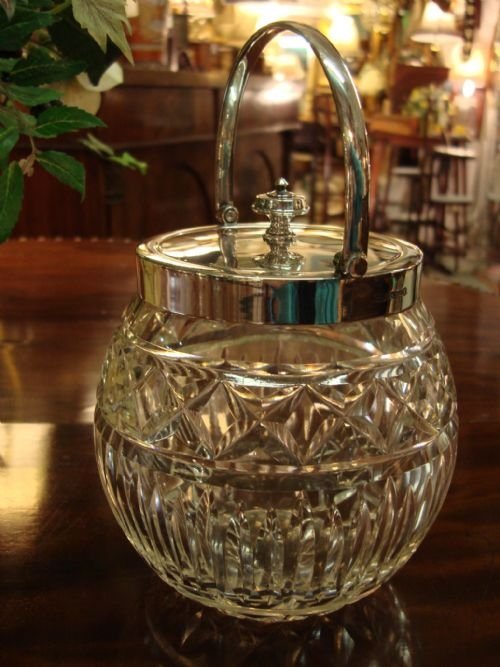
Silver Cut Glass Barrel
These silver cut glass barrel pieces combine weighty crystal bodies with gleaming metal mounts to grace any dining table.
Silver Cut Glass Barrel
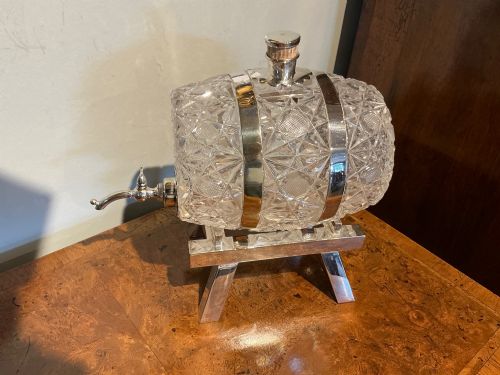
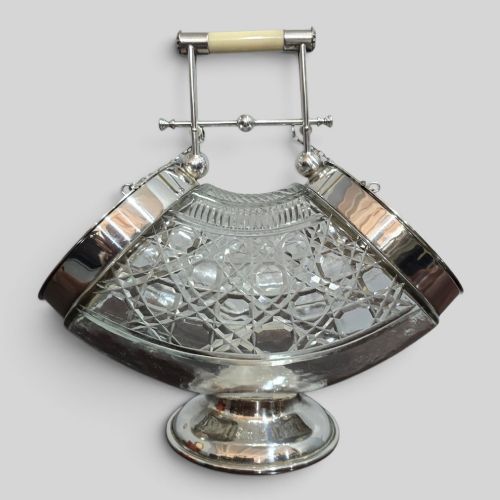
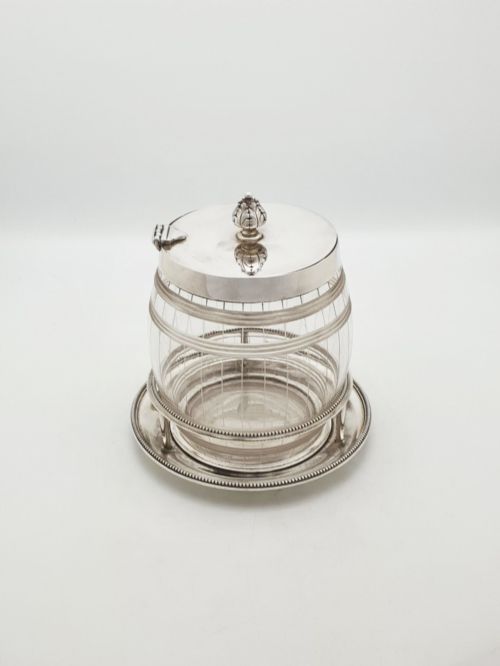
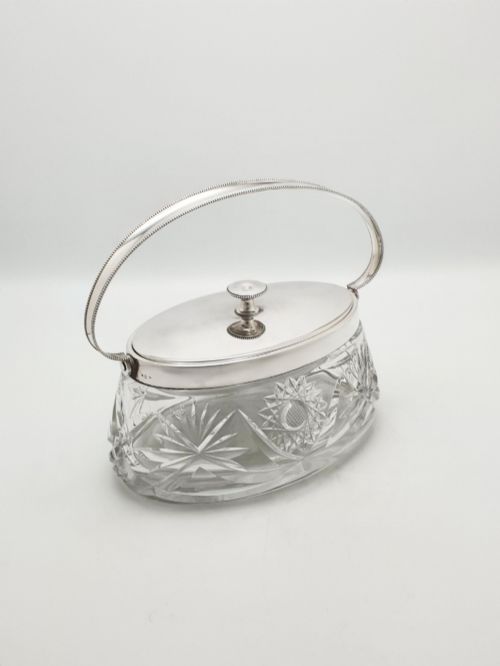
A silver cut glass barrel serves principally as a biscuit box, ice pail or spirit container, shaped with cylindrical or curved glass profiles. Victorian and Edwardian examples dominate the selection, often resting in matching stands or fitted with handles and hinged lids.
Makers produced these cylindrical vessels across several decades, spanning the late Victorian era through the Art Deco period. The primary forms include lidded biscuit barrels alongside spirit barrels fitted with taps and resting on wooden trestles.
Materials and Construction
Craftsmen shaped heavy lead crystal or standard glass bodies by cutting deep geometric patterns into the surface, including hobnail and faceted designs. Some vessels utilise coloured cranberry glass or overlay techniques to create striking visual contrast.
Mounts, lids, swing handles and finials consist of either sterling silver or silver plate applied over a base metal. Cork stoppers and metal taps complete the functional elements on liquid containers.
Some Victorian barrels feature fierce heraldic dragon finials guarding the dry biscuits inside.
Quality Variations
The precision and depth of the glass cutting dictate the visual crispness of each barrel, separating simple moulded pieces from deeply carved crystal. Heavier silver mounts and substantial gauge silver plate reflect higher manufacturing costs.
Elkington·WMF·Walker and Hall·James Dixon and Sons·John Grinsell and Sons·William Hutton·Henry Williamson
The Silver Cut Glass Barrel Glossary
- Biscuit Barrel
- A covered vessel designed for storing and serving dry biscuits at the table. These containers typically feature a hinged metal lid and a swing handle.
- Hobnail Cut
- A raised geometric pattern carved into the surface of glassware, resembling the faceted head of a traditional clout nail. This technique catches the light sharply.
- Silver Plate
- A thin layer of silver fused to a base metal, commonly utilised to provide the appearance of solid silver at a lower cost. Many Victorian barrels utilise this durable method.
- Jugendstil
- The continental European manifestation of the Art Nouveau movement, characterised by flowing organic lines. Pieces bearing this style appear occasionally among the British items.
- Faceted Glass
- Glassware finished with numerous flat polished planes that create geometric reflections. This surface treatment is common on early twentieth-century examples.
Silver Cut Glass Barrel: Frequently Asked Questions
What were silver cut glass barrels used for?
These vessels served primarily to hold biscuits, dry provisions, ice or spirits for guests in the dining room or drawing room. Their sealed lids helped keep contents fresh.
They stood on sideboards or dining tables as decorative items of utility during formal entertaining in the nineteenth and twentieth centuries.
How do I date a silver cut glass barrel?
Dating relies on hallmarks stamped into the silver mounts, style markers such as Jugendstil or Art Deco framing, and the specific cut of the glass. Victorian pieces often display heavier mounts and deep hobnail cutting.
Assessor marks on sterling silver sections provide exact year ciphers, whereas silver-plated variants require stylistic comparisons with known maker catalogues.
How do I clean a glass and silver barrel?
Wash the glass body gently in warm soapy water using a soft cloth, avoiding harsh abrasives that might scratch the surface or damage coloured cranberry glass. Clean silver or plated mounts with a dedicated polish applied sparingly.
Keep moisture away from cork linings and internal wooden components to prevent warping or deterioration over time.
Are these barrels suitable for everyday use?
Sturdy construction makes these vessels robust enough for serving dry goods or ice during modern gatherings, provided they are handled with reasonable care. The thick cut crystal is remarkably durable.
Owners should hand wash all components rather than placing them in a dishwasher to preserve the silver plating and glass clarity.