
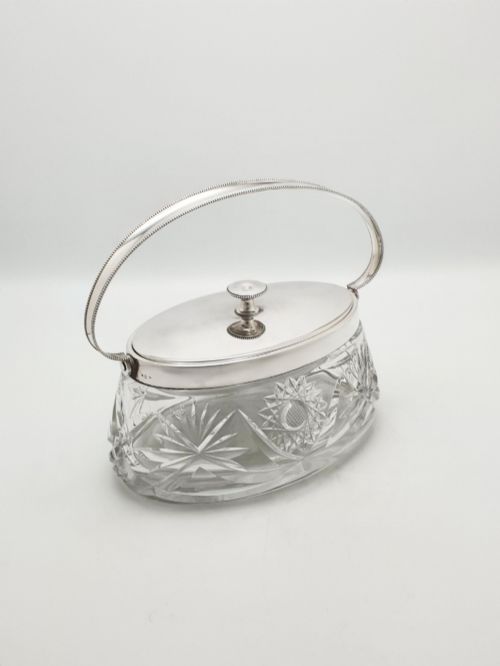


Silver Plate Biscuit Container
These silver plate biscuit container pieces are elegant lidded vessels designed for the dining table, combining plated metal mounts with ceramic or glass bodies.
Silver Plate Biscuit Container
A silver plate biscuit container sits on the dining table or sideboard, designed to keep dry baked goods fresh behind a secure lid. You will encounter these vessels most often in Victorian and Edwardian forms, spanning styles from classic Neoclassical to flowing Jugendstil and Art Deco.
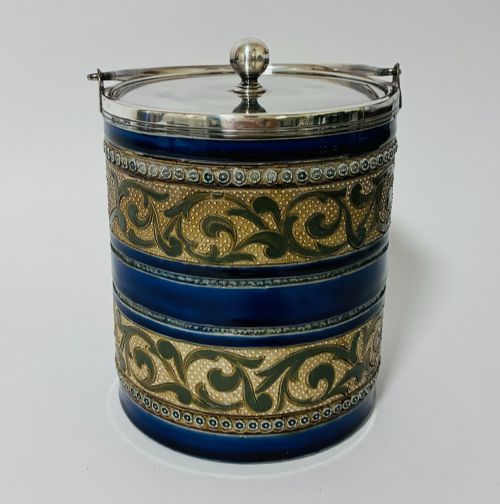
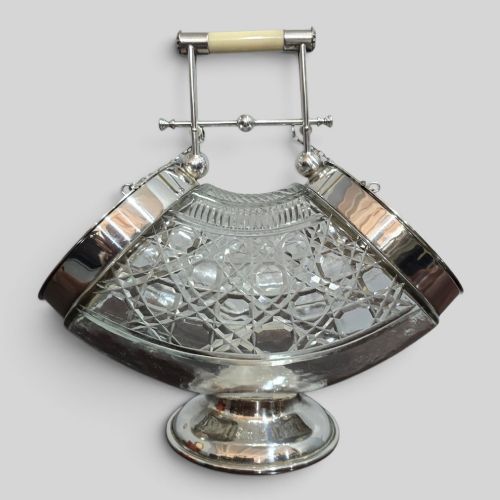
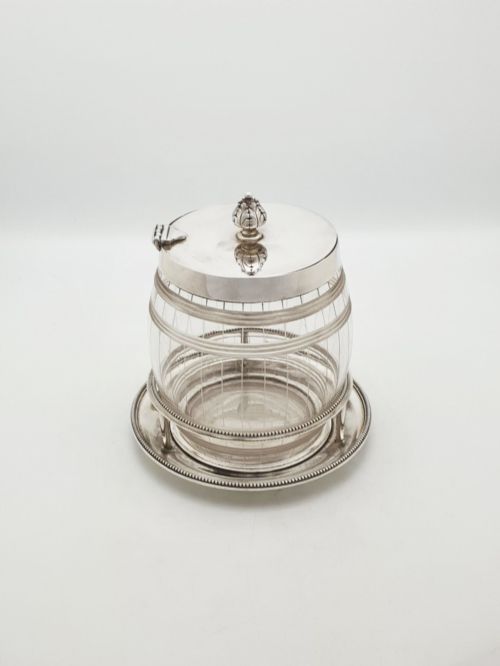
The core shapes on this page include cylindrical ceramic jars, faceted cut glass bodies, and novelty forms such as weighted metal boxes. Makers utilised earthenware, stoneware like Doulton Lambeth and Wedgwood Jasperware, and cranberry glass alongside electroplated nickel silver mounts.
Originating predominantly from English workshops, these items serve as both practical storage and decorative table art. The selection moves from simple ceramic jars with hinged lids to elaborate mounted pieces complete with swing handles and stands.
Materials and construction
Makers formed the structural bodies from blown glass, pressed earthenware, or thrown stoneware, often applying deep hobnail cuts, floral transfers, or moulded relief details. These bodies required precise inner dimensions to fit snugly within metal collars and mounts.
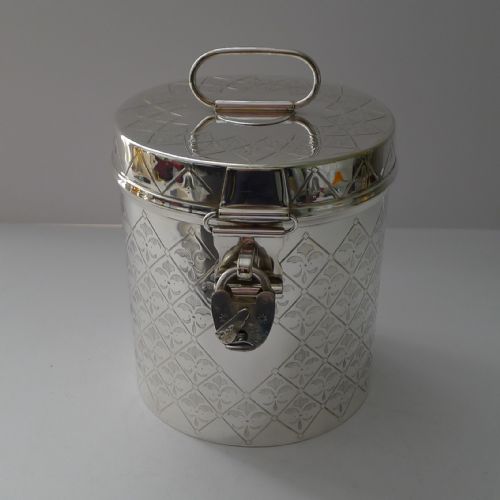
The metal components rely on electroplated nickel silver or standard silver plate applied over a base metal, sometimes accented with gold leaf. Hinged lids, swing handles, and locking mechanisms were cast and soldered separately before attachment to the main vessel.
A few biscuit containers take the form of heavy metal weights, secretly storing dry snacks inside a surprisingly convincing mail parcel.
Assessing quality and execution
Quality depends upon the crispness of the glass cutting, the depth of the ceramic relief work, and the weight of the metal mounts. Better examples display heavier silver plating, robust hinges that hold their position, and securely fitted lids.
Distinction also lies in the material variety and artistic ambition, separating standard ceramic jars from pieces featuring cranberry glass, intricate Doulton Lambeth stoneware, or complex locking mechanisms by established makers.
Mappin and Webb·Elkington·WMF·Thomas Bradbury·Wedgwood·Doulton Lambeth
The Silver Plate Biscuit Container Glossary
- Electroplated Nickel Silver
- A base metal alloy coated with a layer of pure silver through an electrical process. This technique became the standard method for producing durable domestic tableware during the Victorian period.
- Cranberry Glass
- A rich red-pink transparent glass created by adding gold chloride to the molten batch. It appears frequently in Edwardian table wares paired with bright silver-plated mounts.
- Jasperware
- A fine-grained, unglazed stoneware developed by Wedgwood, typically featuring white applied reliefs against a coloured background. It provides a classic matte contrast to polished metal lids.
- Hobnail Cut
- A raised, faceted pattern cut into the surface of glassware that resembles the hobnails on heavy boots. This technique catches the light and adds considerable weight to the vessel.
- Finial
- The decorative knob or ornament attached to the top of a lid. On these vessels, finials range from simple spheres to heraldic animals.
Silver Plate Biscuit Container: Frequently Asked Questions
How were biscuit containers used?
These vessels were placed on the dining table or sideboard during tea and dessert courses to hold dry biscuits and crispbreads. The heavy lidded design helped protect the contents from moisture and staleness in a domestic dining room.
Servants would fill the containers in the kitchens before bringing them out for family meals or formal gatherings. The inclusion of swing handles allowed guests to pass the container easily around the table.
How do I date a silver plated container?
Dating relies on observing the prevailing aesthetic styles, manufacturing techniques, and material combinations recorded in the piece. Victorian examples often feature heavy ornamentation and classical motifs, while Edwardian versions lean towards lighter glass bodies and simpler mounts.
Technological shifts, such as the introduction of electroplated nickel silver in the nineteenth century, provide a baseline for production eras. Maker marks and registration numbers stamped into the metal also help narrow the timeline of manufacture.
What is cranberry glass?
Cranberry glass is a distinctive transparent glass coloured by adding gold to the molten mixture during production. It yields a deep pinkish-red hue that contrasts sharply with polished silver-plated mounts.
This material gained immense popularity during the late Victorian and Edwardian periods for decorative table items. Its vibrant colour makes it a focal point in any collection of glassware.
Are novelty biscuit boxes rare?
Novelty forms, such as those shaped like weighted parcels or heavy metal blocks, represent a playful departure from standard ceramic and glass barrels. These items utilised the same silver-plating techniques but applied them to surprising architectural or utilitarian shapes.
Makers produced these less frequently than traditional jars, catering to Victorian and Edwardian tastes for witty conversation pieces. Their unusual silhouettes distinguish them within a standard tabletop collection.