


Vintage Ruby Diamond Brooch
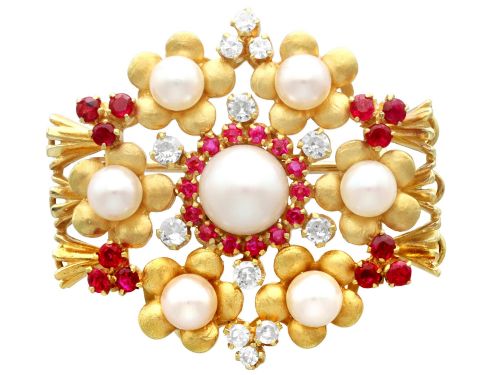
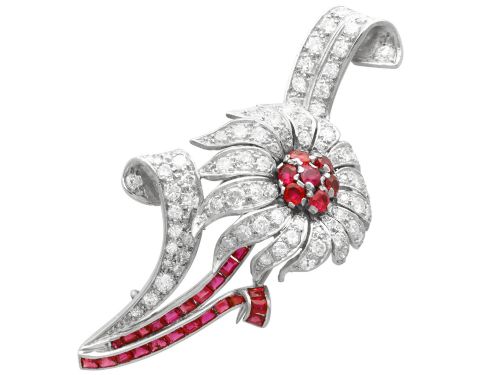
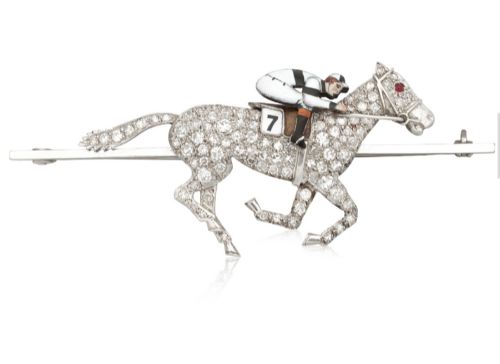
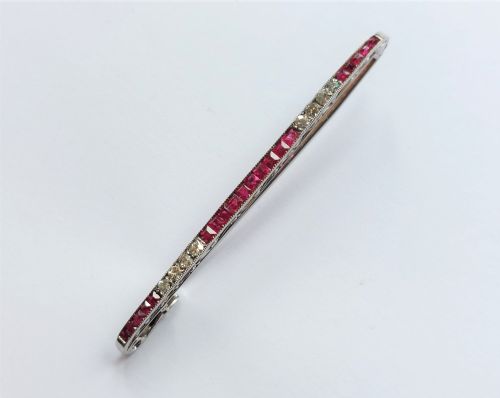
These vintage ruby diamond brooch pieces bring together rich red gemstones and bright stones in gold and platinum mountings.
Vintage Ruby Diamond Brooch
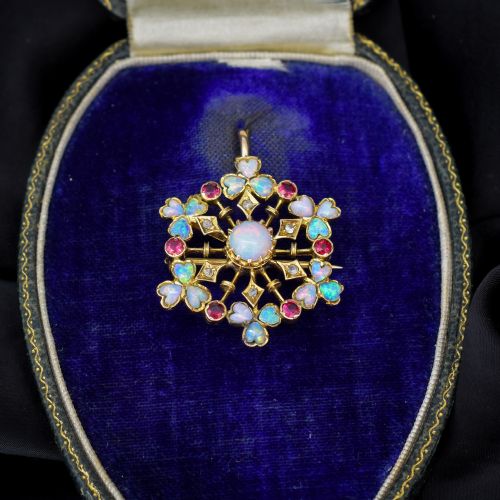
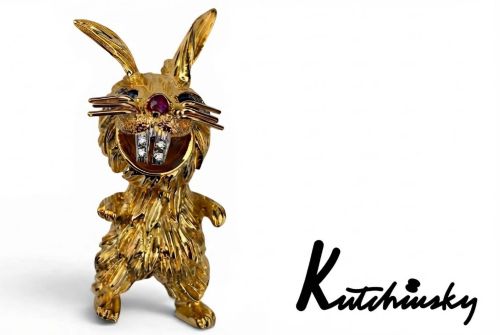
When you search for a vintage ruby diamond brooch, you encounter pieces spanning from the Victorian and Edwardian eras through the Art Deco period and mid-century designs. The selection includes bar brooches, floral motifs, crescent shapes, and figural animal designs like rabbits, birds, and insects.
The version most commonly met on this page is the Edwardian or early twentieth-century bar brooch set in gold and platinum, alongside mid-century creations employing yellow gold and white gold. These items function both as dress fastenings and as pendant combinations.
The evidence shows diverse material combinations reaching back to the nineteenth century, incorporating sapphires, emeralds, pearls, and rose-cut diamonds alongside central rubies. Makers and workshops from London and France appear among the mid-century works.
How they were made
The construction of these pieces relies on precious metals including 9ct gold, 18ct yellow and white gold, platinum, and silver settings. Metalworkers formed intricate frames to hold rubies and diamonds securely within floral, geometric, and naturalistic forms.
Gemstones are hand-set into the metalwork, utilising claw settings, bezel mounts, and pavé arrangements. Natural rubies and diamonds shape the focal points of crescents, bar pins, and figural subjects.
Materials recorded across the inventory include ruby, diamond, sapphire, emerald, pearl, silver, platinum, and various gold purities.
What varies in quality
The calibre of the gemstones dictates the upper tier of these pieces, specifically the depth of colour in the rubies and the cut of the diamonds. Heavier carat weights and signed workshop pieces stand apart from unsigned or smaller examples.
The complexity of the metalwork, whether a delicate insect bar brooch or a heavy gold multi-gem animal figure, marks the distinction between standard production and fine jeweller craftsmanship.
Kutchinsky·Ben Rosenfeld·Gubelin
The Vintage Ruby Diamond Brooch Glossary
- Bar brooch
- A horizontal pin configuration popular during the Edwardian and Art Deco periods. This form places gems along a narrow metal rod.
- Crescent brooch
- A curved ornament shaped like a moon. Makers frequently set graduated rubies and diamonds along the arch.
- Platinum
- A dense, durable white metal utilised in Edwardian and later mounts to secure fine gemstones with minimal visible metal.
- Rose-cut diamond
- An antique stone shape featuring a domed top with triangular facets and a flat base. This cut appears on earlier eighteenth and nineteenth-century pieces.
Vintage Ruby Diamond Brooch: Frequently Asked Questions
How do I wear a vintage ruby diamond brooch?
Pin the piece firmly to heavy fabrics such as wool lapels, winter coats, or structured scarves to support the weight of the gold and gemstones.
For pendant-combination pieces, thread a gold chain through the integrated loop to wear the jewel around the neck.
What periods do these brooches come from?
The listings include nineteenth-century, Victorian, Edwardian, Art Deco, and mid-century eras up to the 1960s.
Each period brings distinct metal choices and motifs, ranging from silver-topped gold insect pins to 18ct white gold geometric bars.
Are these brooches made of solid gold?
The pieces utilise various solid precious metals including 9ct yellow gold, 9ct rose gold, 14ct gold, and 18ct yellow or white gold.
Platinum and silver also appear, frequently combined with gold in Edwardian settings to enhance the brilliance of the diamonds.
How can I tell an Edwardian brooch from a mid-century one?
Edwardian examples often feature platinum-topped silver or gold settings with delicate lace-like wirework, pearls, and insect or floral motifs.
Mid-century pieces from the 1950s and 1960s display heavier yellow gold construction, abstract or figural animal subjects, and bolder gemstone arrangements.