


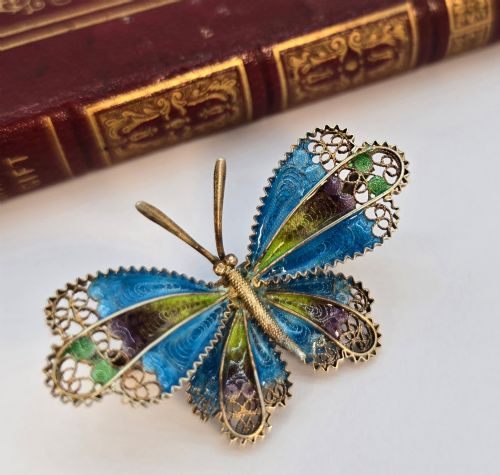


Art Deco Gold Pin
An art deco gold pin delivers geometric symmetry and fine gemstones, bringing period elegance to modern lapels.
Art Deco Gold Pin
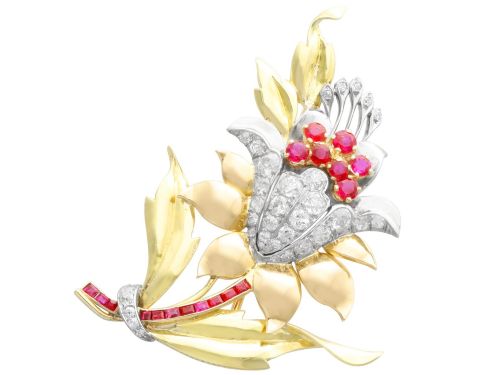
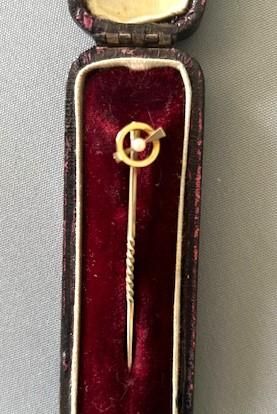
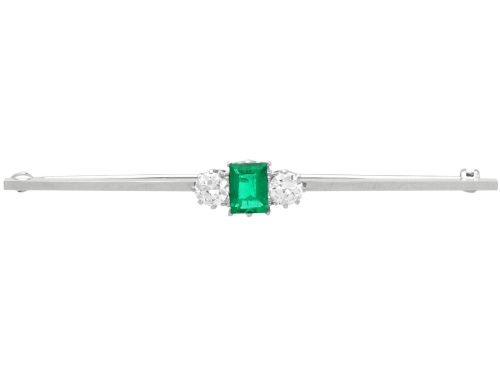
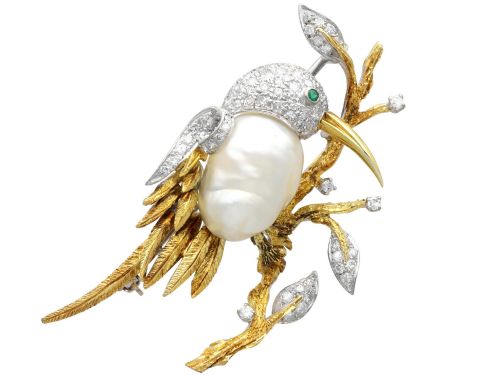
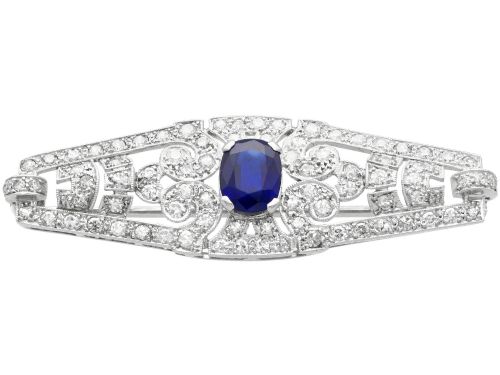
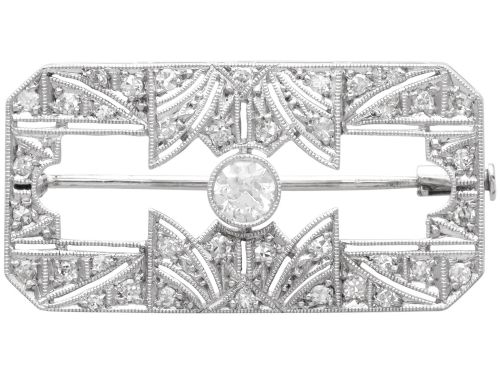
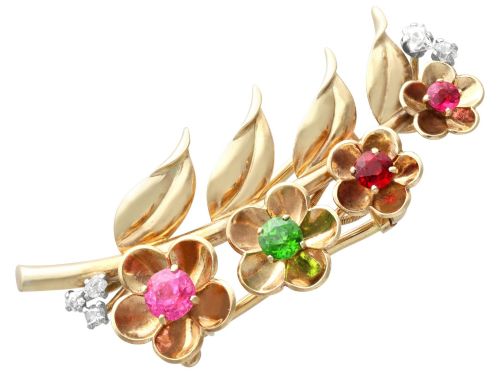
When you search for art deco gold pin, you enter a field of brooches spanning the 1920s and 1930s, alongside adjacent periods like the Edwardian era, 1940s, 1950s, and 1960s. The common forms take shape as bar brooches, floral sprays, and geometric pins.
Yellow gold, white gold, and platinum dominate the metalwork, often paired together in French workshop traditions. These pieces served as decorative fastenings for lapels, scarves, and hats during the interwar years and beyond.
Materials and technique
Goldsmiths utilised 18ct yellow and white gold alongside platinum to construct rigid settings that could securely hold numerous small stones. Platinum sections frequently provided the bright, durable foundation required for delicate millegrain edges and intricate pierced work.
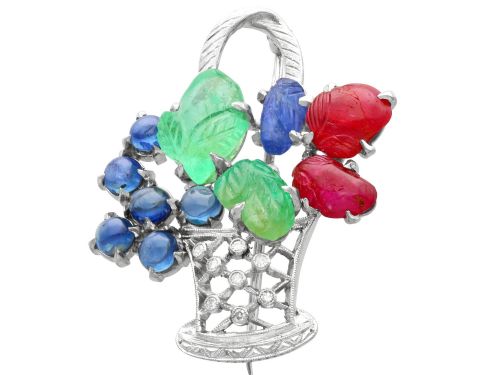
Gemstones such as old-cut diamonds, rubies, sapphires, pink pearls, onyx, and rock crystal quartz were meticulously channel-set or pavé-set to create flat, continuous planes of colour and light.
Art Deco Gold Pin Retail Price Guide 2026
Typical asking prices for art deco gold pin among the pieces listed under this phrase on Sellingantiques today, from the lower quarter to the upper quarter. They describe what is for sale here now, not the wider market.
Listings feature 18ct yellow gold, 18ct white gold, platinum, and silver gilt alongside diamonds, rubies, sapphires, and pink pearls.
Assessing the work
The distinction between ordinary and exceptional pieces rests upon the precision of the metal geometry and the uniformity of the stone cutting. Finer examples display meticulous hand-piercing and perfectly matched calibre-cut gems that sit flush within their bezels.
Design complexity also dictates the tier, where multi-tiered floral sprays or combined platinum and gold constructions require superior bench skills compared to simple bar forms.
The Art Deco Gold Pin Glossary
- Bar brooch
- A slender horizontal pin format that became the canvas for linear gemstone arrangements during the early twentieth century. This shape allows light to catch a continuous row of diamonds or coloured stones across the wearer's chest.
- Old-cut diamond
- A hand-faceted stone shape predating modern brilliant cutting standards, characterised by a smaller table and a high crown. These stones display softer, broader flashes of light under candlelight.
- Millegrain
- A decorative technique featuring a row of tiny raised metal beads along the edge of a setting. This border softens the transition between metal and stone.
- Platinum
- A dense, white precious metal chosen for its strength in secure, ultra-thin jewellery settings. It permits intricate openwork designs without risking structural failure.
- Onyx
- A black chalcedony variety frequently sliced into thin geometric inlays to provide high-contrast backdrops for diamonds in geometric compositions.
Art Deco Gold Pin: Frequently Asked Questions
How do I wear an art deco gold pin?
These pieces fasten securely to heavy coat lapels, thick knitwear, or structured scarves using traditional pin stems and safety catches.
Position the piece horizontally on a lapel or vertically on a dress bodice to let the weight of the gold and platinum anchor the fabric correctly.
Were these pins only made in the 1920s?
While the core style belongs to the 1920s and 1930s Art Deco period, similar bar and spray pins continued into the 1940s and 1950s.
Maker techniques and stone cuts help distinguish true interwar examples from later mid-century reinterpretations.
What is the difference between white gold and platinum settings?
Platinum offers greater tensile strength, allowing jewellers to construct finer wirework and more secure claw settings for diamonds.
White gold provides a similar silvery appearance with a warmer tone and lighter weight across larger brooch frames.
How do I clean my gold and diamond pin?
Use a soft brush with warm soapy water to gently remove dust from behind closed-back stone settings.
Avoid harsh chemical dips, particularly if the piece incorporates pearls, onyx, or enamel elements that react poorly to moisture.