



Burmese Ruby Jewellery
Burmese ruby jewellery brings together deep crimson corundum and fine precious metals in rings, drop earrings, and bracelets that collectors prize for their rich colour.
Burmese Ruby Jewellery
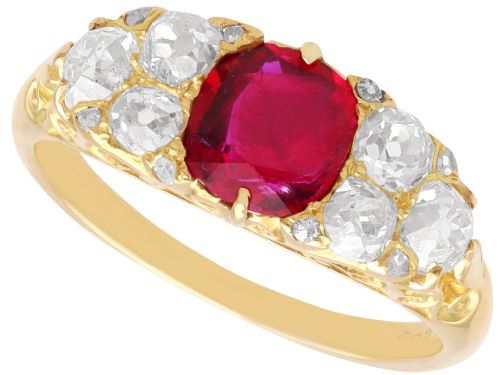
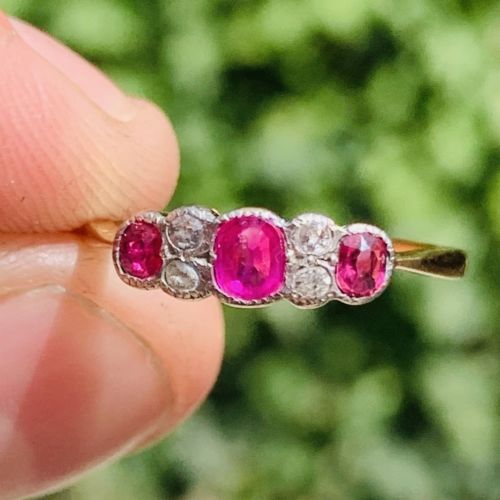
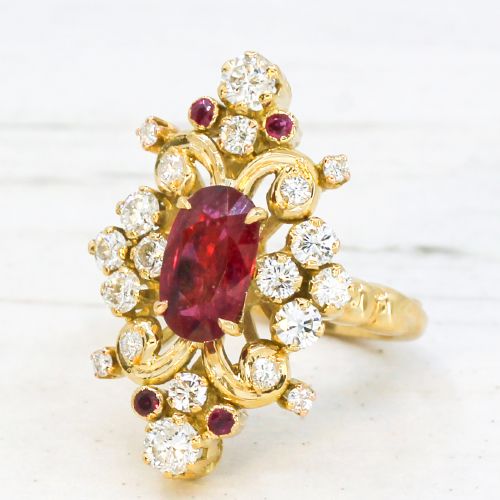
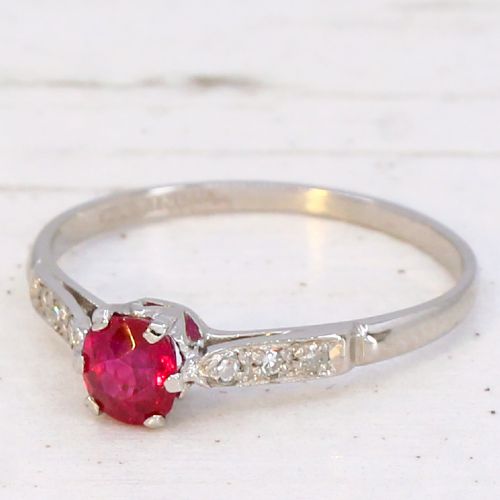
When you search for Burmese ruby jewellery, you look at pieces that span from the late Victorian era through the Edwardian period and into the Art Deco and mid-twentieth-century decades. These items take the form of dress rings, cluster rings, solitaire rings, drop earrings, pendant brooches, and multi-gemstone bracelets.
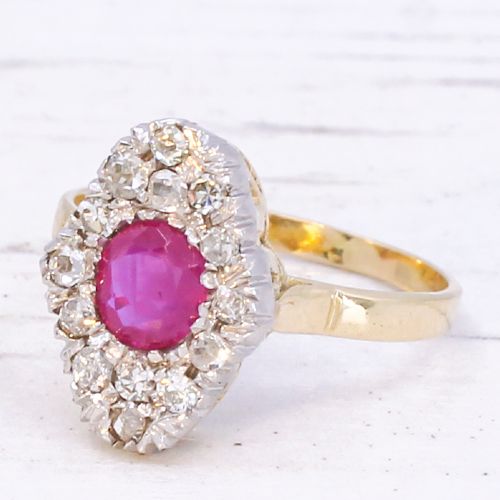
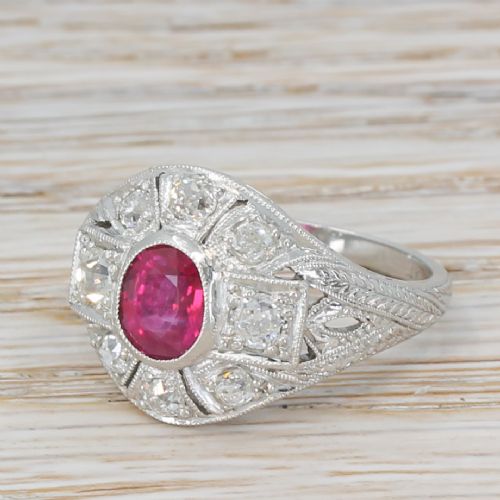
The version you are most likely to meet on this page is the ring, often combining a central Burmese ruby with supporting diamonds in platinum and yellow gold or white gold settings. These pieces originate from distinct periods including the eighteen-eighties, nineteen-twenties, and nineteen-forties.
Alongside rings, the selection includes bracelets featuring pearls, emeralds, and sapphires alongside rubies, as well as convertible pendant brooches. Each piece demonstrates the specific design vocabulary of its decade, from Victorian navette shapes to geometric Art Deco clusters.
How they were made
Goldsmiths and jewellers utilised precious metals such as platinum, yellow gold, white gold, and silver to house these stones. Platinum and white gold frequently appear in Art Deco and later vintage pieces to provide a bright, neutral contrast to the red corundum.
Cut stones, including old-cut diamonds and rubies from specific origins like Mogok and Mong Hsu, were set into elaborate multi-stone arrangements. Hand-working methods predominated, creating secure bezels, claws, and intricate gallery wirework that held both primary gems and accent diamonds.
Burmese Ruby Jewellery Retail Price Guide 2026
Typical asking prices for burmese ruby jewellery among the pieces listed under this phrase on Sellingantiques today, from the lower quarter to the upper quarter. They describe what is for sale here now, not the wider market.
Some Victorian pieces multitask as both pendants and brooches, proving that nineteenth-century jewellers understood the art of versatile accessorising.
What varies in quality
The distinction between tiers of these items rests primarily on the saturation and geographical origin of the corundum, alongside the weight and clarity of accompanying diamonds. Stones originating from Mogok or carrying certifications noting unheated status command higher regard among connoisseurs.
Execution and metalwork also differentiate the range, as refined claw settings and balanced proportions in cluster or navette arrangements demonstrate superior workshop skill. The integration of high-carat yellow gold or enduring platinum further elevates the build standard.
The Burmese Ruby Jewellery Glossary
- Mogok
- A valley in Myanmar historically renowned for producing rubies with exceptional fluorescence and depth of colour. Stones from this region often show a distinct crimson hue.
- Navette
- A boat-shaped mounting style popular in Victorian jewellery that tapers to points at either end. This profile allows a cluster of stones to sit long along the finger.
- Old-cut diamond
- A hand-faceted diamond cut before modern brilliant standards were established in the early twentieth century. These stones typically feature smaller tables and larger culets.
- Solitaire
- A mounting designed to showcase a single primary gemstone without competing side stones. In this collection, such settings highlight the central Burmese ruby.
- Unheated
- A descriptive term indicating that a gemstone has undergone no thermal enhancement to improve its natural colour or clarity. Unheated rubies retain their original geological traits.
Burmese Ruby Jewellery: Frequently Asked Questions
What is Burmese ruby jewellery?
Burmese ruby jewellery comprises rings, bracelets, and brooches set with rubies originating from Myanmar, frequently paired with diamonds and mounted in gold or platinum.
These pieces span various eras, including the Victorian period and the Art Deco years, reflecting the prevailing design aesthetics of each time.
How do I identify Art Deco pieces?
Art Deco pieces typically display geometric symmetry, sharp angles, and the use of platinum or white gold to frame the central gemstones.
Such items often pair Burmese rubies with old-cut diamonds in structured cluster arrangements that contrast with earlier Victorian curves.
What does unheated mean for rubies?
An unheated ruby is a gemstone that has not been subjected to artificial heat treatment to alter its colour or clarity. This natural state is noted by gemological testing.
Collectors often seek out unheated stones from sources like Mogok for their unaltered geological characteristics and inherent qualities.
How should I care for antique rings?
Antique rings require gentle handling, avoiding harsh ultrasonic cleaners or abrasive chemicals that might harm softer gems or vintage metal settings. Regular inspection by a specialist ensures the security of the claws holding the Burmese ruby and diamonds.