
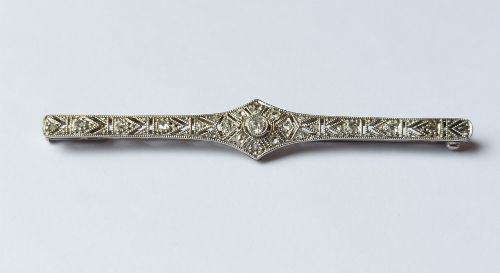
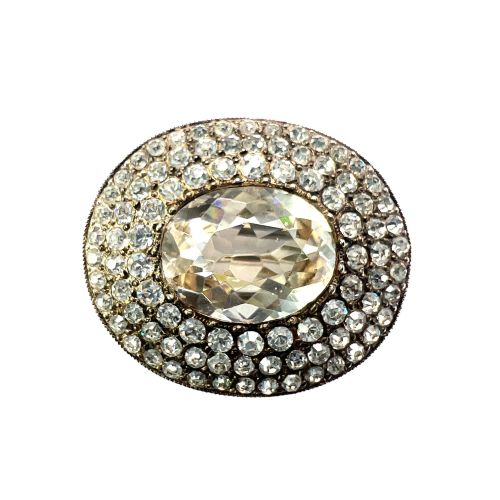


Antique Dress Clip Brooch
These antique dress clip brooch options bring together platinum, silver, and diamond work from the Victorian, Edwardian, and Art Deco eras to fasten garments securely.
Antique Dress Clip Brooch
An antique dress clip brooch combines the functionality of a secure garment fastener with decorative metalwork and stone setting. These pieces emerge predominantly from the Victorian, Edwardian, and Art Deco periods, spanning the nineteenth century through the 1940s.
The selections available here range from delicate paste glass and silver pins to substantial platinum and diamond creations. Buyers encounter forms including chatelaines, double clip pendants, and convertible cape clips alongside standard brooch pins.
Geographic origins extend across British, French, Chinese export, Scandinavian, and Swedish workshops. Each piece reflects the stylistic preferences of its decade, from rococo revival curves to geometric modernist lines.
Materials and construction methods
Craftsmen utilised precious metals such as platinum, sterling silver, yellow gold, white gold, and silver gilt to form the structural foundations. These metals were frequently combined in dual layers, pairing gold or silver with platinum to securely hold diamonds and coloured stones.
Lapidaries shaped diamonds into old cuts alongside sapphires, chalcedony, pink pearls, rock crystal quartz, black onyx, and chrysoprase. Artisans added decorative detail using hand-applied enamel, marcasite crystals, paste glass, and filigree wirework.
Construction techniques include gallery mounting for diamonds, bezel and prong settings for coloured gems, and mechanical folding mechanisms for convertible double clip brooches. Enamelling required precise firing onto metal bases to create coloured botanical and abstract motifs.
A celluloid novelty brooch from the 1930s proves that antique charm sometimes comes from bright plastic rather than precious gems.
Judging quality and craftsmanship
The standard of gem selection and cutting determines the upper tier of these pieces. Fine examples utilise matched, high-carat diamonds and natural sapphires with clean facets, whereas lower tiers employ paste glass or simpler stones.
Metalwork intricacy distinguishes finer workshops from mass production. Hand-pierced platinum galleries, delicate silver filigree, and precise enamel work require advanced skill compared to cast brass or basic stamped metal components.
Structural integrity of the pin stems, hinges, and clip mechanisms indicates superior original construction. Pieces that retain rigid fastenings and tight folding joints demonstrate enduring utility alongside aesthetic value.
Paillette·Wiener Werkstatte
The Antique Dress Clip Brooch Glossary
- Platinum
- A dense, durable white metal utilised extensively in twentieth-century jewellery for secure stone settings. It allowed artisans to create fine, lace-like metalwork without sacrificing strength.
- Paste glass
- Hand-cut and polished glass used as an imitation gemstone in antique jewellery. High-grade paste displays convincing brilliance and light refraction.
- Marcasite
- Small, faceted pieces of iron pyrite set closely into silver mountings to provide a dark, metallic sparkle. This material gained popularity during the Art Deco and Edwardian periods.
- Chatelaine
- A decorative belt hook suspended with chains holding utilitarian items or small brooches. Victorian examples often featured elaborate rococo revival metalwork.
- Duette
- A patented double clip frame that holds two separate dress clips together as a single brooch. This ingenious mechanism allowed the wearer to split the piece into two distinct ornaments.
- Filigree
- Delicate openwork created by twisting fine threads of gold or silver into intricate patterns. Chinese export and European makers employed this technique for butterfly and floral motifs.
Antique Dress Clip Brooch: Frequently Asked Questions
How do dress clips work?
Dress clips feature a hinged mechanism with teeth on the reverse that grip fabric without piercing the material. Wearers attached them to necklines, lapels, or hat bands.
Many Art Deco examples were designed as double clip brooches that detach from a central frame to be worn separately on opposite sides of a dress.
What is an antique dress clip brooch?
This category covers convertible jewellery pieces that function as both a standard brooch pin and a detachable dress or fur clip. They gained immense popularity during the 1920s and 1930s.
Maker designs often incorporated platinum, diamonds, and geometric Art Deco motifs to complement contemporary fashions.
How do I date an antique brooch?
Dating relies on identifying the prevailing materials, metal combinations, and stylistic movements of the piece. Victorian items frequently feature silver-gilt and rococo revival motifs, while Edwardian pieces showcase platinum and softer floral sprays.
Art Deco items display geometric lines, calibrated stones, and specialised cuts such as rock crystal quartz and onyx.
Can I wear these brooches daily?
Sturdy platinum and gold mountings from the Edwardian and Art Deco eras withstand regular wear when handled with care. Secure pin stems and tight clasps ensure the piece remains fastened to heavier fabrics.
Delicate silver filigree, enamel, and paste glass items require gentler handling and suit lighter garments or special occasions.
What is the difference between a pin and a brooch?
A pin generally refers to a simpler, smaller fastener used primarily to secure clothing adjustments. A brooch is typically a larger, highly decorative ornament featuring more complex stone settings and prominent metalwork.
Many listings use the terms interchangeably when describing antique dress accessories.