
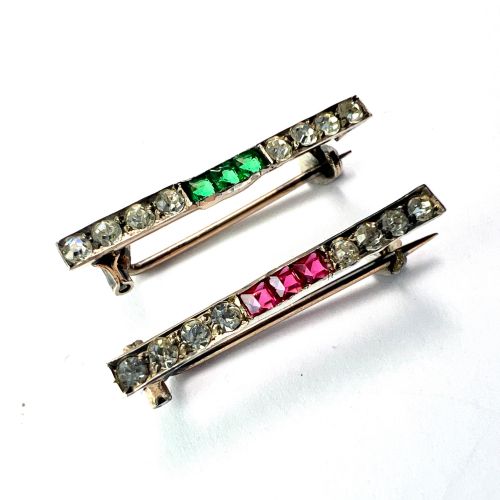
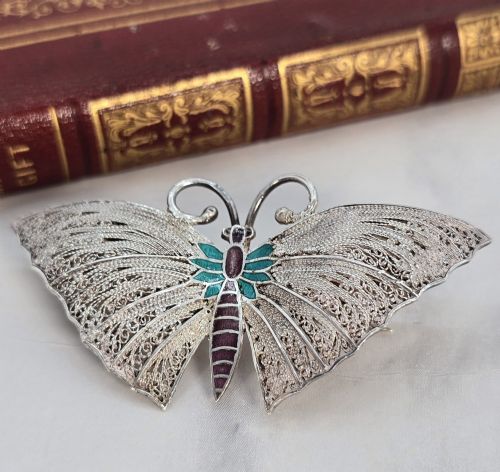
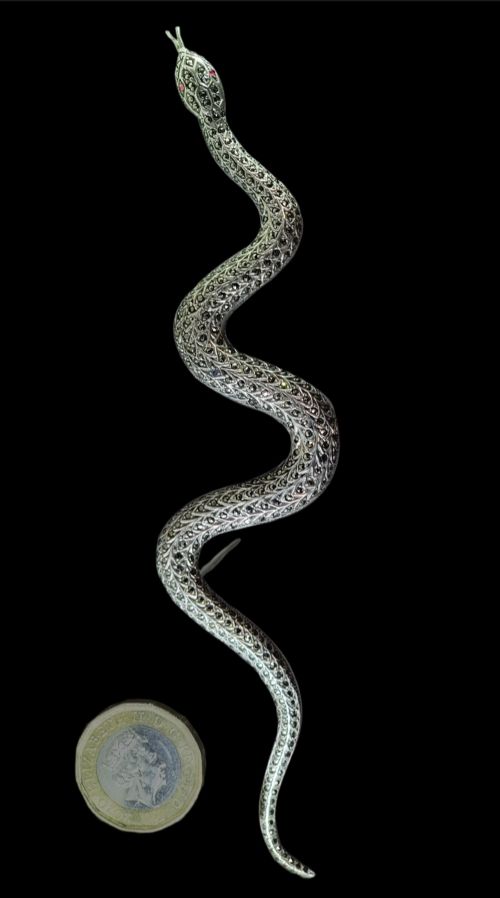


Art Deco Silver Brooch
An art deco silver brooch brings geometric crispness and bold colour from the nineteen-twenties and thirties directly to a lapel.
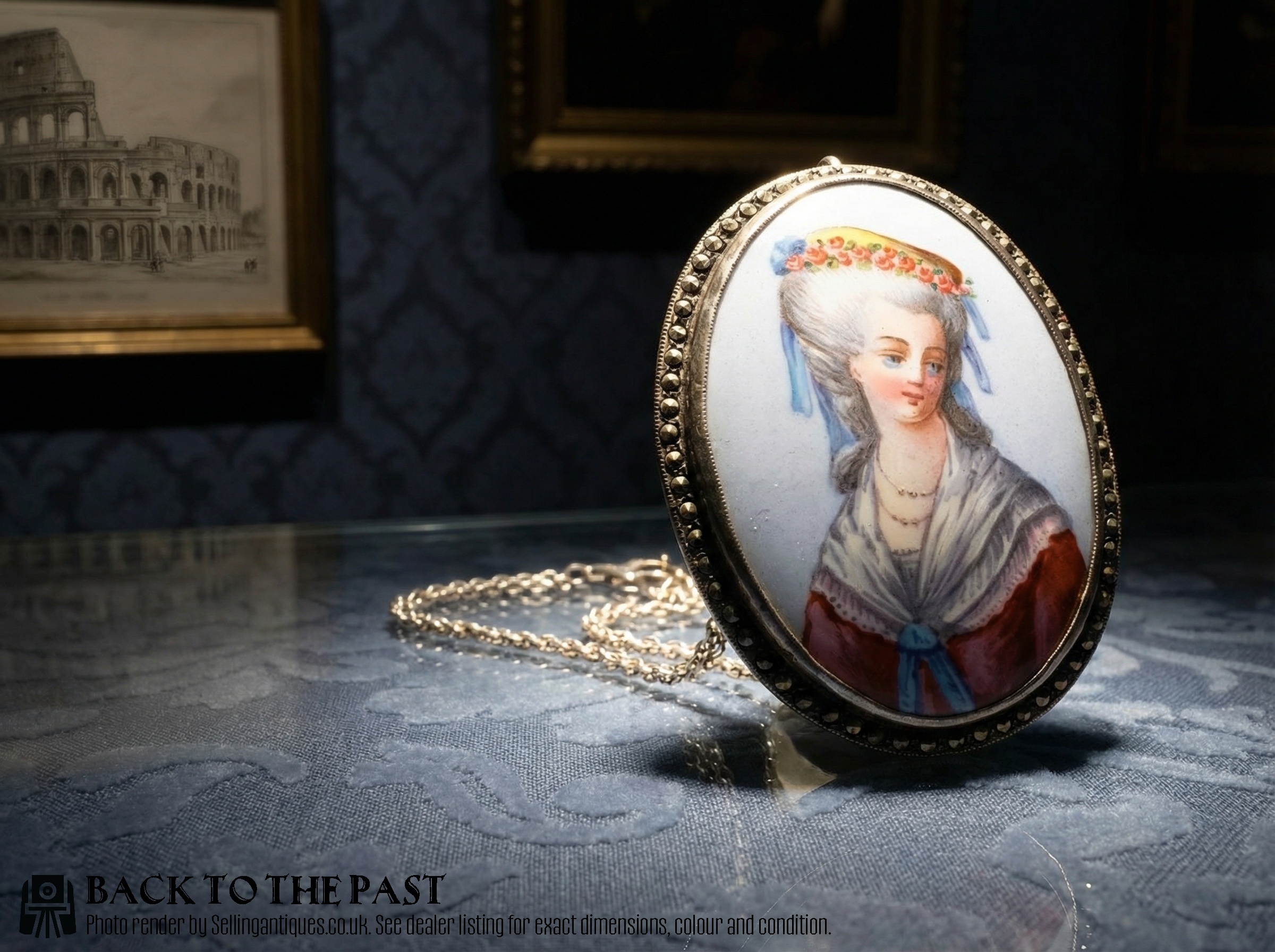
Defining the Art Deco Silver Brooch
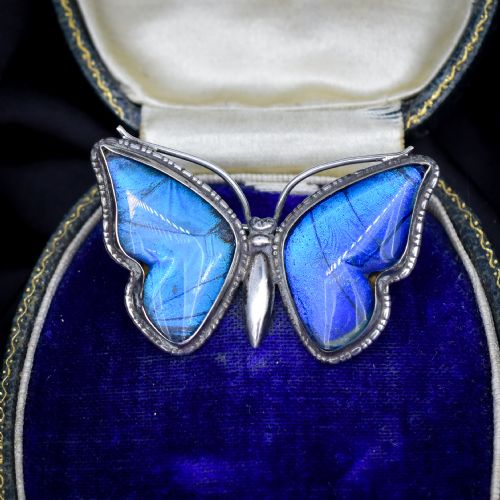
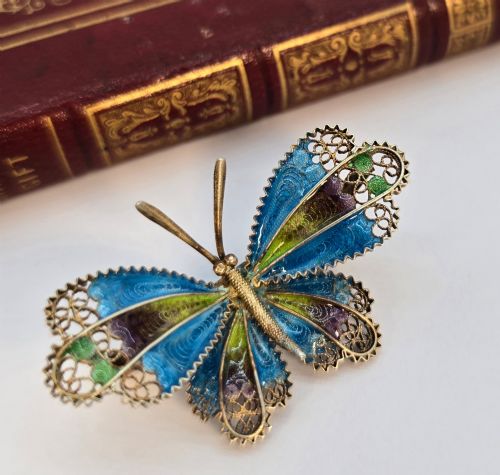
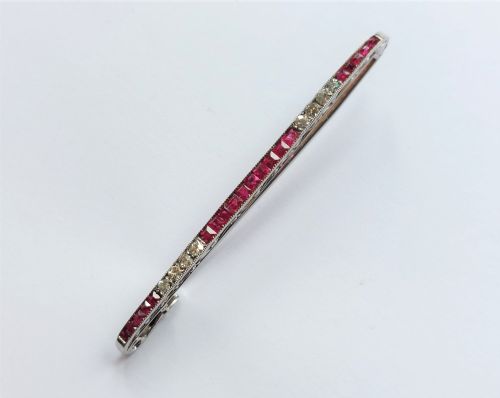
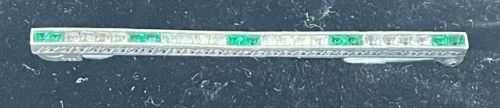
An art deco silver brooch captures the distilled geometry, stylised nature, and modernist spirit associated with the inter-war period. These pieces frequently appear in forms such as butterflies, crinoline ladies, lizards, monkeys, and floral bouquets, alongside strict abstract shapes.
The versions most common on this page date from the nineteen-twenties and nineteen-thirties, reflecting the peak of the style. Makers employed sterling silver and standard silver grades, frequently pairing the metal with contrasting elements to create visual impact.
Geographical origins in the archive stretch across England, Denmark, Germany, Italy, France, and China. This wide provenance brings distinct regional techniques, from Danish floral minimalism to Chinese export filigree and Birmingham enamelwork.
Assessing Quality and Execution
The upper tier of these jewels relies on the precision of the setting work and the complexity of the materials. Master makers achieved tight flush settings for paste stones and smooth, even applications of guilloché enamel without pitting or hairline fractures.
Artistic ambition dictates distinction within the range, separating standard geometric bars from sculptural figurals like lizards, borzoi dogs, or crinoline ladies. Pieces bearing identified factory marks or specific designer stamps carry stronger documentary weight for a collection.
Retail Price Guide 2026
Typical UK retail prices for art deco silver brooch, calculated from the Sellingantiques database of over a million retail prices indexed since 2003. This retail price guide relies exclusively on Sellingantiques data; no external sources or auction records are used, so the figures do not describe the wider market.
Figural designs in the archive range from monkeys and lizards to elegant ladies walking borzoi dogs.
Thomas Lyster Mott·John Atkin And Sons·Ciro·Knoll And Pregizer·Charles Horner
The Art Deco Silver Brooch Glossary
- Paste
- Faceted glass cut and polished to imitate gemstones. It provides high refractive sparkle in period jewellery without using natural minerals.
- Guilloché
- Enamelling technique where the silver base receives a machine-turned engraved pattern beneath translucent coloured enamel. This creates rippling wave or ray effects under the glass surface.
- Duette
- A versatile convertible jewel composed of two dress clips locked onto a dedicated frame to form a single brooch. The design allowed wearers to split the piece into matching lapel ornaments.
- Filigree
- Delicate decorative work made from twisted silver threads soldered together in openwork patterns. It creates airy, lace-like structures within the metal frame.
- Marcasite
- Small faceted pyrite stones polished and set individually into silver jewellery. They project a dark metallic glitter popular throughout the period.
Frequently Asked Questions
What is butterfly wing jewellery?
Butterfly wing jewellery uses the iridescent natural scales of tropical Morpho butterflies mounted beneath a clear glass dome. Silversmiths framed these fragile blue wings inside sterling silver mounts to create shimmering pictorial brooches.
Keep these pieces away from moisture and direct sunlight to protect the delicate organic material underneath the glass.
How do I distinguish nineteen-twenties from nineteen-thirties pieces?
Nineteen-twenties designs often favour flat, linear motifs, delicate filigree, and symmetrical arrangements influenced by early modernist art. The following decade introduced bolder, more sculptural forms, larger coloured paste stones, and heavier geometric massing.
Examining the clasp type and the presence of foreign export marks helps confirm the decade of manufacture alongside stylistic cues.
Are Chinese export silver brooches different?
Chinese export pieces from the period usually combine intricate silver filigree with vibrant enamel painting or carved natural elements. They frequently depict traditional flora and fauna adapted to suit Western tastes of the nineteen-thirties.
These items carry distinct artisan or workshop stamps in place of standard British hallmarks on the reverse of the frame.