



Art Deco Bar Brooch
An art deco bar brooch is a crisp geometric jewel that fastens neatly to a lapel, offering clean lines and brilliant old cut stones.
Art Deco Bar Brooch
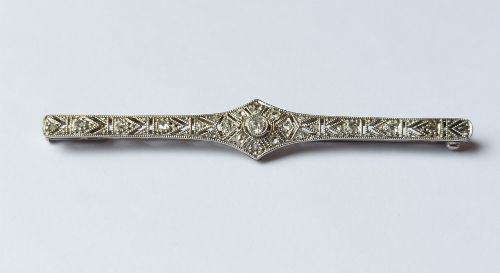
An art deco bar brooch is a slender horizontal pin designed to sit flat against fabric, balancing strict symmetry with fine metalwork. These pieces date principally from the nineteen twenties and nineteen thirties, though Edwardian precursors and later mid-century reinterpretations also appear.
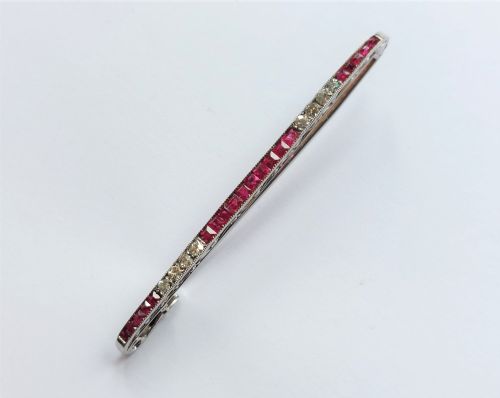
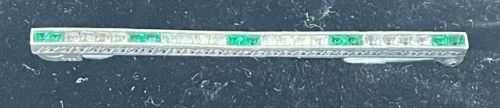
The most common form you will meet on this page pairs platinum or white gold with diamonds in a linear arrangement. Alongside these diamond set mounts, makers often incorporated calibrated rubies, sapphires, emeralds, pearls, and black onyx to create striking colour contrasts.
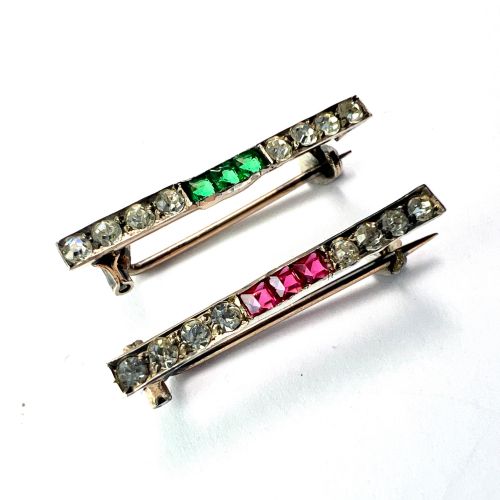
Beyond standard gold and platinum settings, continental workshops also utilised silver and paste stones for lighter, decorative pieces. Whether geometric or floral in influence, each item serves as a functional fastener and a distinct period ornament.
How they were made
Jewellers constructed these brooches using precious metals such as platinum, yellow gold, and white gold, often combining gold backs with platinum top settings to hold stones securely. This dual-metal technique allowed workshops to exploit the strength and bright white surface of platinum alongside the warmth of gold.
Gemstones including diamonds, sapphires, rubies, and pearls were meticulously hand-set into channel, bezel, or millegrain mounts. Artisans also utilised paste, jadeite, and onyx to achieve vivid blocks of colour that define the aesthetic of the period.
Art Deco Bar Brooch Retail Price Guide 2026
Typical asking prices for art deco bar brooch among the pieces listed under this phrase on Sellingantiques today, from the lower quarter to the upper quarter. They describe what is for sale here now, not the wider market.
Terrier dogs occasionally guard your lapel, proving that even strict geometric eras appreciated a playful canine pin.
What varies in quality
The distinction between ordinary and exceptional work rests on the precision of the metal fabrication and the quality of the individual gemstones. Superior pieces display crisp millegrain edges, tightly integrated stone settings, and balanced proportions that reveal a high level of bench skill.
Materials also dictate the tier of the piece, with heavier platinum mounts and substantial diamond carat weights sitting at the upper end of the range. Simpler silver or paste examples offer the same period silhouette but rely on decorative effect rather than intrinsic gemological value.
Jakob Bengel
The Art Deco Bar Brooch Glossary
- Bar brooch
- A slender horizontal pin ornament designed to secure clothing while displaying gems along its length.
- Millegrain
- A decorative technique featuring a fine border of tiny raised metal beads along the edge of a setting.
- Old cut
- A diamond facet style popular before modern brilliant cutting, characterised by a smaller table and high crown.
- Paste
- Hand-cut glass used as a substitute for precious gemstones in period jewellery.
- Platinum
- A dense, durable white metal favoured in twentieth-century jewellery for its strength and refined lustre.
Art Deco Bar Brooch: Frequently Asked Questions
How do I wear an art deco bar brooch?
Pin the piece horizontally or diagonally across a structured lapel, heavy knit jumper, or scarf. The long pin mechanism distributes weight evenly across thick fabrics.
Ensure the safety clasp or rolling catch is fully engaged before stepping out to prevent loss during wear.
Are these brooches made of platinum?
Many examples utilise platinum, particularly those created during the height of the nineteen twenties and nineteen thirties. Workshops often paired platinum top settings with gold pin stems for added resilience.
Other variations rely entirely on yellow gold, white gold, or silver depending on the origin and workshop standards.
How can I tell an original piece from a later copy?
Examine the construction methods under magnification to spot hand-cut stones, millegrain beadwork, and period pin fittings. Authentic items exhibit wear consistent with age and traditional hand-crafting techniques.
Cast reproductions often lack the crisp geometric precision and subtle tool marks found in vintage work.
What gemstones were used in these designs?
Diamonds form the foundation of most high-tier pieces, often accompanied by calibre-cut sapphires, rubies, and emeralds. Pearls and black onyx also appear frequently to create graphic two-tone contrasts.
More decorative items substitute genuine gems with coloured glass paste while retaining identical metalwork styles.