



Vintage Butterfly Pin
A vintage butterfly pin brings the delicate symmetry of nature into metal and glass, offering a wearable piece of history.
Vintage Butterfly Pin
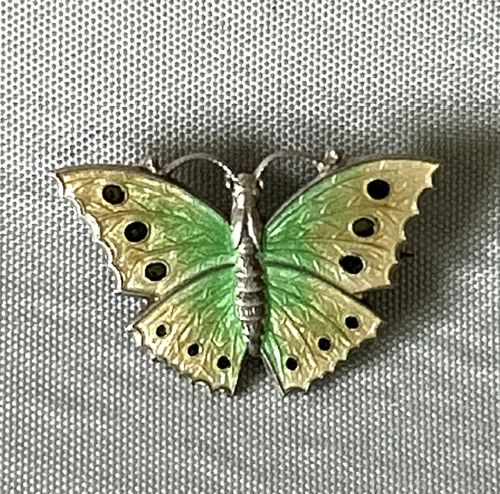
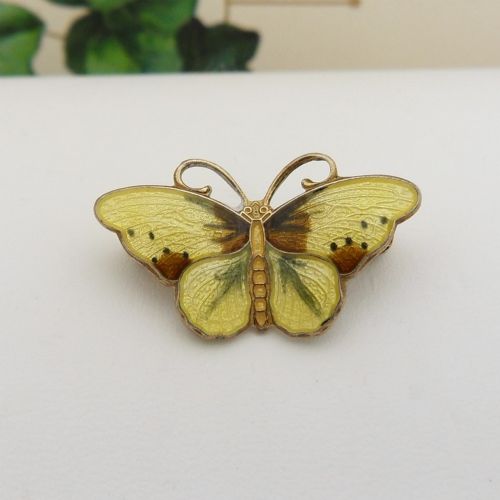
A vintage butterfly pin captures the insect form across various decorative periods, with the 1930s representing a particularly common origin in these collections. You will frequently encounter these pieces rendered as brooches and hatpins, fashioned from silver, sterling silver, and gold.
The selection spans numerous stylistic traditions, including Art Deco, Art Nouveau, and Mid-Century Scandinavian aesthetics. Enamelled silver and butterfly wing designs dominate the offerings, alongside occasional precious stone settings from the Victorian era.
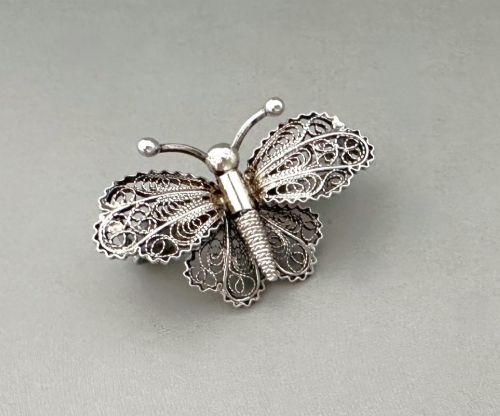
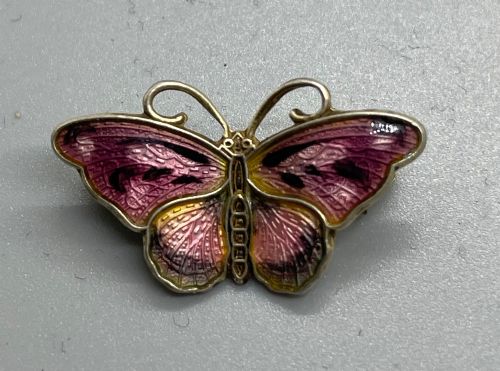
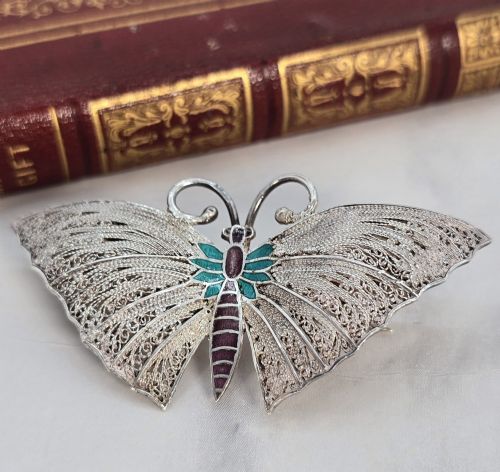
Origins vary widely, encompassing Continental, Chinese Export, and Scandinavian workshops. Pieces range from petite Guilloche enamel examples to larger filigree creations.
Materials and construction
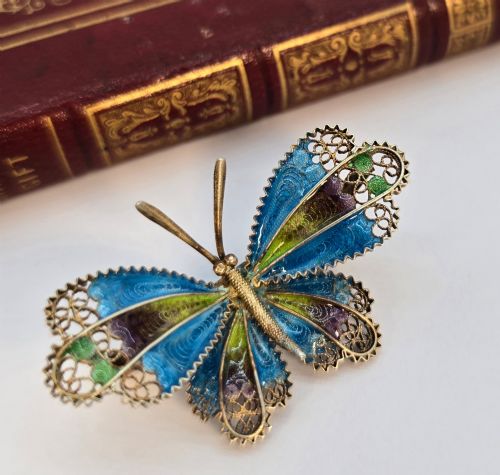
Makers utilised sterling silver and silver gilt as the primary foundation for vitreous enamel work, often employing intricate filigree wire to define the insect wings. Guilloche enamel techniques introduced engine-turned geometric patterns beneath translucent coloured coatings.
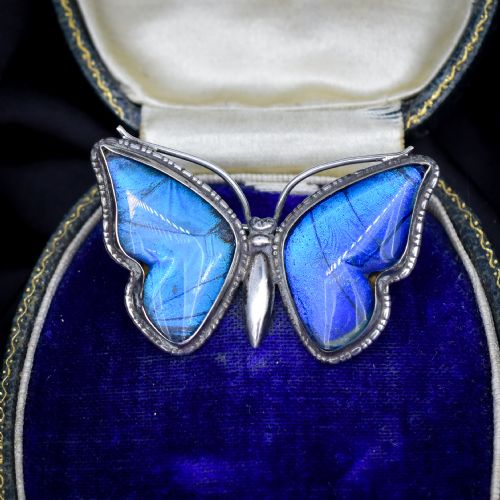
Natural materials also feature prominently, with genuine butterfly wings preserved beneath bevelled glass to create iridescent blue and pink colour shifts. Early pieces incorporate yellow gold set with moonstones, diamonds, and sapphires.
Vintage Butterfly Pin Retail Price Guide 2026
Typical asking prices for vintage butterfly pin among the pieces listed under this phrase on Sellingantiques today, from the lower quarter to the upper quarter. They describe what is for sale here now, not the wider market.
The inventory spans Victorian, Art Nouveau, Art Deco, and Mid-Century Scandinavian design traditions.
Assessing quality in butterfly pins
Quality reveals itself in the precision of the metalwork and the clarity of the enamel. Finer pieces display smooth, unblemished glass surfaces and tightly executed filigree without excess solder.
Hroar Prydz·Aksel Holmsen·David Anderson·Rene Lalique
The Vintage Butterfly Pin Glossary
- Guilloche enamel
- A decorative technique where an engraved metal surface is coated with translucent enamel, allowing the pattern underneath to show through. This method creates a shimmering depth popular in mid-century Scandinavian pieces.
- Silver gilt
- Sterling silver that has been coated with a thin layer of gold, often termed vermeil. This treatment provides the warm tone of gold while maintaining a silver base.
- Filigree
- Delicate jewellery-making work consisting of twisted threads of gold or silver soldered together. It forms the intricate openwork veins found in many butterfly wings.
- Butterfly wing jewellery
- Ornamental pieces using actual morpho butterfly wings sealed under glass. The scales on the wing reflect light to produce a brilliant metallic blue.
- Hatpin
- A long pin used to secure a hat to the hair, featuring an ornamental head. The archive records notable examples shaped as insects from the early twentieth century.
Vintage Butterfly Pin: Frequently Asked Questions
How do I date a butterfly pin?
Dating relies heavily on material composition and stylistic markers such as enamel techniques and metal stamps. Art Deco and 1930s pieces often feature geometric silver filigree, whereas Victorian examples tend to utilise yellow gold and gemstones.
Examining the clasp type and maker marks provides further chronological context. Archival records show distinct shifts from nineteenth-century gold work to mid-century Scandinavian enamel.
Are butterfly wing pins fragile?
The butterfly wings are sealed securely beneath glass domes designed to protect the delicate material from everyday wear. However, severe impacts can crack the glass and expose the organic material to moisture.
Keeping the piece away from water and direct sunlight preserves the vibrant colours of the wing. Gentle handling ensures the glass setting remains intact.
What is guilloche enamel?
Guilloche is a decorative technique involving a mechanical lathe that cuts precise, repeating patterns into a metal disc. Translucent enamel is then applied over the engraving to catch the light.
This method produces a distinctive shimmering effect found on many Scandinavian butterfly brooches. The quality depends on the symmetry of the underlying machine engraving.
How should I wear a vintage hatpin?
Hatpins require a structured hat and a secure hairstyle to anchor the long metal shaft effectively. They pass through the fabric and hair, held in place with a protective end cap.
Many collectors also repurpose antique hatpins as lapel pins or display them in dedicated stands. Care must be taken with the sharp point during handling.