





Guilloche Enamel Pin
A guilloche enamel pin represents meticulous metalwork fused with translucent glass, offering tactile colour that catches the light.
Guilloche Enamel Pin
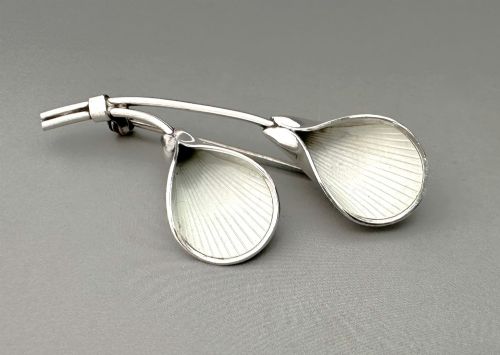
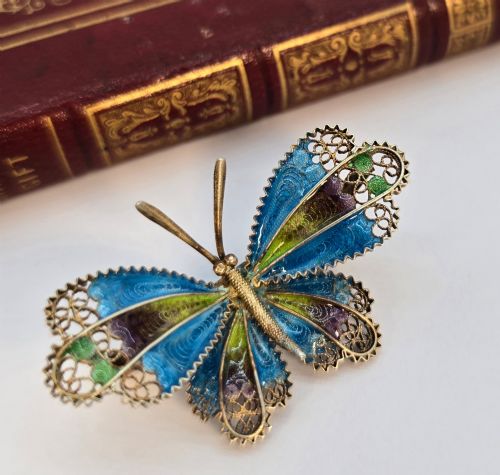
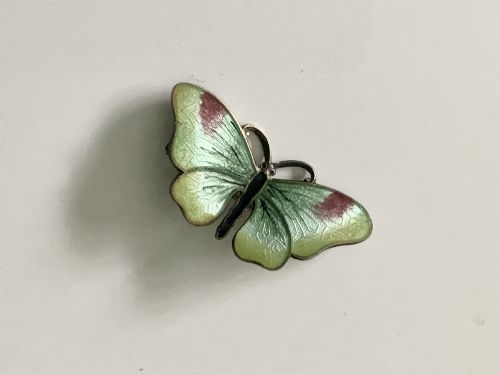
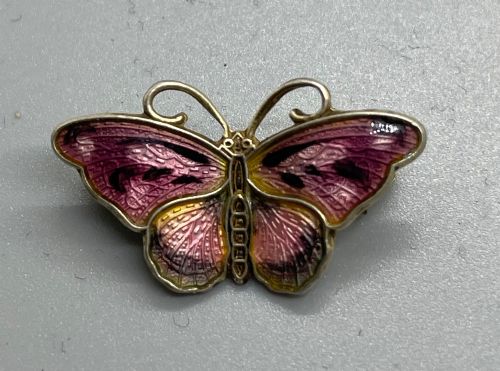
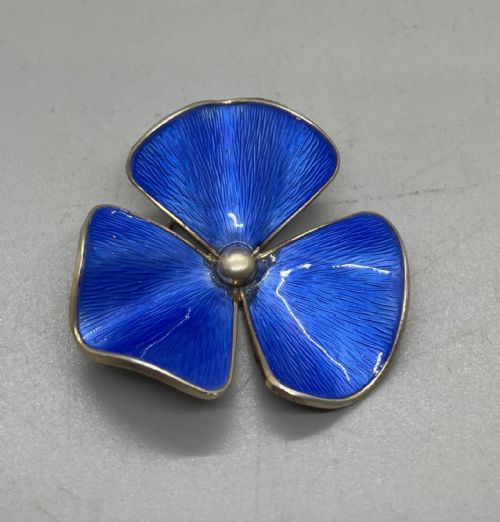
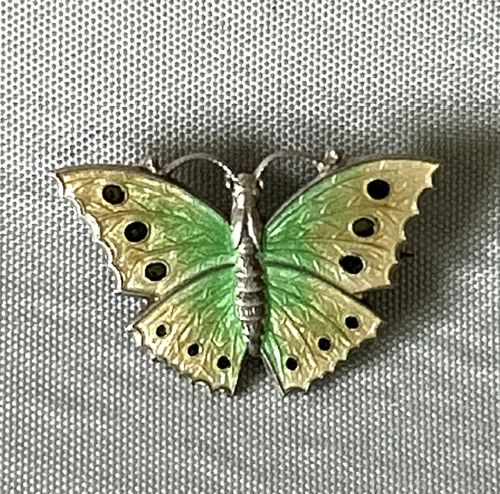
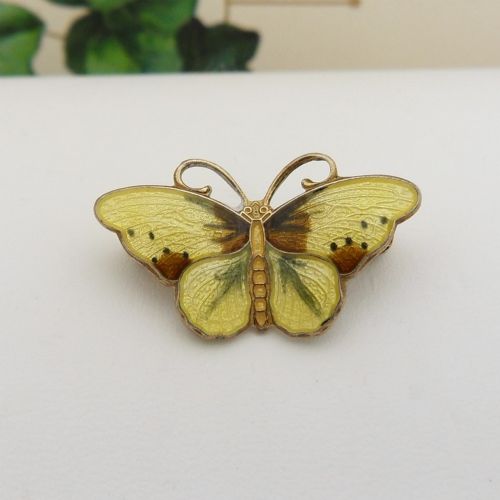
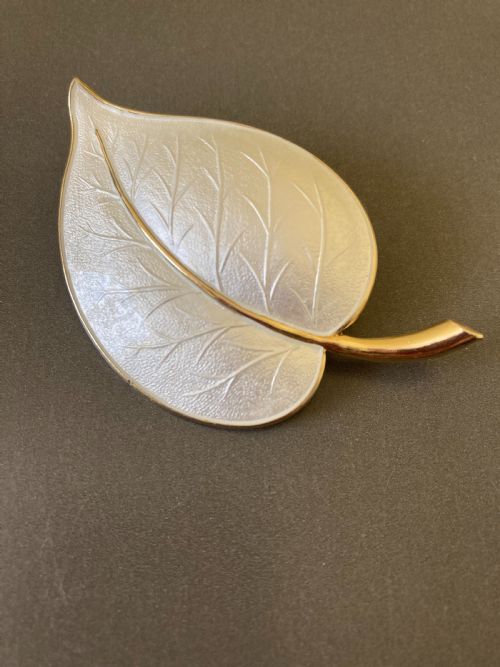
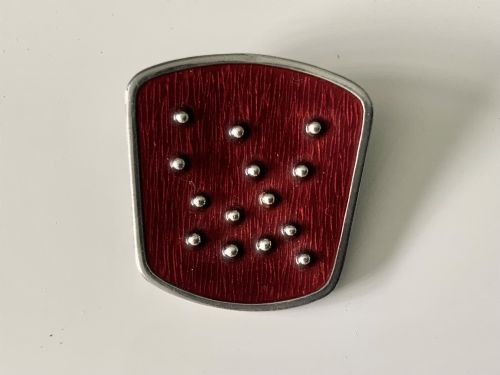
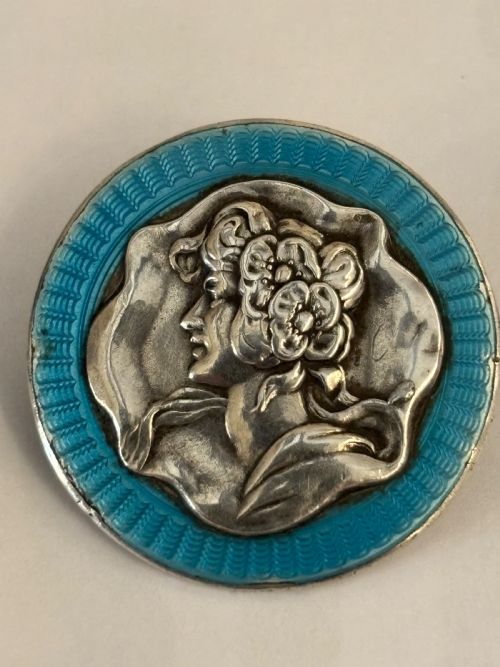
A guilloche enamel pin covers a diverse range of decorative items, most frequently appearing as brooches shaped like butterflies, flowers, or birds. These pieces span from the Victorian and Edwardian eras through the Art Deco period into mid-century Scandinavian designs.
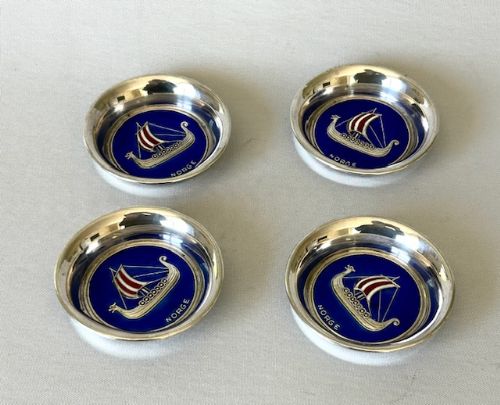
Beyond wearable brooches, the category encompasses smaller desk and dressing table accessories such as pin trays, trinket dishes, compacts, and lidded jars. Scandinavian workshops and English manufacturers produced the majority of these items utilising silver and silver gilt.
The aesthetic shifts from organic floral motifs in early twentieth-century pieces to geometric symmetry during the Art Deco phase. Buyers encounter everything from delicate pansy brooches to practical pin cushions mounted in silver.
Materials and technique
Craftsmen began by machine-engraving a precise geometric pattern onto a metallic base, typically sterling silver or silver gilt, creating the foundational texture for the work. This mechanical engraving is known as guilloche.
Vitreous enamel, a powdered glass paste, was then applied across the engraved metal surface and fired at high temperatures in a kiln. The translucent quality of the enamel allows the underlying machined pattern to reflect light through the colour.
Guilloche Enamel Pin Retail Price Guide 2026
Typical asking prices for guilloche enamel pin among the pieces listed under this phrase on Sellingantiques today, from the lower quarter to the upper quarter. They describe what is for sale here now, not the wider market.
Object forms range from wearable butterfly and floral brooches to dressing table jars, compacts, and small trinket trays.
Assessing the workmanship
Quality rests in the precision of the underlying engine-turned engraving and the even application of the vitreous enamel layer. Superior examples display crisp geometric regularity beneath a smooth, unblemished glass surface without pitting or cloudiness.
The weight and purity of the metal mountings further distinguish individual pieces, with heavier sterling silver or silver gilt settings indicating higher grade production. Maker attribution, particularly to known Scandinavian designers or established Birmingham silversmiths, elevates the standing of a piece.
Aksel Holmsen·Hroar Prydz·Gustav Gaudernack·Mappin and Webb·Crisford and Norris
The Guilloche Enamel Pin Glossary
- Guilloche
- A decorative technique where a mechanical lathe engraves an intricate, repetitive pattern into metal. This forms the textured base seen beneath translucent enamel.
- Vitreous enamel
- A material made by fusing powdered glass to a substrate by firing, usually between eight hundred and eight hundred and fifty degrees Celsius. It provides durable colour.
- Silver Gilt
- Silver that has been coated with a thin layer of gold on its exterior surface. This finish is also referred to as vermeil.
- Pin Cushion
- A small decorative household object designed to hold sewing pins, often featuring a domed cushion mounted within a silver and enamel base.
Guilloche Enamel Pin: Frequently Asked Questions
Are these brooches heavy to wear?
Most pieces utilise hollow or thin gauge silver frames designed to sit comfortably on standard fabrics without sagging. Butterfly and floral brooches generally weigh very little.
Heavier examples usually incorporate solid silver bases or integrated gemstones, requiring sturdier garments for secure placement.
What periods are most common?
The selection spans from Victorian and Edwardian items through Art Deco creations up to mid-century Scandinavian output. Early twentieth-century pieces often feature naturalistic subjects.
Later mid-century items frequently highlight clean lines and minimalist floral interpretations from workshops in Norway and Denmark.
How can I date my piece?
Examining hallmarks stamped onto the silver metal provides precise manufacturing dates and maker marks for English pieces. Stylistic cues also help narrow down the era.
Art Deco designs display geometric symmetry, whereas Victorian and Edwardian items favour organic floral forms and heavier gold or silver settings.