


Blue Enamel Brooch
A blue enamel brooch brings together vitreous colour and precious metal, ranging from Georgian sentiment to Scandinavian modernist work.
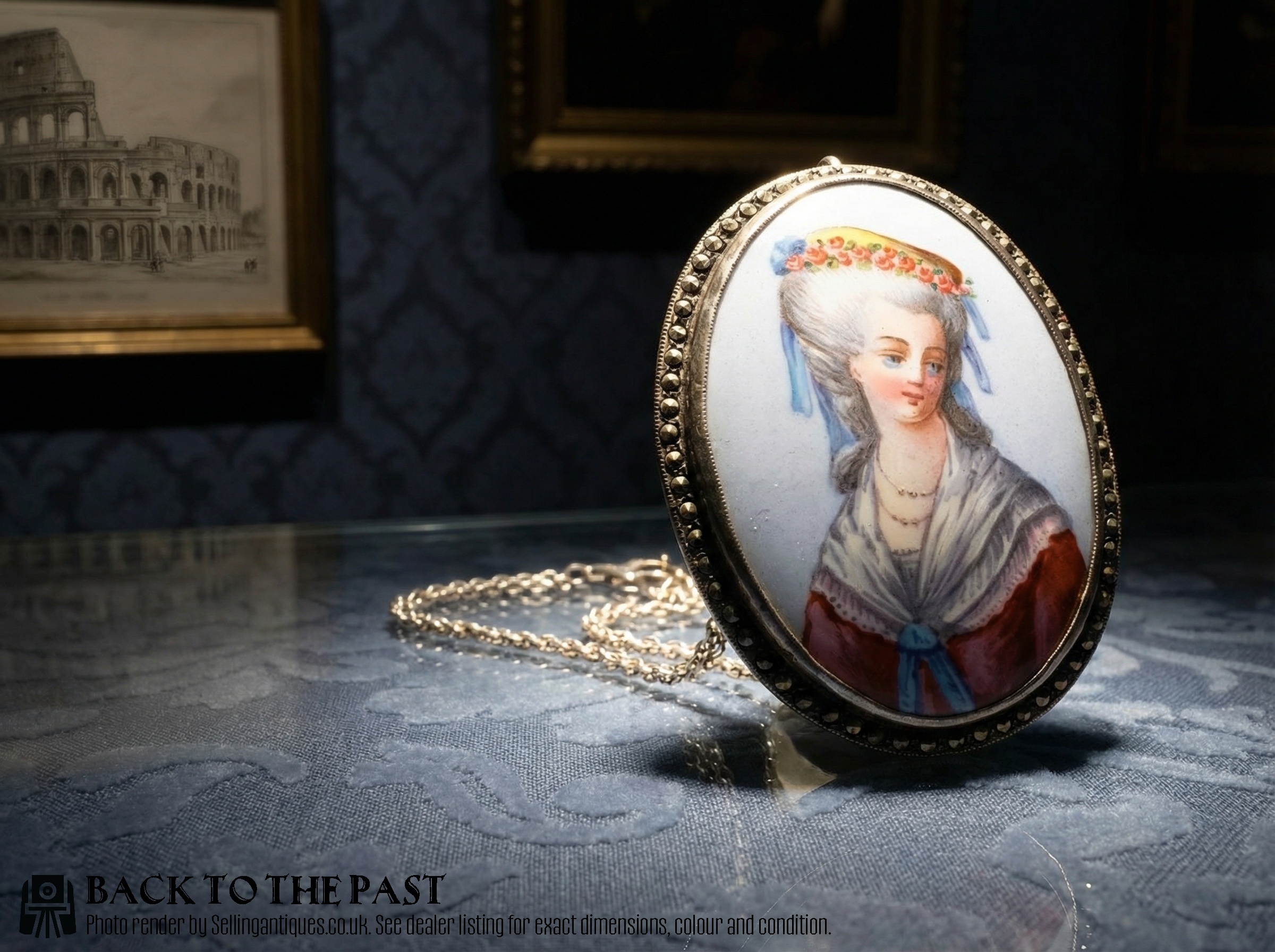
Blue Enamel Brooch
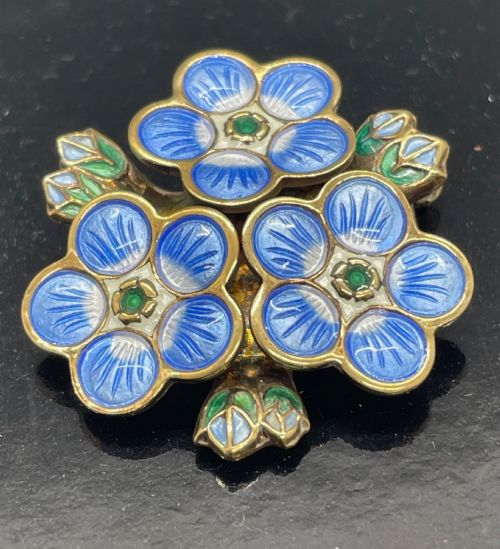
A blue enamel brooch is a wearable ornament defined by fused glass pigment set into a metallic base, spanning periods from the eighteenth century to the mid-twentieth century. When searching this phrase, a buyer encounters everything from delicate floral motifs and winged insects to geometric Art Deco pieces.
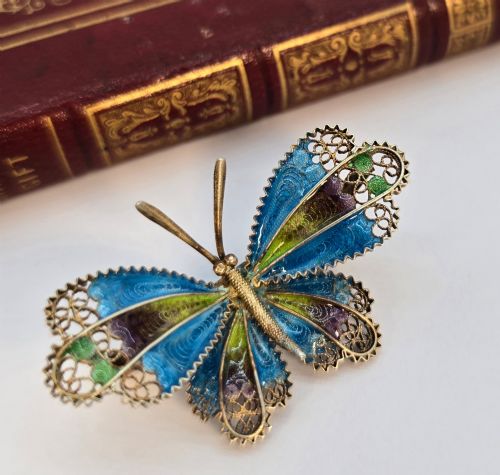
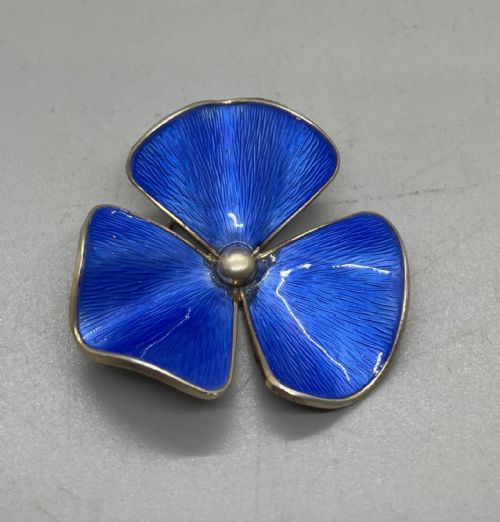
Scandinavian silver gilt workshops dominate the mid-century selections, frequently producing butterfly and leaf designs coated in translucent guilloche enamel. Earlier examples lean towards nineteenth-century gold starbursts, Edwardian belt buckles, and Georgian sentimental tokens framed in silver or gold.
How they were made
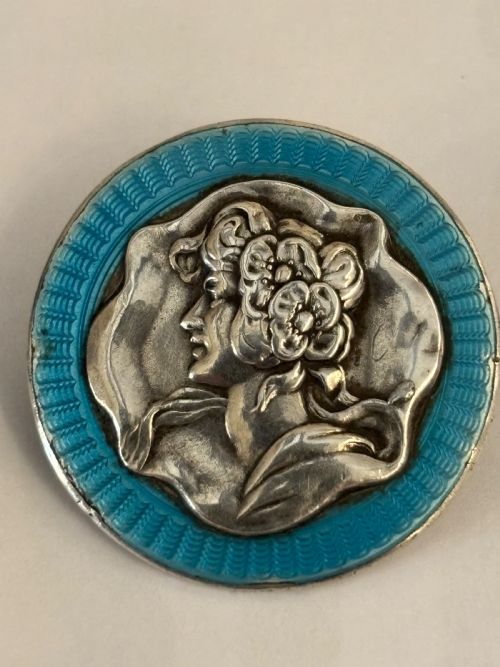
Craftsmen applied powdered glass to silver, silver gilt, or gold bases before firing the metal in a kiln to fuse the vitreous coating. Techniques such as guilloche engraving patterned the metal beneath translucent enamel, creating engine-turned waves of light.
Plique-a-jour methods suspended translucent enamel within open wire frameworks without a solid backing, resembling stained glass. Artisans frequently combined these enamelled surfaces with seed pearls, diamonds, marcasite, or moonstones.
Blue Enamel Brooch Retail Price Guide 2026
Typical asking prices for blue enamel brooch among the pieces listed under this phrase on Sellingantiques today, from the lower quarter to the upper quarter. They describe what is for sale here now, not the wider market.
Materials appearing across the inventory include vitreous enamel, sterling silver, silver gilt, gold, pearls, diamonds, moonstones, glass, and china.
What varies in quality
Quality rests in the crispness of the metalwork and the depth of the fused glass rather than mere age. Finely engraved guilloche patterns under translucent enamel catch light with greater complexity than flat, opaque colour fields.
The precision of the artisan's hand defines the distinction between standard production pieces and masterworks, particularly in plique-a-jour cell structure or hand-painted portrait miniatures.
David Andersen·Hans Myhre·Aksel Holmsen·Hroar Prydz·John Atkins·Ivar T Holth·Finn Jensen·O.F. Hjortdahl·N M Thune·Rolason Brothers·Henry Matthews·Christian Friedrich Zincke
The Blue Enamel Brooch Glossary
- Guilloche
- An ornamental engraving technique that etches precise geometric patterns into metal. This method creates shimmering underlying textures visible through translucent enamel.
- Vitreous enamel
- A material made by fusing powdered glass to a metallic substrate at high temperatures. It produces a durable, glass-like coloured surface.
- Silver gilt
- Sterling silver that has been coated with a thin layer of gold. This finish gives pieces a warm yellow gleam alongside the resilience of silver.
- Plique-a-jour
- An enamelling technique where the enamel is applied in cells without a backing, allowing light to shine through. It creates a translucent, stained-glass effect.
- Portrait miniature
- A small, highly detailed painting on ivory, enamel, or vellum, popular in Georgian and Victorian times. These often commemorated loved ones as sentimental tokens.
Blue Enamel Brooch: Frequently Asked Questions
How do I wear a blue enamel brooch?
Pin the piece securely to the lapel of a structured coat, a woollen scarf, or the collar of a blouse. The substantial weight of silver and gold pieces requires sturdy fabric.
Store the brooch in a lined box away from hard jewellery to prevent the glass surface from scratching against other metals.
Are these brooches made of solid silver?
Many listings feature sterling silver or silver gilt, which is silver plated with gold. Earlier items often utilise yellow gold or base metals depending on the period of manufacture.
Examining the metal hallmarks on the reverse reveals the purity standard and the workshop origin.
How do I tell an Edwardian brooch from a mid-century piece?
Edwardian designs frequently incorporate delicate lace-like silver work, pearls, and romantic motifs. Mid-century Scandinavian pieces tend to display clean modernist lines, vibrant guilloche enamel, and stylized natural forms like leaves and butterflies.
The fastening pins and catch styles also shift from tubular safety catches on modern pieces to older C-clasps on antique examples.
How do I clean an enamel brooch?
Wipe the surface gently with a soft, damp cloth to remove dust and oils. Avoid chemical dips or ultrasonic cleaners, as these harsh solutions can damage vulnerable glass enamel and delicate seed pearls.
Dry the piece thoroughly with a lint-free cloth before storing it in a dry environment.