


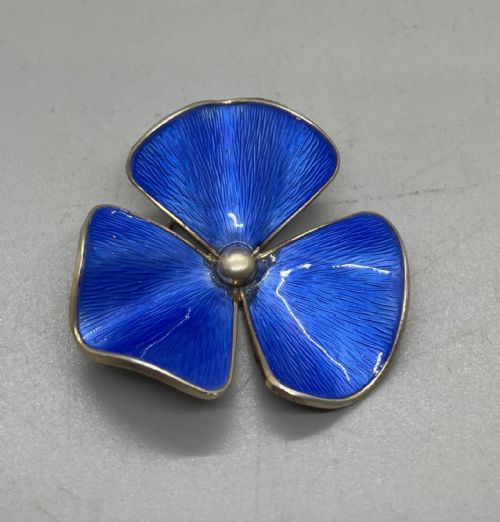

Vintage Enamel Jewellery
Vintage enamel jewellery brings together coloured glass fused onto metal bases, offering bright tones and wearable design from the twentieth century.
Vintage Enamel Jewellery
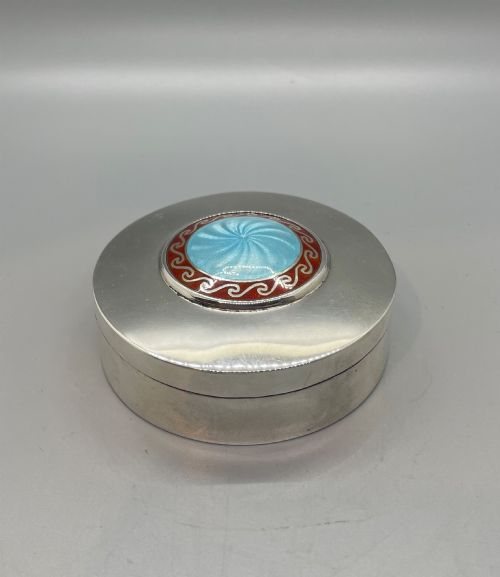
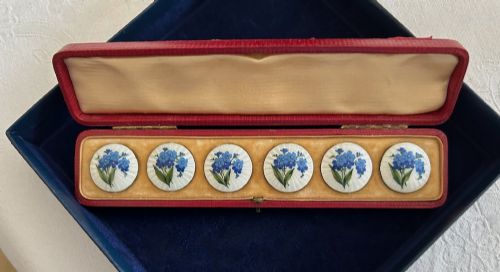
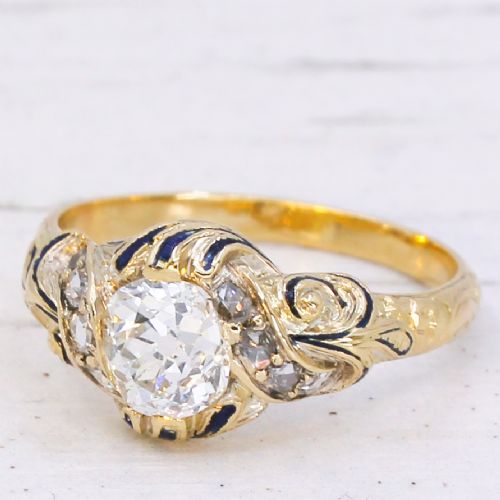
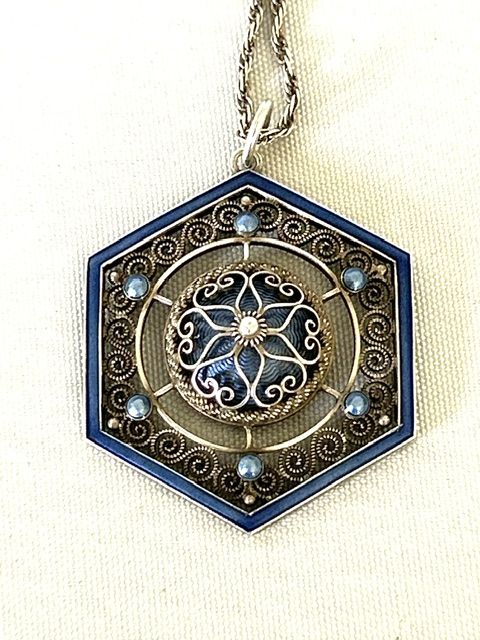
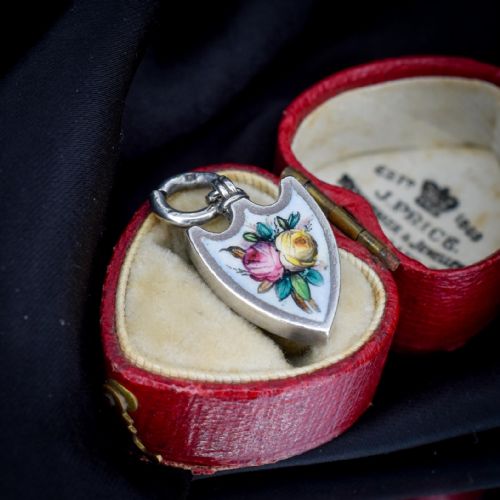
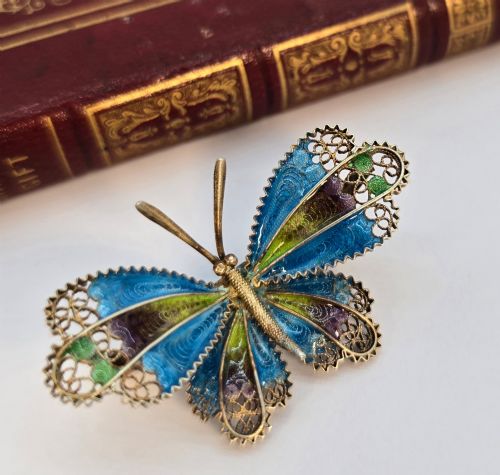
Vintage enamel jewellery encompasses brooches, pendants, earrings, and bracelets created across the Edwardian, Art Nouveau, Art Deco, and mid-century periods. These items combine coloured vitreous glass surfaces with metal mounts, often taking inspiration from floral and insect motifs.
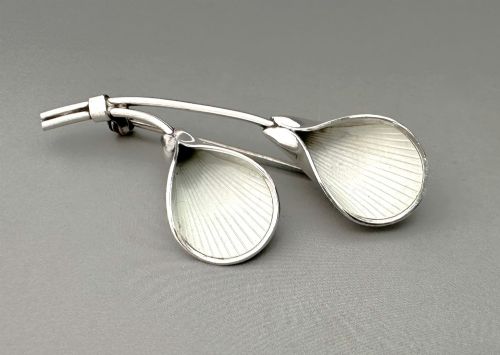
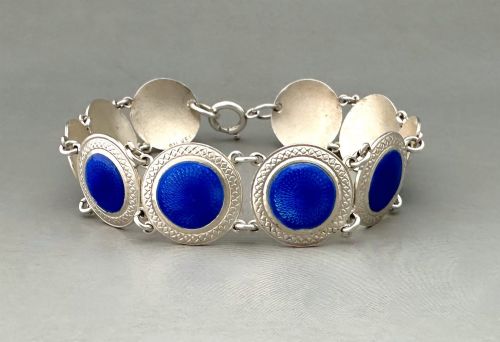
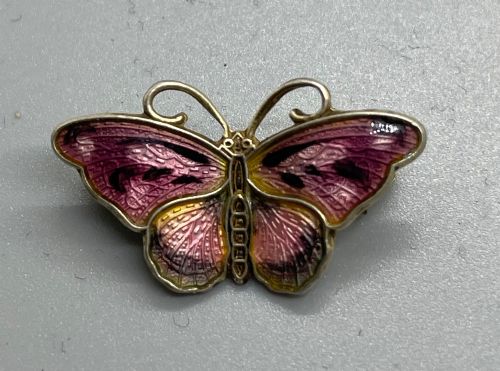
Scandinavian makers dominate the selection, particularly Norwegian workshops producing silver gilt and guilloche enamel items from the mid-century decades. Alongside these northern pieces, English and continental examples demonstrate diverse techniques ranging from delicate filigree to bold geometric designs.
How they were made
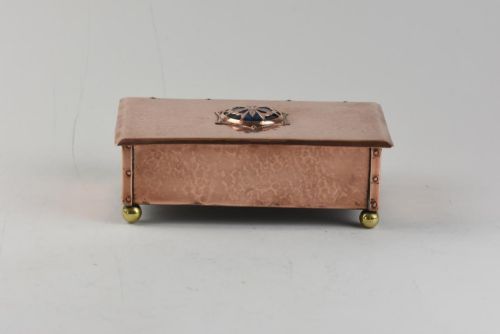
Craftspeople applied powdered glass to metal substrates such as sterling silver, silver gilt, gold, copper, and chromium, then fired the pieces in a kiln to fuse the vitreous coating. Many makers laid down engine-turned guilloche patterns beneath translucent enamel to create shimmering, light-reflecting textures.
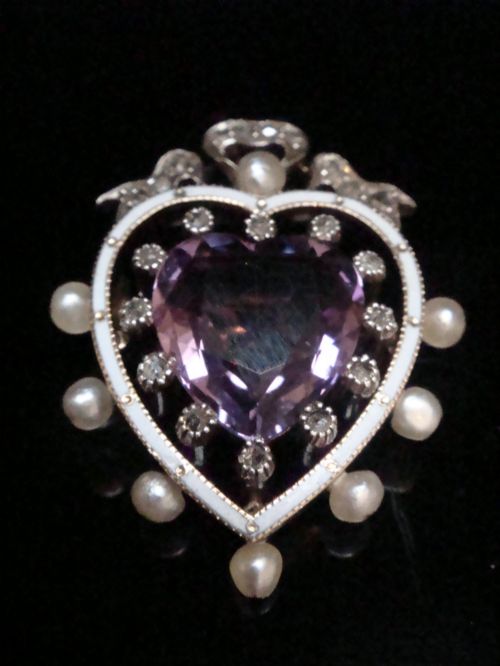
Alternative methods included cloisonné, where wire partitions held distinct enamel compartments, and niello work, which involved dark metallic alloy inlay. Settings incorporated stones like pearls, diamonds, chalcedony, and malachite to accent the coloured glass work.
Materials documented across the inventory include vitreous enamel, sterling silver, silver gilt, gold, copper, brass, chromium, pearls, diamonds, and malachite.
What varies in quality
The precision of the metalwork and the depth of the enamel layer set finer pieces apart from standard production. Guilloche patterns showing sharp, regular machine-engraving under translucent glass indicate superior workmanship compared to flat, opaque surfaces.
Attribution to known designers and workshops elevates individual pieces, especially signed Scandinavian silver gilt work or documented Art Deco chrome bracelets. The integration of precious stones like natural pearls or diamonds alongside the enamel also marks out higher-tier items.
Marius Hammer·Aksel Holmsen·A H Darby And Son·Hroar Prydz·Harold Arthur Lazarus·Jakob Bengel·Solomon Blanckensee Son
The Vintage Enamel Jewellery Glossary
- Guilloche
- A decorative technique where a mechanical lathe engraves a precise, repetitive pattern into a metal surface beneath translucent enamel. This process allows light to reflect through the coloured glass in intricate geometric waves.
- Vitreous Enamel
- A material made by fusing powdered glass to a metallic substrate at high temperatures. The resulting glossy compound resists fading and provides vibrant colour across brooches and pendants.
- Silver Gilt
- Sterling silver that has been coated with a thin layer of gold. This treatment imparts a warm yellowish tone while retaining the underlying silver weight.
- Cloisonne
- An ancient method of decoration where flat metal wires are soldered onto a base to form cells, which are then filled with enamel paste before firing. The technique produces distinct bordered sections of colour.
- Niello
- A black metallic alloy used as an inlay on engraved silver or gold objects. It creates high-contrast dark details against polished metal backgrounds.
Vintage Enamel Jewellery: Frequently Asked Questions
What is guilloche enamel?
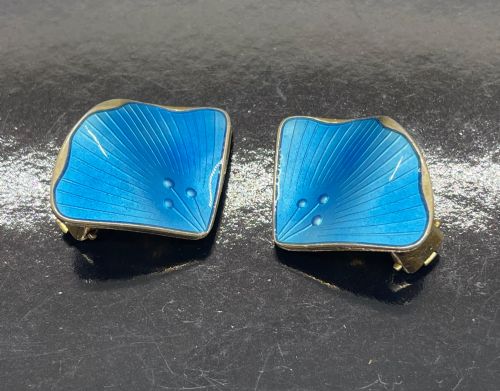
Guilloche enamel is a decorative technique where metal is machine-engraved with fine geometric patterns before being coated in translucent coloured glass. This allows light to pass through and bounce off the textured metal underneath.
The resulting finish creates depth and shimmering movement that flat enamel surfaces do not achieve. It is commonly found on mid-century Scandinavian brooches and early twentieth-century pendants.
How do I care for vintage enamel jewellery?
Vitreous enamel is essentially glass, meaning it requires gentle handling to prevent chipping or scratching against harder materials. Store pieces individually in soft pouches rather than jumbled together in a box.
Clean items using a soft cloth and lukewarm soapy water, avoiding harsh chemical dips or abrasive brushes. Dry them thoroughly immediately after washing to protect any exposed metal mounts.
How do I date vintage enamel pieces?
Dating relies on stylistic markers such as the flowing organic lines of Art Nouveau, the geometric symmetry of Art Deco, or the minimalist floral motifs of mid-century Scandinavian design. Hallmarks on the metal parts can also provide specific assay office stamps and maker marks.
Materials offer further clues, as chromium and certain synthetic backings point towards the 1930s onwards. Comparing construction methods against documented workshop timelines helps narrow down the period of creation.
Are these pieces made of solid silver?
Many items feature sterling silver or silver gilt bases, particularly those originating from Scandinavian workshops and British makers. Some pieces utilise gold, copper, brass, or chromium instead.
Checking for hallmarks stamped on the reverse side of the metal mount will confirm the specific purity. Silver gilt items combine a silver core with a surface layer of gold.