



Silver Butterfly Badge
These silver butterfly badge examples are charming wearable ornaments that collectors prize for their intricate enamel work and delicate metal forms.
Silver Butterfly Badge
A silver butterfly badge represents a distinct category of decorative brooches and pins shaped to resemble flying insects. When searching for a silver butterfly badge, a buyer encounters wearable ornaments produced primarily across several decades from the early twentieth century onwards.
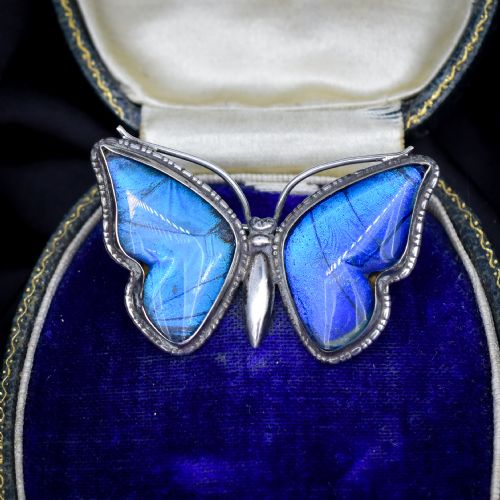
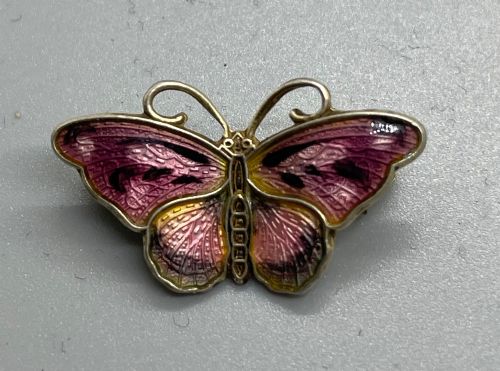
The pieces most frequently met on this page take the form of brooches created during the 1920 and 1930 periods. These items often incorporate striking decorative details such as coloured enamel or preserved butterfly wing sections set within metal frames.
How they were made
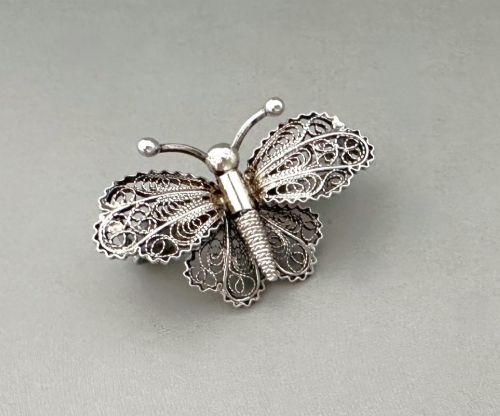
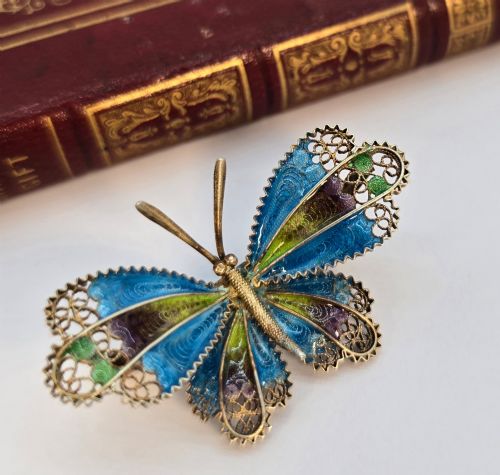
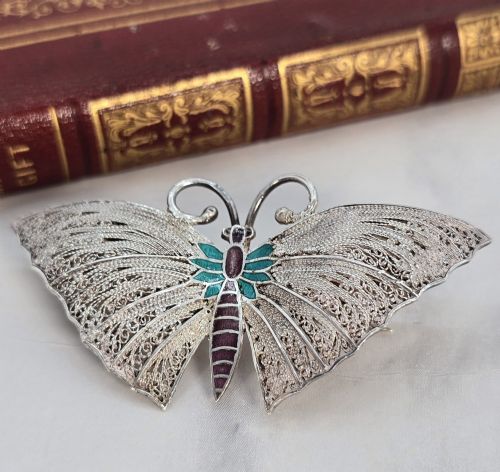
Maker workshops utilised sterling silver, silver gilt, and fine wirework filigree to construct the delicate bodies and wings of these insect brooches. Metal components were shaped by hand or cast to support decorative interior panels.
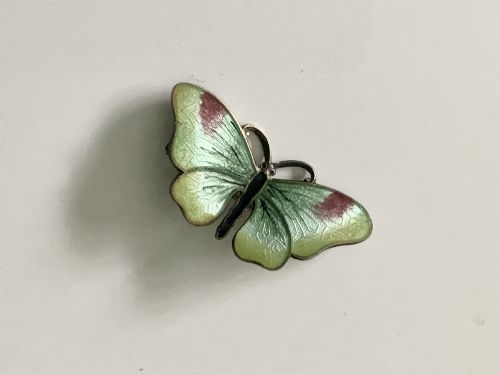
Vitreous enamel, guilloché enamel, and glass were fused onto metal surfaces to produce vibrant coloured patterns. Alternatively, authentic butterfly wing material was sealed beneath glass inserts to create iridescent natural wing displays.
Listings feature items spanning the 1920, 1930, 1950, and 1960 periods, executed in Art Deco, Art Nouveau, and Mid-Century Scandinavian styles.
What varies in quality
The standard of workmanship in the metal chassis and the precision of the applied enamel distinguish finer examples from standard production. Superior items display meticulous filigree wire arrangement and smooth, unblemished vitreous enamelling across the wings.
The integrity of the central decorative medium, whether delicate guilloché patterns or preserved natural wing material beneath glass, dictates the overall refinement of the piece. Well-preserved settings without surface disruption separate the finest pieces.
The Silver Butterfly Badge Glossary
- Silver gilt
- Silver that has been coated with a thin layer of gold. This treatment gives the metal a warm golden appearance while maintaining a silver base.
- Guilloché enamel
- Enamel applied over a metal surface that has been engraved with a precise mechanical pattern. This technique creates shimmering geometric light effects beneath translucent colour.
- Filigree
- Delicate jewellery work formed from fine twisted threads of silver soldered together in openwork patterns. It creates a lace-like structural framework.
- Vitreous enamel
- Glass fused to metal through high-temperature firing. It provides a durable, glossy coloured surface that resists fading over time.
Silver Butterfly Badge: Frequently Asked Questions
What periods do these brooches come from?
The pieces span several decades, featuring items created during the 1920, 1930, 1950, and 1960 periods. Art Deco and mid-century modern styles appear frequently among them.
Design characteristics reflect the prevailing aesthetic of each decade, ranging from geometric Art Deco motifs to Scandinavian mid-century simplicity.
What materials are used in their construction?
Makers utilised silver, sterling silver, and silver gilt as the primary structural metals for the pins and mounts. Decorative elements incorporate enamel, glass, and natural butterfly wing panels.
Translucent vitreous and guilloché enamels add rich colour to the wings, while filigree wire provides intricate textural detail.
How should I care for a vintage enamel brooch?
Enamel and butterfly wing pieces require gentle handling to protect fragile glass surfaces and delicate metal filigree. Store them in padded boxes away from direct sunlight and moisture.
Avoid using harsh chemical cleaning liquids or ultrasonic baths, as these substances can damage the enamel or discolour the metal.