



Plique a Jour Pendant
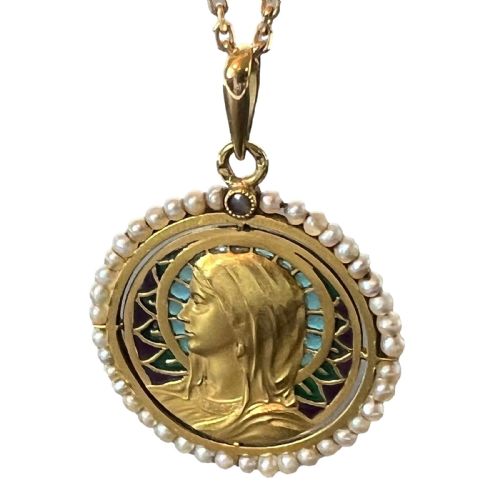
A plique a jour pendant holds light through translucent enamel cells like stained glass, bringing luminous colour to the neck.
Plique a Jour Pendant
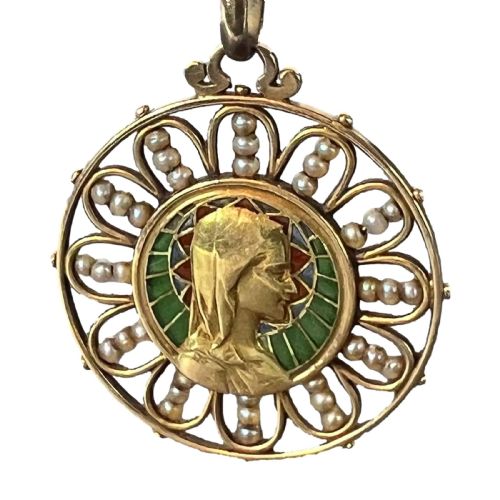
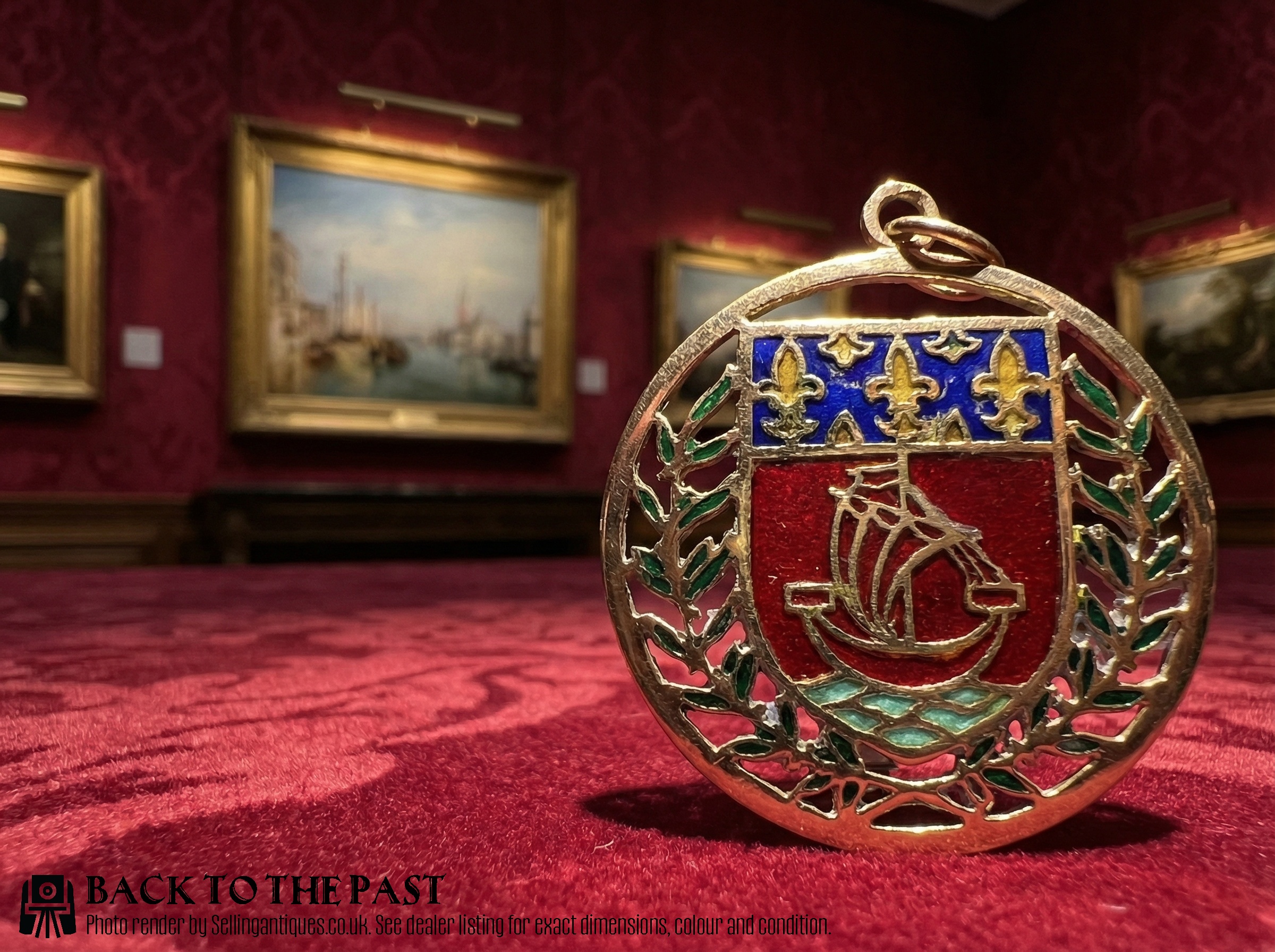
A plique a jour pendant is a delicate jewel where enamel hangs suspended within a wire framework without a backing, allowing light to pass directly through the coloured glass. These pieces span the early decades of the twentieth century, with French devotional medals and striking Art Nouveau floral or insect designs appearing most frequently.
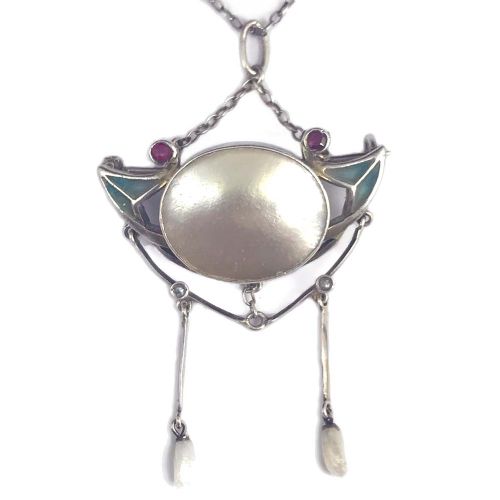
Makers working within the Art Nouveau and Arts and Crafts movements shaped these pendants into naturalistic forms such as butterflies, winged insects and botanical subjects, alongside traditional religious medals. Silver, silver gilt, and high karat yellow gold provide the structural support for the vitreous enamel cells.
The aesthetic draws heavily on French and continental design idioms from nineteen hundred to nineteen thirty. Buyers encounter both delicate silver gilt creations and substantial eighteen carat gold religious medallions bearing translucent enamel work.
How they were made
Goldsmiths constructed an open wire framework of gold or silver, soldering thin metal strips to form the outlines of wings, petals or pictorial scenes. Vitreous enamel paste was then applied by hand into these empty compartments before firing.
The piece underwent successive kiln firings to fuse the glass powder without the use of a solid backing plate. Once cooled, the metal and translucent enamel surfaces were polished flush to create the signature stained glass effect.
Plique a Jour Pendant Retail Price Guide 2026
Typical asking prices for plique a jour pendant among the pieces listed under this phrase on Sellingantiques today, from the lower quarter to the upper quarter. They describe what is for sale here now, not the wider market.
Butterflies and dropsy Virgin Mary medals prove that turn-of-the-century jewellers found equal inspiration in garden insects and divine protection.
What varies in quality
The finesse of the wire framework dictates the visual refinement of the piece, where thinner dividing lines demand greater technical mastery from the jeweller. Superior examples maintain absolute clarity in the enamel cells without cloudy inclusions or structural fractures in the glass.
The integration of precious gems such as peridot, citrine, amethyst, chrysoprase and natural pearls elevates the execution of finer workshop pieces. Heavier gauge eighteen carat gold mountings and signed pieces by known makers distinguish exceptional commissions from standard production.
Heinrich Levinger·Eduard Loss·Martin Mayer·Theodor Fahrner·Meyle & Meyer·Liberty & Co
The Plique a Jour Pendant Glossary
- Plique-a-jour
- A French term meaning letting in daylight, describing an enamelling technique that creates transparent cell work resembling miniature stained glass. This method requires no backing metal, so light shines straight through the coloured glass.
- Vitreous enamel
- A material made by fusing powdered glass to a metallic substrate through high temperature firing. It provides the permanent, vibrant colour seen in the translucent cells of these pendants.
- Silver gilt
- Silver that has been coated with a thin layer of gold on its exterior surface. This treatment offers the warm tone of gold combined with the working properties of silver.
- Seed pearl
- A very small natural or cultured pearl, often round or slightly irregular in shape. These tiny pearls frequently accent the borders of early twentieth century pendants.
- Art Nouveau
- An international design style prominent around nineteen hundred characterised by flowing, organic lines and floral motifs. Jewellery from this period frequently incorporates natural forms and innovative enamelling.
Plique a Jour Pendant: Frequently Asked Questions
How do I wear a plique a jour pendant?
These pendants suspend from fine chains to rest against the collarbone, allowing daylight to pass freely through the transparent enamel cells. Pairing them with simple attire ensures the translucent glass remains the focal point of the outfit.
Because the enamel lacks a solid metal backing, avoid wearing them during activities involving physical impact. Store them in individual compartments to prevent abrasion from other items in your jewellery box.
How can I tell the period?
Stylistic markers such as whiplash curves, insect motifs and naturalistic floral arrangements point directly to the Art Nouveau period around nineteen hundred. French religious medals often bear hallmarks on the suspension rings that indicate the standard of gold purity and origin.
Later pieces from the nineteen twenties and thirties introduce cleaner geometric influences alongside traditional devotional iconography. Comparing the weight of the metal and the saturation of the enamel helps place the piece within its historical decade.
What materials are used?
The structural framework relies on silver, silver gilt, fifteen carat gold or eighteen carat yellow gold. Vitreous enamel forms the translucent coloured sections within the wire cells.
Accents often include seed pearls, cultured pearls, amethyst, peridot, citrine and chrysoprase. Mother of pearl also appears as a complementary element in specific floral and brooch conversions.