


Vintage Enamel Necklace
A vintage enamel necklace brings together molten glass and precious metal, offering the rich colour and intricate patterns treasured by collectors.
Vintage Enamel Necklace
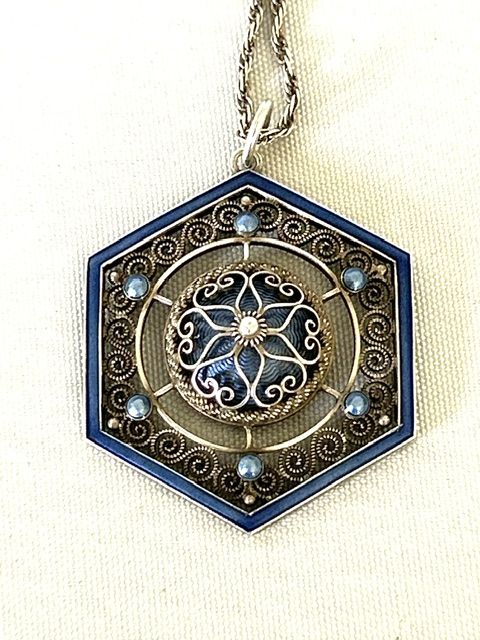
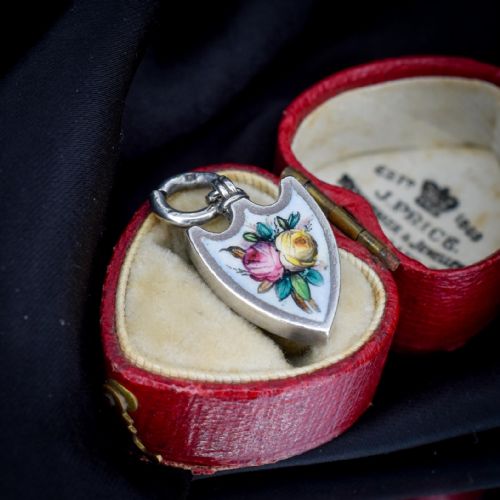
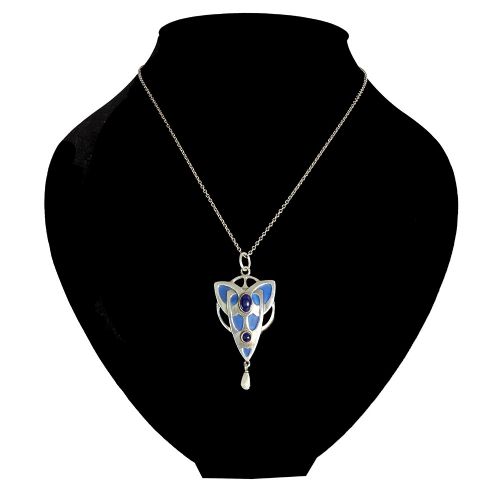
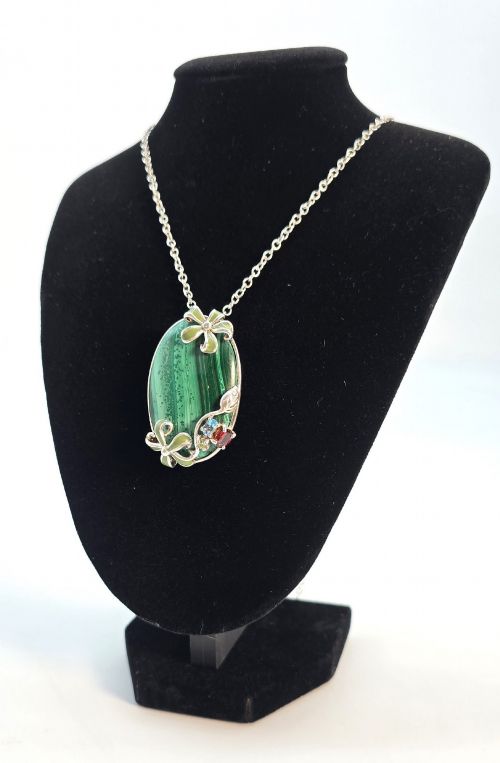
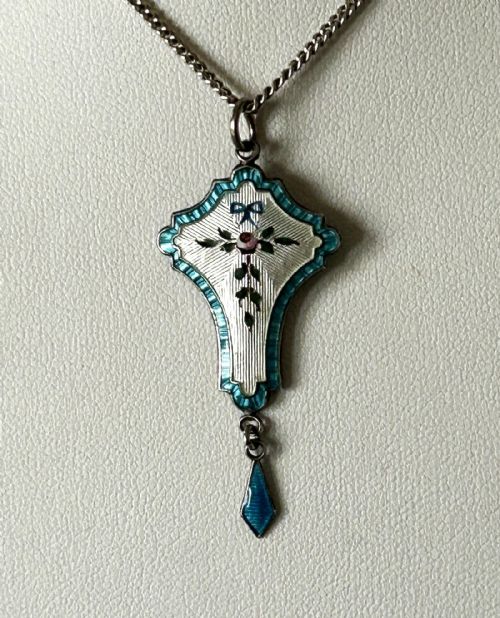
When you search for a vintage enamel necklace, you encounter a diverse range of pendant necklaces, charms, and festoon chains spanning from the nineteenth century through the mid-century period. The most common versions on this page are silver pendants utilising blue, floral, or geometric enamel work tied to the Art Nouveau and Arts and Crafts movements.
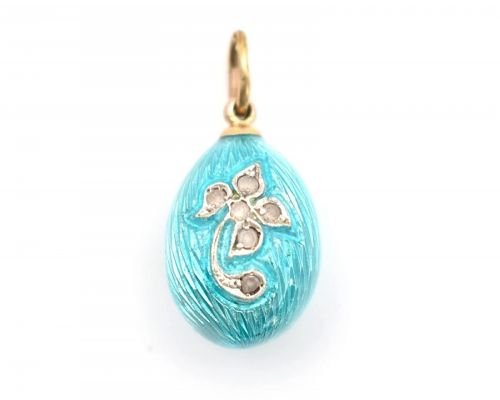
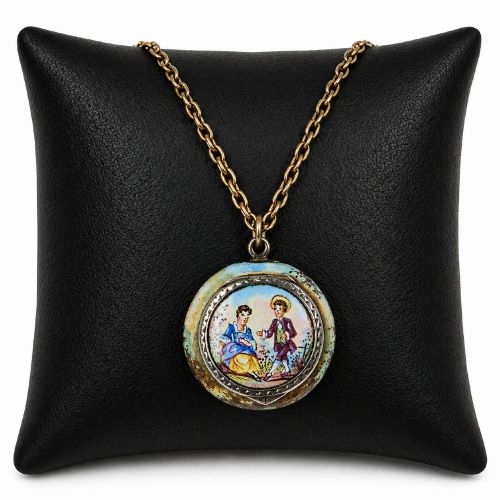
These pieces encompass various regional traditions, including Scandinavian silver, French religious medallions, and Russian egg pendants. The designs often incorporate drop pearls, turquoise, chalcedony, or marcasite alongside the central enamel plaque.
Makers and workshops of note from the early twentieth century heavily influence the selection, with silver-gilt settings and torque necklaces appearing frequently. Buyers find everything from delicate floral shields to bold modernist geometric arrangements.
How they were made
Craftsmen fused powdered glass to metal bases through high-temperature firing, creating vibrant coloured surfaces on sterling silver, gold, and silver-gilt frames. Techniques such as guilloche laid down machine-turned engraved patterns beneath translucent coloured enamel, while plique-à-jour suspended transparent enamel within open metal cells like stained glass.
Jewellers often integrated natural elements like seed pearls, blister pearls, diamonds, and cabochon stones such as malachite and chrysoprase into the metalwork. Chains and pendants were frequently hand-wrought, particularly within the Arts and Crafts tradition, leaving subtle tool marks that distinguish early twentieth-century production from later stamped pieces.
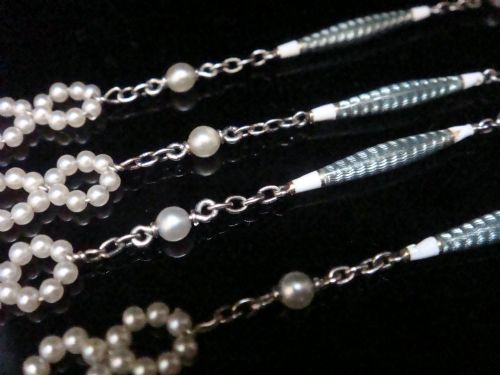
The selection spans from nineteenth-century locket pendants and Edwardian pearl chains to mid-century Scandinavian and modernist designs.
What varies in quality
The sophistication of the enamel technique largely dictates the standing of a piece, with complex plique-à-jour and precise guilloche engraving requiring exceptional skill compared to simple opaque fills. The weight and purity of the metal mounting, such as substantial 18K yellow gold or heavier gauge silver-gilt, elevate the standard.
Design attribution to notable workshops or specific makers adds distinction, as does the integration of high-grade supplementary gemstones like natural saltwater pearls and diamonds. Preservation of the vitreous surface without disruption to the delicate metal cells remains vital.
Archibald Knox·Liberty and Co·Murrle Bennett·Marius Hammer·David Andersen·Heinrich Levinger·Charles Horner·Eduard Loss·Martin Mayer·Ludwig Knupfer·Theodor Fahrner·Jakob Bengel·V Bahner·Christian Dior
The Vintage Enamel Necklace Glossary
- Guilloche
- A decorative technique where a mechanical lathe engraves precise, intricate geometric patterns into a metal substrate before translucent enamel is applied over the top. This allows the underlying pattern to shimmer through the coloured glass.
- Plique-à-jour
- An enamelling method resembling miniature stained glass, where enamel is fired in open cells without a backing metal, allowing light to pass directly through the translucent colours. It requires immense control during the firing process.
- Cloisonne
- A style where thin metal wires are soldered to a metal base to form compartments, which are then filled with enamel paste and fired. The resulting design displays distinct metallic outlines defining each area of colour.
- Silver Gilt
- Silver that has been coated with a thin layer of gold, often providing a warm contrasting background for blue or green enamel work. This finish was widely favoured by Art Nouveau and Arts and Crafts jewellers.
- Festoon
- A necklace style featuring draped chains, swags, or suspended drops arranged in a graceful curve across the collarbone. These pieces frequently incorporate enamel plaques linked by delicate silver or gold wirework.
Vintage Enamel Necklace: Frequently Asked Questions
How do I care for a vintage enamel necklace?
Protect the vitreous glass surface by storing the necklace separately in a soft pouch to prevent scratching from other jewellery. Avoid harsh chemical dips, ultrasonic cleaners, and prolonged exposure to water, cleaning the metal gently with a dry microfibre cloth instead.
Because enamel is essentially glass set into metal, sudden impact or dropping can cause chipping or cracking. Put your necklace on after applying perfumes and hairsprays to protect both the enamel and any accompanying pearls or gemstones.
What is the difference between guilloche and plique-a-jour enamel?
Guilloche enamel involves laying transparent coloured glass over an engraved metal background, creating a reflective, patterned depth beneath the surface. It is typically opaque underneath with a bright, metallic sheen shining through.
Plique-a-jour lacks any backing metal entirely, meaning light shines straight through the coloured enamel cells like a tiny window. This technique is much lighter in the hand and generally found on higher-end Art Nouveau pieces.
How can I tell an Edwardian enamel piece from a 1950s one?
Edwardian and early twentieth-century pieces often rely on delicate sterling silver or silver-gilt settings, frequently featuring natural pearls, softer pastel enamels, and organic Art Nouveau motifs. The construction leans toward hand-wrought details and intricate wirework.
Mid-century items from the 1950s tend to display bolder colours, heavier geometric shapes, or distinct modern art influences. Materials during this later decade also frequently include rolled gold, base metals, and stamped components alongside traditional silver.
Were these necklaces worn every day in the past?
Many Edwardian and Art Nouveau pendant necklaces were created as special occasion jewellery or artistic dress accessories rather than daily adornments. Wealthy patrons wore them pinned to bodices or suspended from long matching chains for evening gatherings and exhibitions.
By the mid-century period, smaller charm pendants and simpler chain designs became more versatile for everyday wear. The inclusion of sturdy safety clasps and shorter chain lengths on later pieces reflects a shift toward practical, daily accessorising.