


Green Stone Pendant
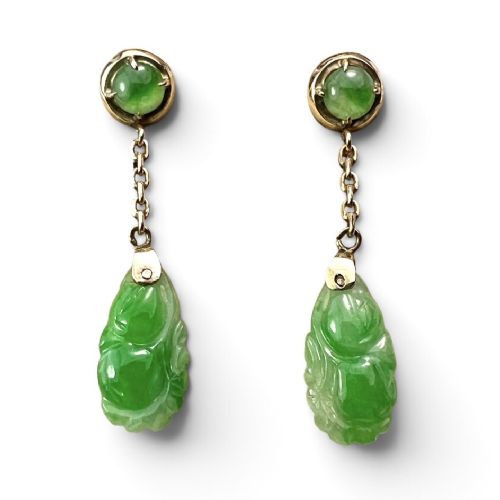
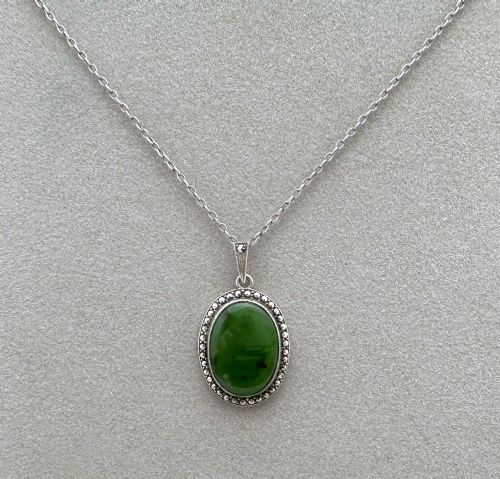
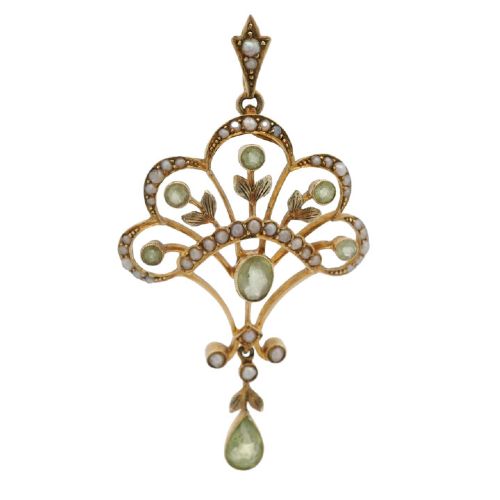
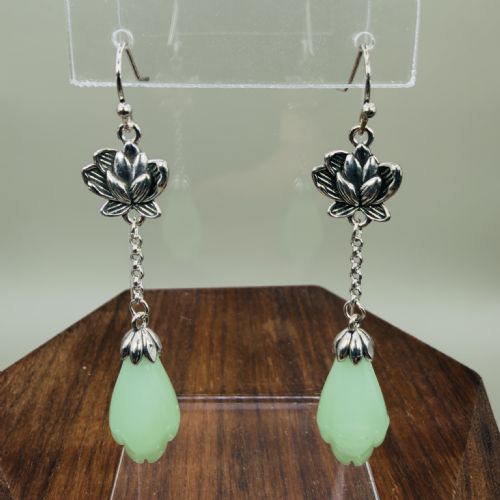
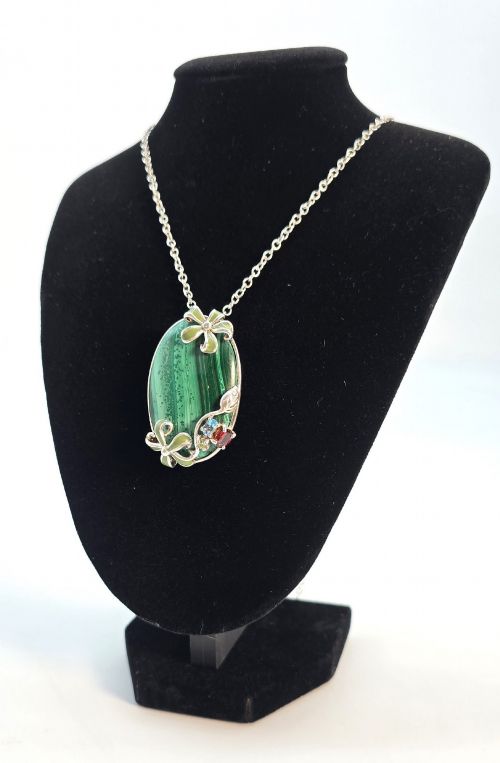
A green stone pendant offers a focused splash of colour, drawing the eye through carved jadeite, crisp peridot, and soft chrysoprase set in gold and silver.
Green Stone Pendant
When you search for a green stone pendant, you encounter a diverse array of items spanning multiple centuries and aesthetics, from carved jade amulets to Edwardian peridot clusters. The pieces on this page range from Victorian silver and emerald combinations to sleek Art Deco geometric designs in jade and Amazonite.
You are most likely to meet pieces from the Edwardian and Art Deco eras, alongside mid-century silver items set with chalcedony or malachite. These jewels appear in various forms, including drops, amulets, plaques, and cluster pendants mounted on gold or silver chains.
The materials dictate much of the visual weight, shifting from translucent carved Chinese jade to vivid faceted peridot paired with seed pearls. Each example reflects the prevailing taste of its period, whether that is the natural motifs of the Arts and Crafts movement or the clean lines of the 1930s.
How they were made
Metalsmithing underpins these pieces, utilising silver, 9ct gold, 15ct gold, and platinum to fabricate settings, bezels, and delicate filigree work. Artisans combined these precious metals with cold enamel or gilt surfaces to enhance the surrounding stones.
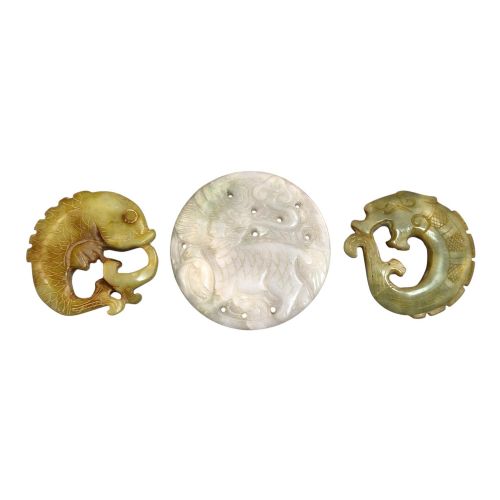
Gemstone preparation involved precision cutting, ranging from brilliant facets on peridots and diamonds to intricate hand-carving on jadeite plaques, bi discs, and talisman masks. Stones were then secured using traditional claw settings, rub-over bezels, or pierced scrollwork frames.
Some dragons and mythical qilin carved into jade discs have watched over wearers for well over a century.
What varies in quality
The distinction between tiers rests upon the execution of the lapidary work and the refinement of the metal setting. Superior examples display deeply detailed hand-carving on jade or well-matched stone clarity and colour saturation in peridots and emeralds.
Construction integrity also dictates the grade, where balanced proportions, secure stone mountings, and the presence of maker marks elevate an item. Lesser pieces rely on simpler stamped metalwork and stones with noticeable inclusions or uneven hue.
Liberty & Co·Levinger & Bissinger·Otto Prutscher·Arthur & Georgie Gaskin
The Green Stone Pendant Glossary
- Jadeite
- A dense mineral prized for its smooth texture and range of green tones, often carved into plaques or amulets.
- Peridot
- A yellowish-green silicate mineral frequently faceted and paired with seed pearls in Edwardian cluster designs.
- Chrysoprase
- A gemstone variety of chalcedony containing nickel, known for its distinct apple-green colour seen in Arts and Crafts jewellery.
- Bi disc
- A traditional flat jade artefact with a circular hole in the centre, often carved with symbolic motifs.
- Seed pearl
- A very small natural or cultured pearl used in clusters and borders to frame central gemstones.
Green Stone Pendant: Frequently Asked Questions
How do I date a green stone pendant?
Dating relies on stylistic clues, metal purity marks, and the cut of the stones. Edwardian pieces often feature delicate millegrain work with peridot and seed pearls, whereas Art Deco items lean towards geometric silver and jade arrangements.
Examining the reverse of the setting and any maker marks or hallmarks provides further chronological context. Comparing the mounting technique with known historical periods helps narrow down the decade of manufacture.
Are jade pendants always Chinese?
While many carved jade and jadeite pendants originate from Chinese traditions, such as bi discs and qilin amulets, jade has also been utilised in Western Art Deco and mid-century modern jewellery designs.
The carving style, iconography, and mineral composition usually clarify the cultural origin of the piece. European makers frequently incorporated carved jade into contemporary settings during the early twentieth century.
How should I care for my pendant?
Maintenance depends entirely on the specific materials used in the piece. Softer stones like malachite, pearls, and jade require gentle cleaning with a soft cloth rather than harsh chemical dips or ultrasonic cleaners.
Storing the pendant separately prevents scratching from harder gems like diamonds or peridots. Regular checks by a jeweller ensure that settings and claw mounts remain secure.
What is the difference between jade and jadeite?
Jade is a term that historically encompasses two distinct mineral species: nephrite and jadeite. Jadeite is generally harder and offers a wider spectrum of vivid green hues and translucent qualities.
Many antique Asian and Art Deco items specify jadeite due to its brilliant polish and depth of colour. Both minerals have been carved into intricate talismans and plaques for centuries.