




Green Enamel Necklace
A green enamel necklace brings vibrant colour and meticulous metalwork to the neckline, catching the eye with translucent depths and rich tones.
Green Enamel Necklace
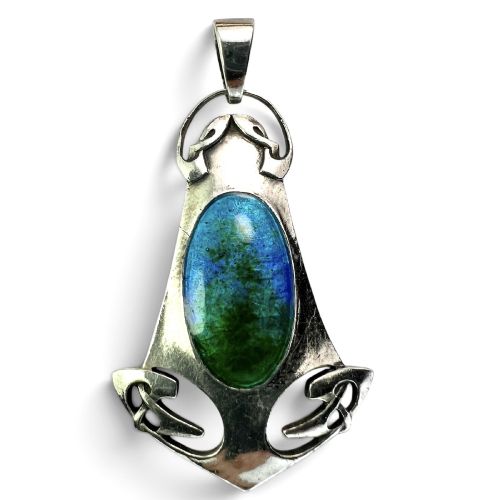
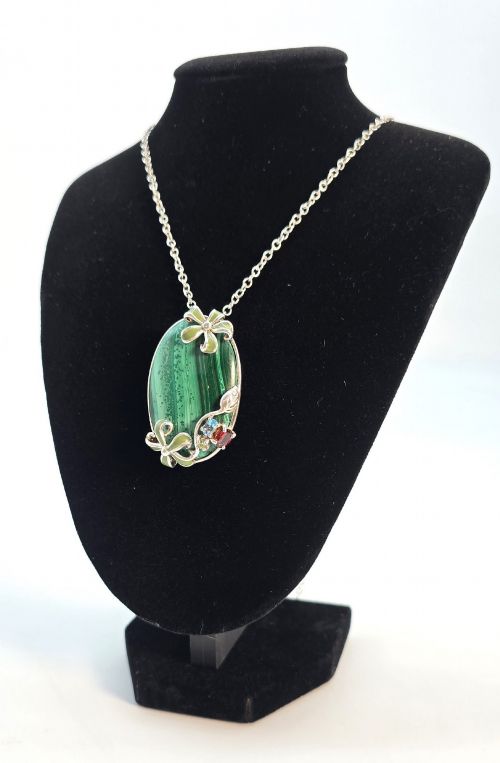
A green enamel necklace typically presents as a pendant or drop suspended from a chain, frequently emerging from the distinct aesthetic movements of the early twentieth century. These pieces showcase a strong affinity for natural motifs and artisanal metalworking traditions.
The most common examples encountered here date from around nineteen hundred, reflecting the organic curves and intricate detailing characteristic of Art Nouveau and Arts and Crafts designs.
Alongside these turn-of-the-century creations, occasional mid-century modern variations and nineteenth-century Austro-Hungarian multi-gem compositions appear, offering alternative interpretations of the green enamel necklace form.
How they were made
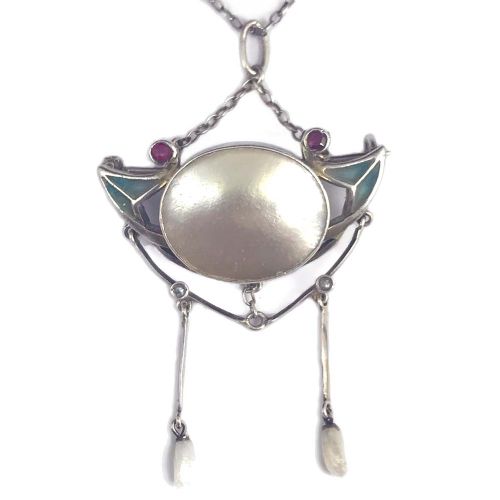
The construction relies heavily on silver, sterling silver, or silver gilt frameworks designed to house vibrant applications of vitreous enamel and plique-a-jour. Plique-a-jour techniques allow light to pass through the translucent green compartments much like stained glass.
Goldsmiths frequently integrated natural gemstones such as pearls, citrine, chrysoprase, and malachite alongside the enamel work to enhance the chromatic richness of the pendant.
Individual links, bezels, and settings were hand-assembled by skilled workshops, ensuring each metal component accommodated the delicate glass paste fired within its borders.
Green Enamel Necklace Retail Price Guide 2026
Typical asking prices for green enamel necklace among the pieces listed under this phrase on Sellingantiques today, from the lower quarter to the upper quarter. They describe what is for sale here now, not the wider market.
Listings feature silver, sterling silver, and silver gilt combined with vitreous enamel, plique-a-jour, citrine, chrysoprase, malachite, and pearls across the nineteenth and twentieth centuries.
What varies in quality
Quality reveals itself in the precision of the metal smithing and the clarity of the fired enamel, particularly where translucent plique-a-jour requires flawless execution without supporting foil backing. Superior pieces display harmonious proportions between the central green enamel panels and the surrounding precious metals.
The choice and setting of subsidiary stones, from matched pearls to carefully faceted citrines, distinguish standard workshop output from exceptional designer pieces produced for prominent retailers. Finer examples maintain crisp definition in stamped marks and hand-tooled leaf or floral motifs.
Murrle Bennett·Archibald Knox·Liberty and Co·Levinger and Bissinger·Heinrich Levinger·Otto Prutscher·Charles Horner·Martin Mayer·Ludwig Knupfer·Theodor Fahrner·Meyle and Meyer
The Green Enamel Necklace Glossary
- Plique-a-jour
- An enamelling technique where the enamel is applied within a cellular framework without a backing metal, creating a translucent, stained-glass effect. Light passes directly through the coloured vitreous material.
- Vitreous enamel
- A material made by fusing powdered glass to a metallic substrate at high temperatures. The resulting glossy coating provides lasting colour stability on silver and gold jewellery.
- Silver gilt
- Silver that has been coated with a thin layer of gold, often providing a warmer tone to early twentieth-century pendants. This finish was widely utilised in Arts and Crafts jewellery.
- Chrysoprase
- A gemstone variety of chalcedony containing small amounts of nickel, typically displaying an apple-green colour. It frequently complements green enamel work in period pendants.
- Festoon necklace
- A necklace featuring draped chains or links suspended across the collarbone, often punctuated by drops and pendants. These designs were popular during the early twentieth century.
Green Enamel Necklace: Frequently Asked Questions
How do I wear a green enamel necklace?
These pendant necklaces pair well with plain necklines that allow the detailed metalwork and translucent green glass to stand out without competing patterns.
Because many examples incorporate delicate plique-a-jour panels, wearing them away from heavy outer garments helps protect the unbacked enamel from accidental pressure.
What periods do these necklaces come from?
The selection spans from nineteenth-century Austro-Hungarian multi-gem pieces to early twentieth-century Art Nouveau and Arts and Crafts creations, alongside mid-century modern designs.
Nineteen-hundred pieces form a major portion of the available range, reflecting the peak of artistic enamel work associated with prominent European workshops.
How do I clean an enamel necklace?
Vitreous enamel benefits from gentle wiping with a soft, damp cloth to remove surface dust without abrasive polishes that might scratch the glass or softer silver surfaces.
Submerging antique jewellery in liquid chemical cleaners can damage historical settings, delicate pearls, and the metal components surrounding the enamel.
What is plique-a-jour enamel?
Plique-a-jour is a delicate technique resembling miniature stained glass, where transparent enamel fills open metal cells without a solid backing plate.
This method allows natural light to illuminate the green hues directly from behind, creating a glowing effect prized by turn-of-the-century designers.
Are these pieces marked with maker details?
Many period pieces bear maker marks, silver purity stamps, or registry numbers on the reverse of the pendant or along the jump rings.
Identifying marks from firms like Liberty and Co or individual makers help confirm the origin and workshop attribution of the jewellery.