




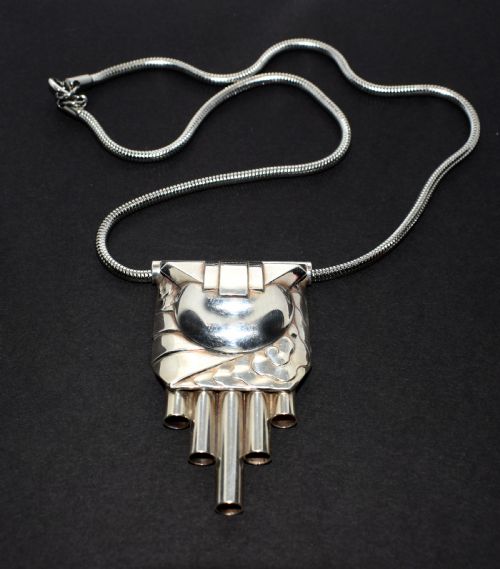

Geometric Silver Necklace
A geometric silver necklace offers clean architectural lines, bold metalwork and sharp angles that define twentieth-century design.
Geometric Silver Necklace
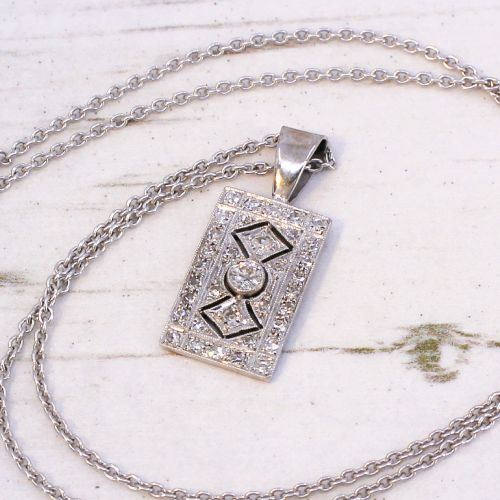
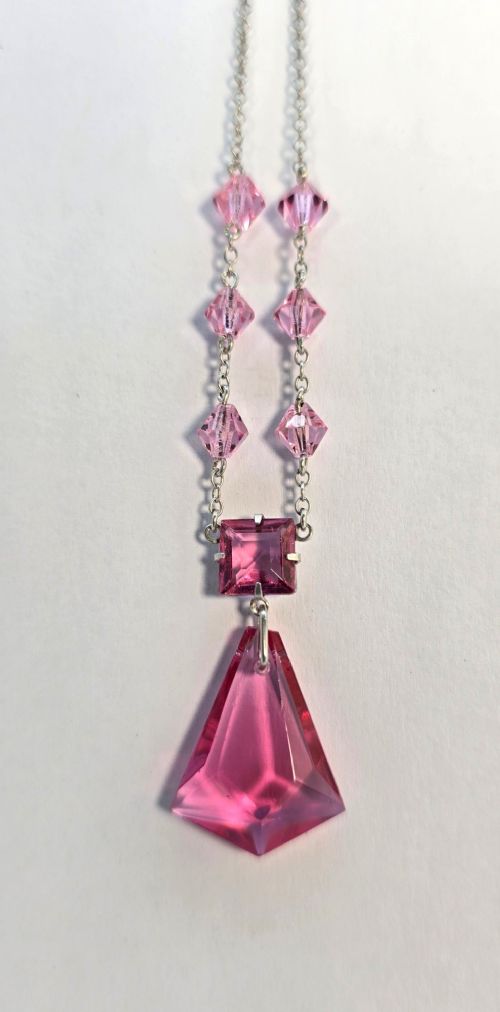
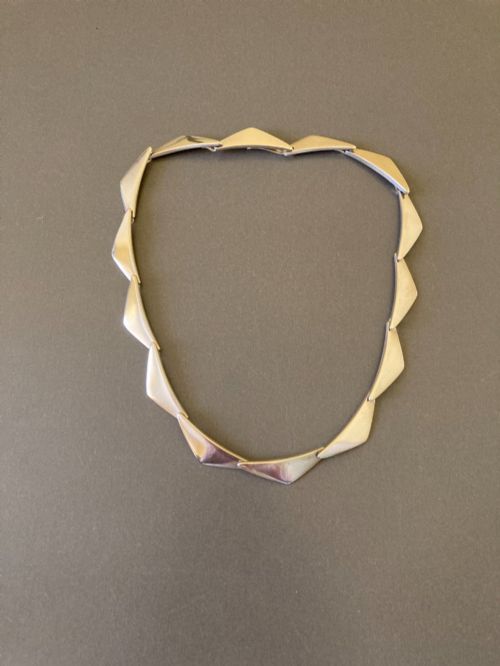
When you search for a geometric silver necklace, you find pieces built around structured shapes, linear drops and balanced arrangements of metal and stone. The examples seen here span the twentieth century, with the Art Deco period and the 1930s providing the strongest showing of these clean, structured designs.
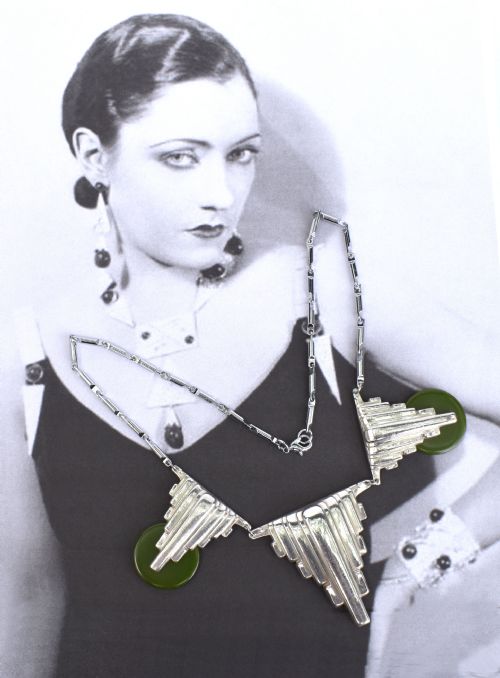
The most common versions on this page combine silver or sterling silver settings with crystal, diamond, onyx, enamel or Bakelite. These materials are shaped into pendants and link necklaces that reflect the modernist taste for symmetry and industrial form.
How they were made
Makers utilised silver and platinum alongside chrome to build rigid frameworks that hold diamonds, crystals and onyx securely within linear mounts. Enamel and Bakelite add blocks of solid colour directly into the metallic design.
Techniques range from hand-cut crystal and diamond work in platinum settings to industrial chrome and galalith construction associated with modernist workshops.
Materials span precious platinum and diamonds alongside chrome, enamel, Bakelite and galalith.
What varies in quality
The standard of a piece rests on the precision of its metalwork and the integration of its components, whether precious stones or synthetic materials like Bakelite. Stronger examples display crisp junction points and secure stone settings that maintain the intended linear purity.
Execution of the design dictates value, distinguishing mass-produced modernist chrome from fine platinum and diamond fringe work of the Art Deco era.
Georg Jensen·Jakob Bengel
The Geometric Silver Necklace Glossary
- Art Deco
- A design style characterised by sleek lines, geometric shapes and streamlined forms prominent during the 1920s and 1930s. It draws inspiration from technology and industrial progress.
- Modernist
- An aesthetic movement rejecting traditional ornamentation in favour of functional, clean forms and novel industrial materials. It dominates the mid-century pieces found in this selection.
- Platinum
- A dense, durable precious metal used for fine settings that require strength without bulk. It allows for delicate yet secure claw work around diamonds.
- Bakelite
- An early synthetic plastic valued for its rich colours and moulded geometric shapes. It appears frequently in 1930s modernist pieces.
- Galalith
- A semi-synthetic plastic derived from milk casein, utilised for smooth, colourful geometric beads and plaques in twentieth-century jewellery.
Geometric Silver Necklace: Frequently Asked Questions
How do I date a geometric silver necklace?
Dating relies on the combination of materials, construction methods and stylistic markers like Art Deco symmetry or mid-century modernist minimalism. Pieces from the 1930s often incorporate Bakelite, chrome or old-cut diamonds in platinum.
Later mid-century pieces from the 1960s tend toward simpler Scandinavian or German silver pendant forms without the intricate stone settings of the earlier decades.
What materials are used in these necklaces?
These pieces utilise metals ranging from standard silver and sterling silver to platinum and chrome. Gemstones like diamonds and onyx, alongside crystals, enamel, Bakelite and galalith, provide colour and contrast.
The choice of material often signals the period, with platinum and diamonds pointing to fine Art Deco work, while chrome and plastics suggest industrial modernist experimentation.
How should I care for vintage silver necklaces?
Care depends on the secondary materials set into the silver framework, as plastics like Bakelite and galalith require gentle cleaning away from harsh chemicals. Silver and platinum components tolerate standard polishing cloths designed for precious metals.
Store these items flat or hung carefully to prevent delicate fringe links or geometric drops from bending or tangling.