


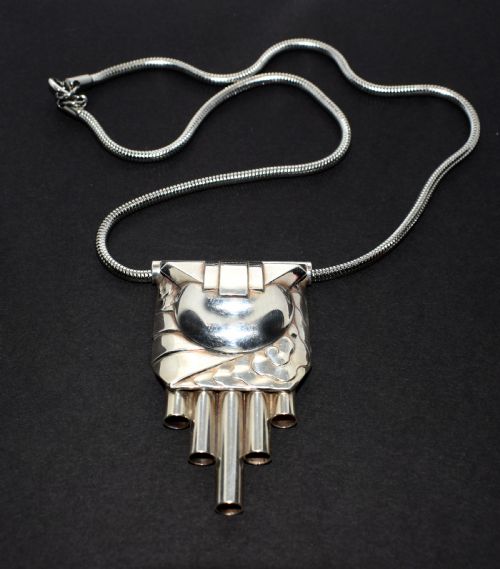

Modernist Pendant Necklace
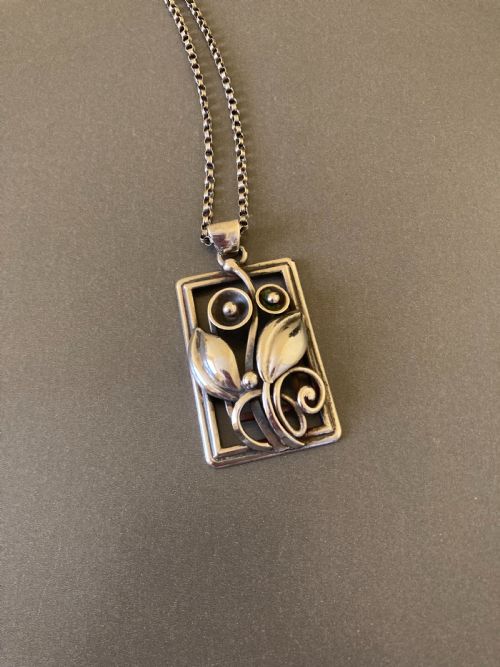
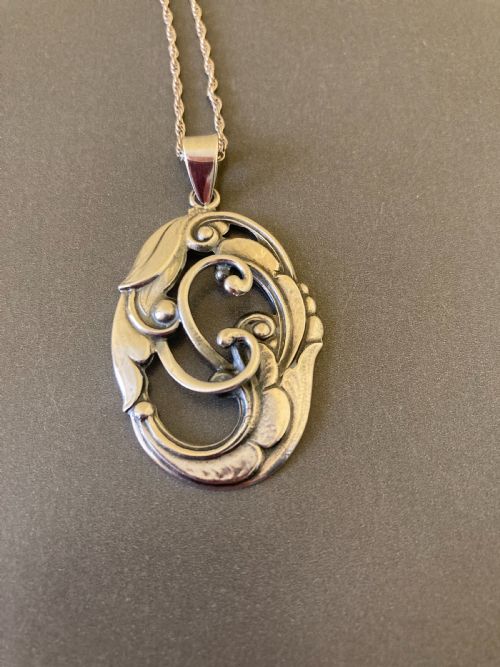
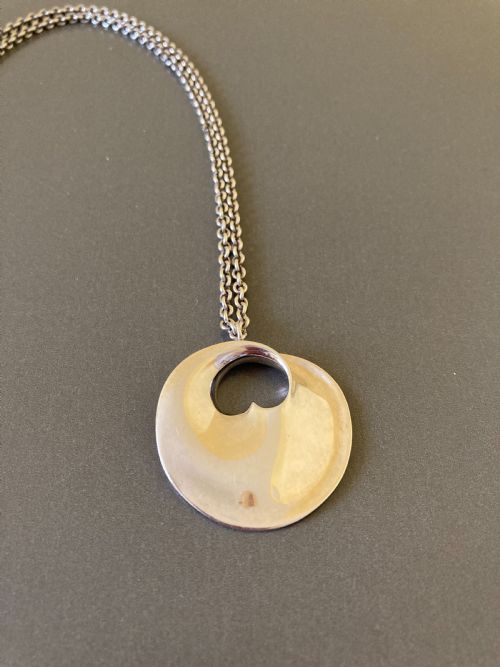
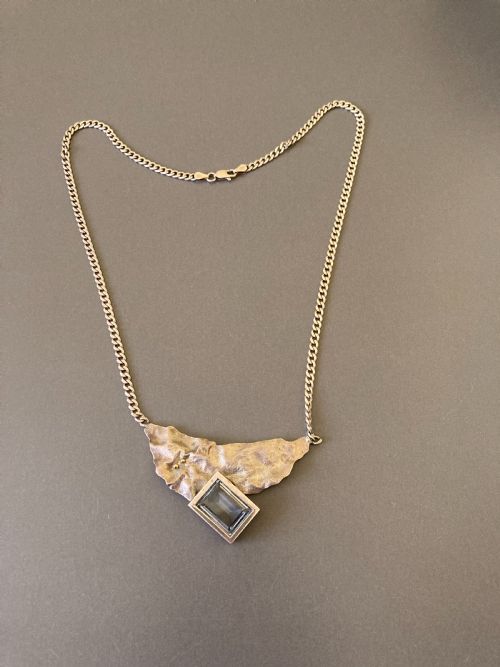
These modernist pendant necklace examples deliver clean geometric forms and striking materials, offering a bold shift away from traditional ornamentation.
Modernist Pendant Necklace
A modernist pendant necklace brings together architectural lines and distinct material choices, spanning periods from the nineteenth century through the mid twentieth century and beyond. When you search for this phrase, you encounter pieces that embrace both Scandinavian simplicity and industrial Art Deco geometry.
The selections on this page range from Danish and Finnish silver work to French statement pieces and chrome designs. Common configurations include drops set with stones such as topaz, moonstone, opal, and amethyst, alongside vibrant enamel work.
Makers from Norway, Denmark, and France appear frequently, often working in sterling silver, silver plate, or early plastics like Galalith. These designs prioritise structural form and bold visual impact over conventional floral motifs.
How They Were Made
Makers utilised sterling silver and silver plate as primary frameworks, shaping metal into geometric pendants and rigid torque collars. Construction often involved soldering clean bezels around stones or fusing linear metal elements together.
Enamel work added colour and surface pattern to metal bases, particularly in Scandinavian and Art Deco pieces. Alternative materials such as Galalith and chrome introduced industrial textures and smooth planes that defined the modernist aesthetic.
Represented design traditions span Art Deco, Scandinavian Modern, Skønvirke, and mid-century modernist movements.
What Varies In Quality
Quality rests in the precision of the metalwork and the integration of the stone or enamel element within the design. Stronger examples show crisp solder lines, secure stone settings, and balanced proportions that maintain clean lines from every angle.
Weight and finish also distinguish the work, with superior pieces offering a substantial feel in the hand and a polished surface texture. Maker attribution and well-preserved enamel or original stone settings elevate the standing of a piece within its period.
G. Hoppe·Georg Jensen·David-Andersen·Jakob Bengel
The Modernist Pendant Necklace Glossary
- Galalith
- An early semi-synthetic plastic made from casein and formaldehyde, frequently utilised in Art Deco modernist jewellery for its smooth finish and vibrant colour. It requires gentle care to maintain its structural integrity over time.
- Torque
- A rigid circular or open-ended neck ring that sits firmly against the collarbone, often supporting a central pendant drop. This form gained popularity in mid-century Scandinavian design.
- Skønvirke
- A Danish design movement parallel to Art Nouveau and Arts and Crafts, focusing on natural motifs rendered with clean craftsmanship. Pieces from this tradition often bridge traditional and modern aesthetics.
- Bezel setting
- A method of securing a gemstone by wrapping a thin strip of metal around its perimeter. This technique provides a sleek, low-profile edge favoured in modernist jewellery.
Modernist Pendant Necklace: Frequently Asked Questions
How do I clean a silver modernist pendant?
Use a soft microfibre cloth to polish the silver elements gently, avoiding harsh chemical dips that can damage enamel or soft stones like opal and moonstone.
Keep the piece dry and store it separately to prevent scratching against other jewellery items.
What is Galalith jewellery?
Galalith is an early casein-based plastic that allowed makers to carve bold geometric shapes and produce vibrant colours for Art Deco necklaces.
It feels dense and smooth to the touch, distinguishing it from later injection-moulded plastics.
How do I date a modernist silver necklace?
Examine the construction style, maker marks, and material combinations, comparing them against known periods like the 1930s Art Deco era or 1960s Scandinavian production.
Design cues such as rigid torque collars or abstract silver drops often point directly to mid-century aesthetics.
Are these necklaces heavy to wear?
Weight varies depending on the materials used, with solid silver and chrome statement pieces offering a substantial feel while lighter enamel or Galalith designs sit comfortably for daily wear.
Rigid torque styles distribute weight evenly around the neck.