



Art Deco Costume Jewellery
Art deco costume jewellery brings geometric symmetry and vibrant colour to everyday wear, offering striking modernist design without traditional precious stones.
Art Deco Costume Jewellery
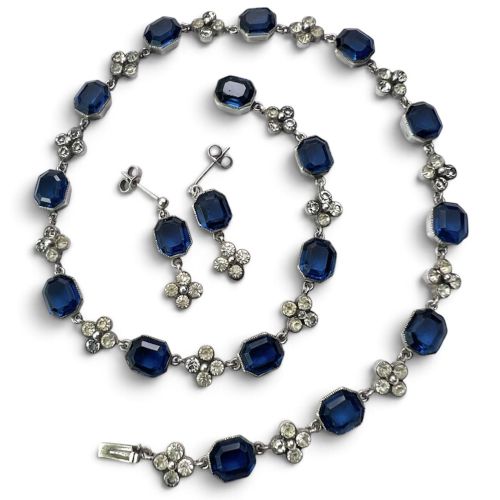
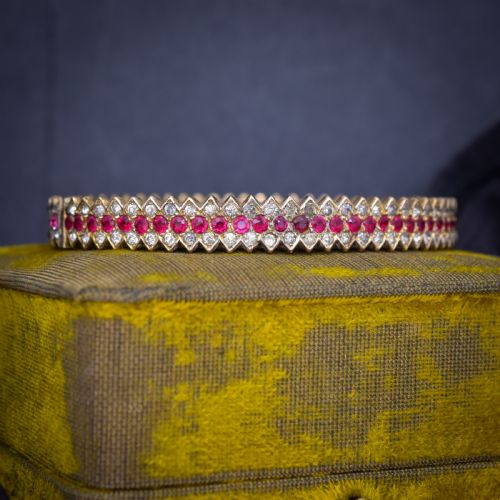
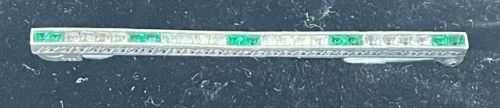
Art deco costume jewellery encompasses bracelets, necklaces, earrings, and brooches produced primarily during the 1920s, 1930s, and 1940s. These pieces embrace the bold, linear aesthetics of the interwar period, utilising alternative materials to achieve high visual impact.
The most common examples on this page are bracelets, necklaces, and earrings featuring distinct geometric motifs. Many incorporate chrome, silver plating, and coloured glass to mimic precious gemstones in a strictly modernist style.
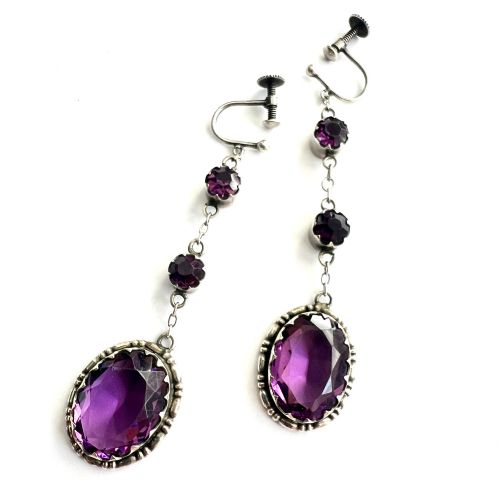
Origins stretch from continental workshops to specific German producers, capturing an era when design took precedence over intrinsic material wealth. Pieces range from delicate screwback earrings to heavy statement necklaces and dress clips.
Materials and construction methods
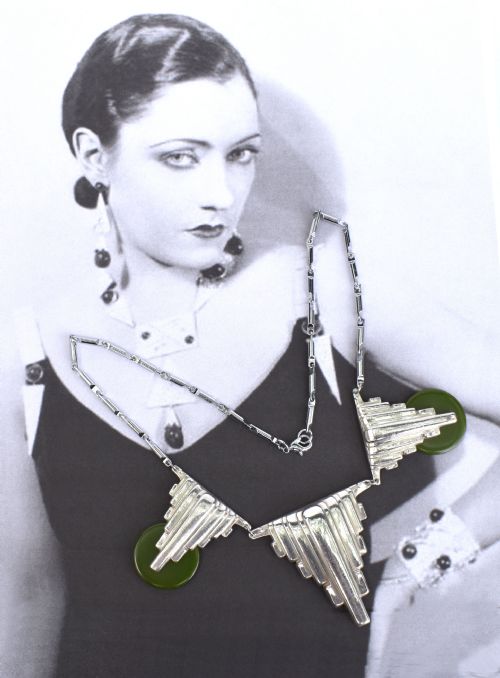
Manufacturers utilised industrial metals such as chrome, silver, and silver plate alongside early plastics like bakelite, galalith, and celluloid. These components were assembled to create rigid geometric structures and repetitive link patterns, particularly in modernist bracelets.
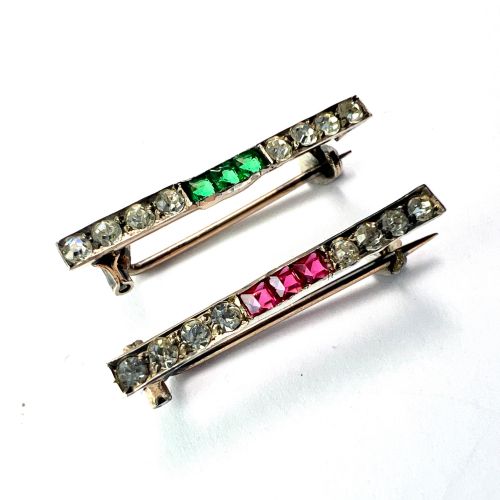
Coloured paste glass, faux emeralds, and synthetic sapphires provided vibrant hues, often held securely within closed or open-backed metal settings. Enamel work added smooth blocks of colour, contrasting sharply against polished chrome or silver surfaces.
Art Deco Costume Jewellery Retail Price Guide 2026
Typical asking prices for art deco costume jewellery among the pieces listed under this phrase on Sellingantiques today, from the lower quarter to the upper quarter. They describe what is for sale here now, not the wider market.
Celluloid novelty brooches brought whimsical everyday subjects into the rigorous geometry of art deco fashion.
Distinctions in standard and execution
The sophistication of the metalwork and the precision of the geometric assembly separate standard items from superior examples. Master workshops employed complex interlocking links and innovative material combinations that required advanced industrial fabrication techniques.
The clarity and cut of the paste glass or the stability of early plastics dictate the overall integrity of a piece. Finer items maintain secure stone settings and crisp enamel application that resist dulling, reflecting intentional design rather than mass-produced shortcuts.
Jakob Bengel
The Art Deco Costume Jewellery Glossary
- Paste
- Hand-cut glass designed to imitate gemstones. It reflects light sharply and is securely set into metal mounts.
- Bakelite
- An early synthetic plastic prized for its durability and rich colour range. It defines much of the modernist aesthetic of the period.
- Galalith
- A semi-synthetic plastic derived from milk protein. It polishes to a smooth finish and accepts vibrant dyes readily.
- Screwback
- A type of earring fastening that uses a threaded screw to secure the piece to an unpierced earlobe. This mechanism is common in twentieth-century designs.
- Dress clip
- A versatile ornament featuring a hinged, toothed clip on the reverse. It was designed to attach securely to necklines, lapels, or hat bands.
Art Deco Costume Jewellery: Frequently Asked Questions
How do I clean vintage chrome and plastics?
Wipe metal surfaces gently with a soft, dry cloth to remove dust without scratching the finish. Avoid submerging early plastics in water or using harsh chemical solvents that can degrade the material.
Keep pieces stored away from direct sunlight to preserve the original colour of enamels and plastics. Gentle care ensures the structural integrity remains intact over time.
Are these pieces made of solid silver?
Most items utilise alternative base metals like chrome, silver plate, or plain metal rather than solid precious bullion. Silver appears occasionally in specific settings and mounts alongside paste stones.
Industrial metals were favoured during this era to achieve modern geometric designs and lightweight wearability. Hallmarks are therefore less common than on traditional precious jewellery.
How can I date a piece accurately?
Examine the fastening types, materials, and overall design motifs present in the construction. The presence of chrome combined with bakelite typically points toward the 1930s.
Stylistic shifts from Edwardian floral details to strict art deco modernism help narrow down the decade of production. Manufacturing techniques evolved rapidly across the early twentieth century.
Can screwback earrings be converted?
Screwbacks can be adjusted for comfort using standard padding, though physical conversion alters the original vintage mechanism. Many collectors prefer to keep the original screwback findings intact to preserve historical authenticity.
Unpierced ears accommodate these securely without requiring permanent alterations to the metalwork. Consulting a professional jeweller ensures any mechanical adjustments protect the setting.