


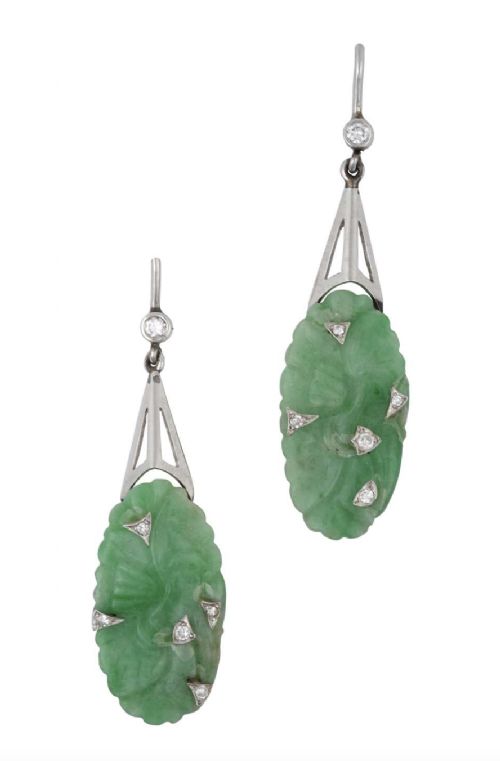


Art Deco Dangle Earrings
Art deco dangle earrings bring together geometric lines, fine platinum work and hanging stones from the interwar period.
Art Deco Dangle Earrings
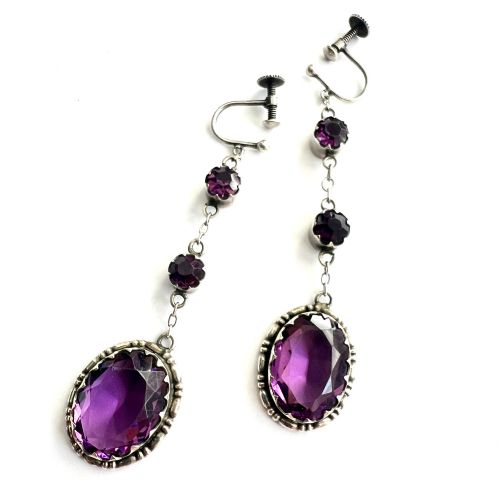
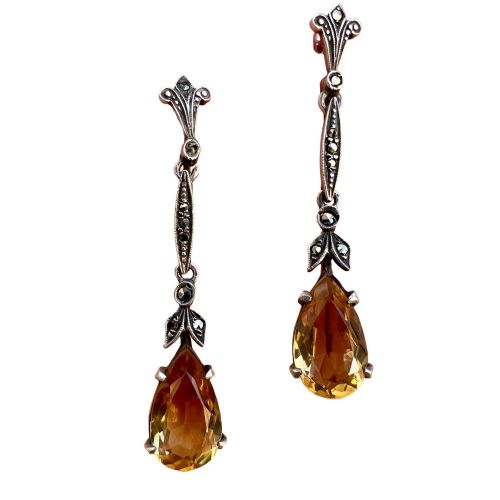
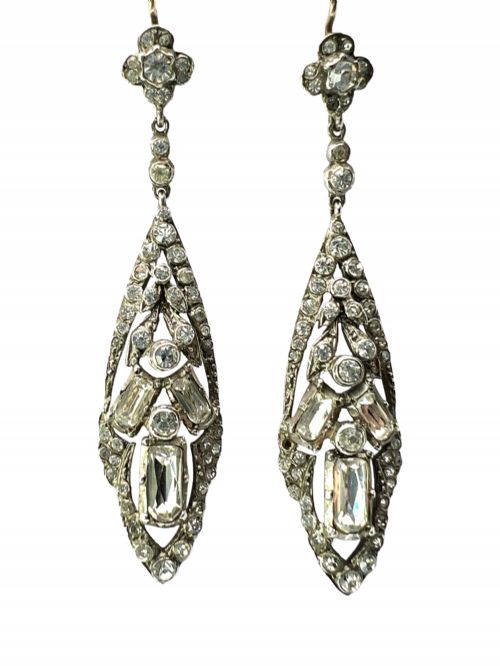
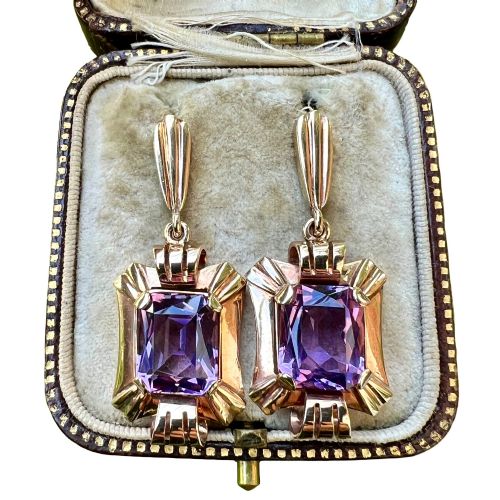
Art deco dangle earrings are drop-style jewels featuring geometric profiles, articulated sections and swinging stones designed to catch the light during movement. When searching this phrase, buyers encounter pieces primarily originating from the 1920s and 1930s, alongside Edwardian precursors and later mid-century revivals.
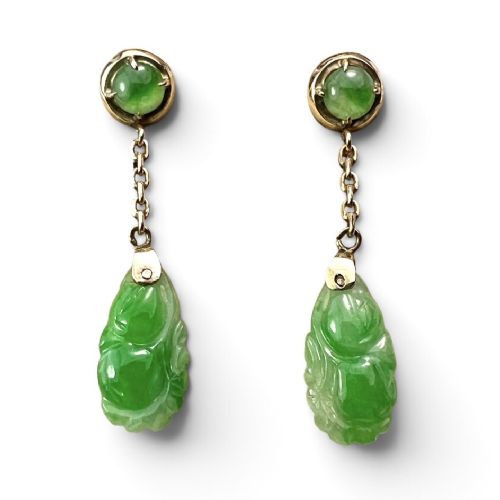
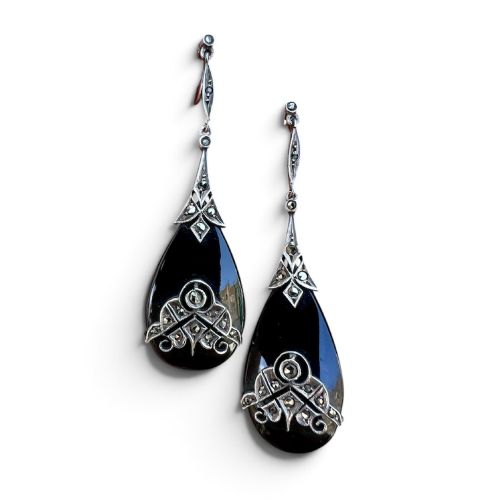
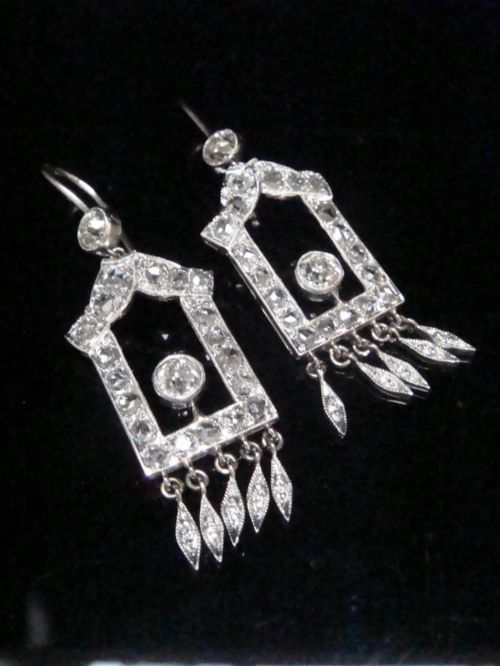
The selection ranges from platinum and diamond chandelier formations to silver pairs set with marcasite, paste, onyx or carved jadeite. Shorter drops sit close to the lobe, while night and day configurations offer detachable lower sections for versatility between daytime and evening wear.
Materials and construction methods
Makers utilised durable platinum and 18ct white gold as the primary white metals for secure stone settings, pairing them with yellow gold or silver depending on the period. Old cut, rose cut and baguette diamonds form the glittering focal points, often accompanied by calibre-cut gemstones like emerald, aquamarine, ruby and sapphire.
Construction relies on detailed metalwork including millegrain edges, openwork galleries and articulated joints that allow the drops to move fluidly. Alternative materials such as carved jadeite, onyx, mother of pearl, bakelite and marcasite provide striking contrast and varied textures.
Art Deco Dangle Earrings Retail Price Guide 2026
Typical asking prices for art deco dangle earrings among the pieces listed under this phrase on Sellingantiques today, from the lower quarter to the upper quarter. They describe what is for sale here now, not the wider market.
Common gemstone pairings include diamonds set alongside carved jadeite, black onyx, aquamarine, and pink tourmaline.
Distinctions in construction and design
The distinction between standard examples and finer items lies in the precision of the metalwork, the complexity of the articulation and the quality of the matched stones. Superior pairs exhibit hand-finished platinum galleries with crisp millegraining and securely bezel-set or grain-set diamonds.
Design cohesion also dictates merit, where balanced proportions between the upper stud or screwback and the hanging drop create a harmonious silhouette. Original conversion work or intact screwback and lever-back mechanisms add to the integrity of surviving pairs.
The Art Deco Dangle Earrings Glossary
- Articulated drop
- A design featuring hinged sections that allow the lower part of the earring to swing independently. This movement enhances the brilliance of old cut diamonds.
- Millegrain
- A decorative technique involving a fine line of tiny raised metal beads along the edges of a setting. It softens the appearance of platinum and white gold borders.
- Marcasite
- Small, faceted iron pyrites polished and set closely into silver to resemble diamonds. It provides a dark, metallic sparkle popular in vintage jewellery.
- Paste
- Hand-cut and polished glass utilised as a gemstone substitute in period pieces. High-grade paste exhibits convincing brilliance and deep colour saturation.
- Night and day
- Convertible earrings with detachable lower sections. This format allows the wearer to transform a long evening drop into a simpler stud for daytime.
Art Deco Dangle Earrings: Frequently Asked Questions
How do I wear screwback earrings?
Screwback findings feature a threaded post and a small screw mechanism that adjusts the pressure on the earlobe. They provide a secure fit for non-pierced ears without requiring spring tension.
To wear them, open the screw slightly, place the finding behind the lobe, and gently tighten the screw until comfortable. Do not over-tighten, as this can pinch the skin during extended wear.
What is the difference between platinum and white gold?
Platinum is a naturally white, dense and durable metal that holds delicate gemstone settings securely over decades of use. White gold is an alloy of yellow gold mixed with white metals like palladium or nickel to achieve a similar tone.
Platinum maintains its colour naturally, whereas white gold is often plated with rhodium to enhance brightness. Both metals appear frequently across the interwar jewellery selection.
Are these earrings suitable for daily wear?
Many pairs are robust enough for regular use, particularly platinum and gold designs with secure diamond or gemstone settings. However, delicate configurations involving paste, fragile glass, or intricate articulated joints require careful handling.
Store them separately in a lined box to prevent scratching and remove them before participating in physical activities or swimming.
How do I identify the period of a pair?
Dating relies on examining the metal choices, gemstone cuts, and overall stylistic motifs present in the piece. Edwardian items tend to feature lacy platinum work and pearls, while 1920s and 1930s examples lean towards bold geometry, calibre-cut stones, and baguette diamonds.
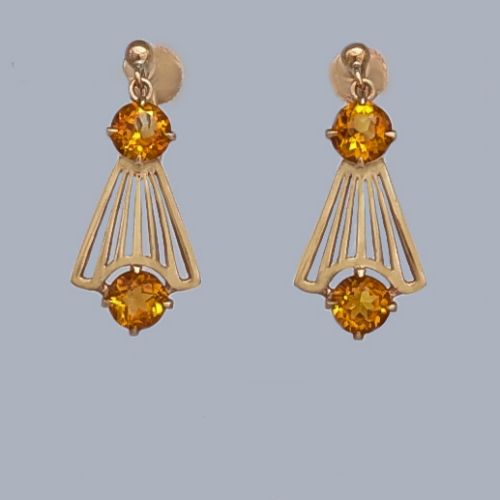
Later mid-century revivals often incorporate heavier yellow gold settings and distinct modernist silhouettes that differ from earlier interwar work.