
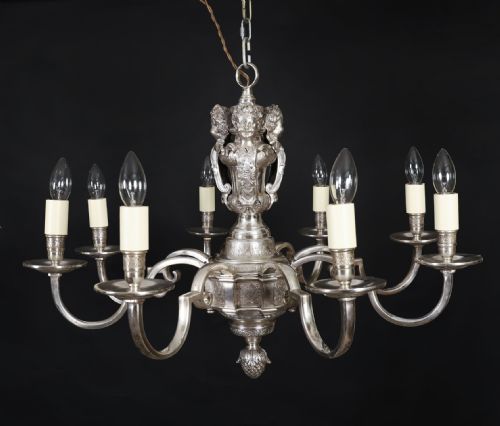


Silver Plated Pendant
These silver plated pendant fixtures and items bring period illumination and adornment, combining lasting metalwork with glass or enamel.
Silver Plated Pendant
A silver plated pendant encompasses multi-arm chandeliers, ceiling pendant lights, dish lights, and smaller personal adornments like necklaces and earrings. Buyers searching for a silver plated pendant find substantial hanging ceiling fixtures alongside decorative wearable pieces.
The selection ranges from Victorian and Edwardian examples to later Art Deco designs. Edwardian and 1920s multi-arm chandeliers dominate the lighting options.
Origin details in the evidence point toward English craftsmanship, alongside specific continental influences such as Russian Empire and Dutch styles. Forms vary from simple single-bulb drop lights to grand multi-light configurations.
Materials and construction
Makers utilised silver plate over brass, nickel plated brass, or general metal foundations to provide the appearance of solid silver at a different scale. This metalwork supports components formed from cut glass, cut crystal, and cobalt or green glass.
Enamel frequently appears alongside silver plate in personal jewellery items to add colour and geometric detail. Structural elements involve cast or wrought metal components assembled into multi-arm frames and suspension assemblies.
Ceiling candle light fittings remind us that domestic illumination once relied on wax before the copper wire took over.
Judging the range
Quality depends upon the crispness of the metal casting and the clarity of the integrated cut glass or crystal elements. Heavier frames with balanced proportions separate standard production from more ambitious decorative works.
The preservation of the silver plating across complex junctions indicates the original standard of manufacture. Finer pieces retain intact enamel work and well-finished glass components without heavy surface degradation.
The Silver Plated Pendant Glossary
- Silver plate
- A thin layer of silver bonded to a base metal substrate such as brass or nickel. This technique provided durable reflective surfaces for large architectural fittings and smaller decorative items.
- Chandelier
- A branched ornamental light fixture designed to mount from the ceiling. These pieces hold multiple light sources or candle holders across several arms.
- Cut glass
- Glass shaped and patterned by abrasive wheel cutting. It catches and refracts light across pendant fittings and dish lights.
- Enamel
- A glassy substance fused to metal through firing to provide decorative colour. It frequently defines the surface patterns of Art Deco jewellery items.
Silver Plated Pendant: Frequently Asked Questions
What periods do these pendants cover?
The available evidence spans from the mid nineteenth century through the Edwardian era and into the Art Deco period. Pieces date from the eighteen fifties up to nineteen forty.
Earlier examples reflect Victorian and Neo-Classical tastes, while later items adopt Modernist and Art Deco geometric styling.
Are these items strictly lighting?
No, the selection includes both architectural ceiling lighting and personal jewellery. Alongside chandeliers and pendant lights, buyers encounter necklaces and earrings.
Both categories utilise silver plate combined with glass, crystal, or enamel materials.
What base metals lie beneath the plating?
Makers constructed the structural frames primarily from brass, nickel plated brass, or general base metal alloys. These materials provided the necessary strength for hanging ceiling fixtures.
The silver plating was then applied to create the visible exterior finish.
How do glass components feature in the design?
Glass acts as a primary decorative and optical element, appearing as cut glass drops, crystal bowls, dish lights, and coloured glass accents. Cobalt glass and green glass are recorded among the materials.
These elements work alongside the metal framework to diffuse and reflect light.