
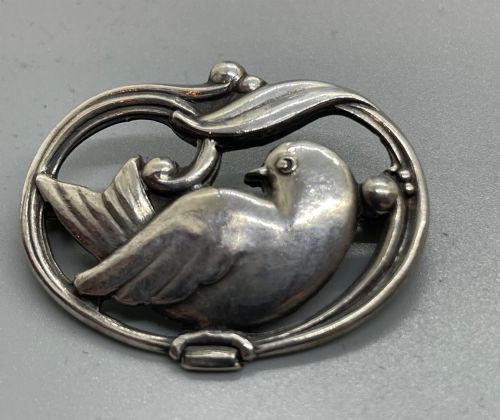


Danish Silver Brooch
A danish silver brooch brings together clean Scandinavian metalwork and wearable art, offering collectors striking mid-century design and early twentieth-century craftsmanship.
What these brooches are
A danish silver brooch spans several distinct periods, reaching from early twentieth-century Skønvirke and Art Nouveau creations through to mid-century Danish Modern forms. Buyers encounter floral motifs, animal subjects, and abstract modernist shapes that reflect the shifting tastes of Scandinavian designers over decades. Cape clips, pendants, and standard pin-backs demonstrate the versatile utility of these pieces.
The most common examples on this page date from the nineteen-fifties, frequently featuring vibrant enamel work or silver gilt finishes. These pieces capture the post-war enthusiasm for accessible design, often taking the form of the iconic daisy or geometric leaf patterns. Alongside these popular enamels, earlier works showcase naturalistic interpretations of flora and fauna using amber or moonstone settings.
How they were made
Silversmiths utilised sterling silver and oxidised silver as the primary foundations for these ornaments, occasionally applying a layer of vermeil or silver gilt to create rich golden surfaces. Enamel was frequently fused to the metal base to introduce brilliant blue, pink, white, or multi-coloured tones into floral and abstract designs. Natural stones such as amber, amethysts, and moonstones were hand-set into the metalwork to provide focal points.
Techniques ranged from delicate hand-painting of vitreous enamel to sculptural casting and repoussé work for animal and plant motifs. The construction often combined soldered pin stems and secure catch mechanisms with intricate wirework or layered silver petals. Makers relied on traditional silversmithing skills passed down through workshops to achieve clean lines and durable mounts.
Retail Price Guide 2026
Typical UK retail prices for danish silver brooch, calculated from the Sellingantiques database of over a million retail prices indexed since 2003. This retail price guide relies exclusively on Sellingantiques data; no external sources or auction records are used, so the figures do not describe the wider market.
Elephants and snails occasionally make an appearance in the metal menagerie, reminding us that mid-century silversmiths maintained a delightful sense of humour.
What varies in quality
Quality in a danish silver brooch rests on the depth of the design, the crispness of the casting, and the reputation of the maker. Pieces produced by established houses like Georg Jensen or designed by notable silversmiths display superior proportions and finer hand-finishing in the metalwork. The complexity of the composition, from simple modernist bars to multi-petalled enamel flowers, dictates the overall refinement.
Georg Jensen·Anton Michelsen·Erik Magnussen·Volmer Bahner·Hans Hansen
The Danish Silver Brooch Glossary
- Sterling silver
- A standard alloy of silver containing parts of other metals for durability. This material forms the primary structural base for the vast majority of Scandinavian metalwork.
- Vermeil
- Sterling silver that has been plated with a thin layer of gold. This finish appears frequently on mid-century enamel pieces to provide a warm contrast.
- Skønvirke
- The Danish variant of Art Nouveau and Arts and Crafts styles. It emphasises organic motifs, natural materials, and traditional craftsmanship seen in early twentieth-century pieces.
- Oxidised silver
- Silver that has been intentionally treated to darken recessed areas. This technique enhances the contrast and three-dimensional detail of floral and animal designs.
- Vitreous enamel
- Glass powder fused to metal through high-temperature firing. It provides the durable, glossy coloured surfaces found on daisy and leaf motifs.
Frequently Asked Questions
How do I date a daisy brooch?
Daisy brooches span several decades of production, with many originating in the nineteen-fifties through collaboration with major silversmithing firms. Examining the maker marks and the tone of the silver gilt helps place the piece within a specific manufacturing period.
Earlier examples often carry distinct workshop stamps on the reverse, while later variations show subtle shifts in the scale and coloration of the white enamel petals.
What is Skønvirke style?
Skønvirke represents the Danish interpretation of Art Nouveau and the Arts and Crafts movement, flourishing in the early decades of the twentieth century. It focuses on hand-wrought silver, naturalistic plant forms, and traditional craft techniques.
Pieces from this movement tend to feature organic curves and unpolished or softly patinated silver surfaces rather than high-gloss modern finishes.
How should I wear a cape clip?
A cape clip functions as a secure fastening garment accessory, often joined by a short chain or designed as a substantial single clasp. They were originally utilised to fasten heavy woolen wraps, shawls, or collars.
Today, they attach easily to modern cardigans, heavy coats, or scarves as a functional statement piece that highlights the weight and texture of the silver.
Are these brooches marked with silver purity?
Many pieces feature stamped hallmarks indicating sterling silver standards or specific maker initials on the reverse side. These tiny punch marks can include designer monograms, workshop symbols, and export control stamps.
Not all items carry full hallmarks due to their small size or age, meaning construction style and materials must be assessed alongside any visible stamps.